

Before you commit
Appliance
installation cost,
band by band.
Bands rather than prices, because the same installation costs differently on a freestanding unit and on a built-in. What does not change is the order — the cheap causes are also the common ones — or the rule that decides repair against replace.
Mon–Sat, 8am–8pm
- 9 priced jobs
- 6 bands
- Price in writing first
Book a visit
Three short steps, about a minute.
or call (844) 638-8309
Loading appointment form…
The appointment form couldn’t load. Please try again.
Installations are quoted once the room and the model are known.
Think of the ladder as a way to set one fitting job beside another, and nothing more precise than that. Sliding a new dishwasher into the space the old one left may take an hour, while a panel-ready column pair set into fresh cabinetry can fill a working day; a valve that turns freely costs nothing extra and a seized one adds a step; an exhaust that exits right behind the machine is simple and one that climbs to the roof is not. Your price is set after the model and the room have both been looked at, it is written down, and the work starts when you say go.
The bands, job by jobAt booking, find out the price of the site check and whether that amount is taken off the installation later.
Share the model number and some pictures of the space before the day; a firm figure follows once both are in hand.
Where a circuit, a gas line or a cabinet change has to come first, you learn it ahead of the delivery date and pay nothing for work that cannot go ahead.
What an installation
usually costs.
Weigh an installation against what a poor one leads to, not against doing it yourself for nothing. A gas connector leak-tested at the joints, a supply line with a real stop valve and a drain with its high loop take an hour or two; a slow leak under a new floor, a range that tips or a dryer exhaust folded behind the wall can cost far more than the appliance did. The price of an installation is mostly set by what the house already has. When the gas valve, the water stop, the drain, the receptacle and the exhaust are where the new unit needs them, the job is short. When one of them is missing, the missing piece is often the work of a licensed plumber or electrician, and it is better to know that before the delivery date than on it. A site check before you order is the cheapest way to find out.
| Installation | Relative cost | Notes |
|---|---|---|
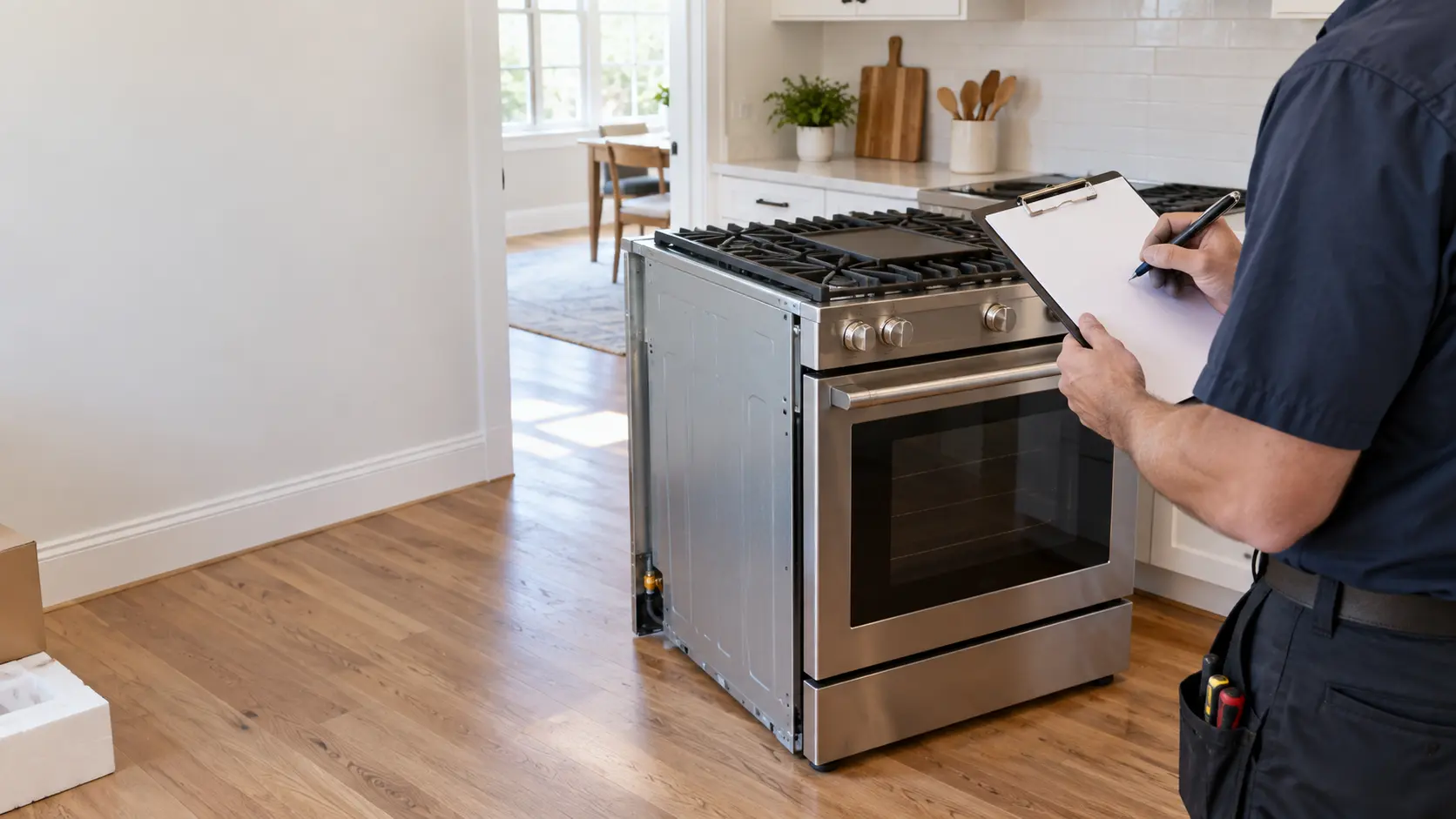
| New gas range, cooktop, wall oven or dryer connected with a new connector, conversion kit fitted if needed, every joint leak-tested and the first flame read | low to moderate | A like-for-like swap on natural gas, with a working valve right behind the unit, sits at the light end. A propane conversion, a pro-style range with many burners or a valve that has to be replaced at the stub moves it up. |
| New supply line and quarter-turn stop for a refrigerator, ice maker, dish care machine or laundry pair, flushed and tested under pressure | low | One braided line onto a valve that already works is a short job. Replacing a saddle valve, a long run to an island or two machines with hot and cold hoses each takes a little longer. |
| Drain hose routed through a high loop, an air gap or into a standpipe, disposer knockout removed, first drain checked | low | Reusing a sound drain connection with a new clamp is modest. Fitting a new countertop air gap, a drain pump for an ice maker or a standpipe adapter adds parts and time. |
| Metal exhaust transition and reachable wall run fitted from a new dryer to the outside hood, joints taped, airflow confirmed | moderate | A short run straight through the wall behind the machine is the lighter end. A long run with several elbows, a roof or soffit exit, a closet that needs a periscope transition or a booster fan is the fuller job. |
| Wall, island, insert or downdraft hood mounted and ducted outdoors at full size, damper and cap fitted, fan and lights tested | moderate to highest | Swapping a hood onto an existing duct of the right size is the lighter case. A new route through a wall or roof, an island hood hung from the ceiling or ducting enlarged to meet a bigger fan takes much longer. |
| Built-in column, integrated drawer, wall oven or panel-ready model set to its cutout, anchored, connected and its panels or trim aligned | highest | One built-in into a cutout made for it is the lighter end of the top step. A column pair, several drawers with panels, a heavy unit carried up stairs or a first fit after a kitchen remodel makes it the fullest job here. |
| Laundry pair stacked with the maker's kit or raised on pedestals, leveled, connected and run together | low to moderate | Pedestals under a pair on an open floor are modest. A stack in a tight closet, with the dryer's exhaust and fuel connected before it goes back, is the fuller visit. |
| Anti-tip bracket fastened and engaged, leveling legs set, doors squared on a range, cold storage unit, dish care machine or laundry machine | lowest | A bracket into a wood floor and four legs turned is the smallest job on this page. Tile over concrete, a heated floor that moves the bracket to the wall or several appliances in one trip add a little time. |
| Old appliance shut off, disconnected, capped and carried out, opening cleaned, disposal or recycling arranged | low | A plugged-in unit on the ground floor is quick. A hard-wired or gas unit, a heavy built-in, a basement or an upper floor, and cold storage that needs refrigerant recovery sit higher. |
What the diagnostic
visit covers.
The first visit decides what the installation actually is. The fee, and whether it is credited against the installation, is said when you book, before anyone comes out.
The diagnostic visitThe opening measured at the front, the back and both sides, and the floor checked for slope and new flooring.
The path from the street walked and measured, including doors, stairs, railings and the tightest turn.
The gas shutoff, receptacle and breaker, water valve, drain and exhaust compared with what the model asks for.
A written list of what fits now, what the installation covers and what a licensed trade or a carpenter must do first.
What moves
the price.
Five things decide where in its band an installation lands. None of them is known for certain until a technician has seen the appliance.
The typesLike for like, or something new
The same size, fuel and connections in the same spot is the shortest installation. A different width, a built-in where a freestanding unit stood, a new fuel or a new location adds measuring, parts and sometimes a licensed trade first.
The state of the existing hookups
A gas valve, water stop, drain and receptacle that are sound and within reach keep the job short. A seized valve, a saddle tap, a two-slot receptacle for a four-wire cord or a drain with no high loop each add a step.
The path in and out
A ground-floor kitchen with a straight path from the front door is quick. Stairs, a basement turn, an upper floor without an elevator or doors that come off their hinges add time and sometimes a second person.
Ducts and exhaust
A short exhaust run through the wall behind the machine or a hood onto a duct of the right size is simple. A new route through a roof or an exterior wall, or a duct enlarged to meet a stronger fan, is the longer job.
Built-in fitting and panels
Built-in columns, drawers and panel-ready models are fitted to fractions of an inch, often by two people, with panels hung and adjusted at the end. They are the fullest installations on the ladder.
Not every appliance
breaks the same way.
A new refrigerator, freezer, wine unit, beverage unit or ice maker counts as cold storage. Anything that heats food, gas or electric, from a range or a wall oven to a cooktop, a steam oven or a microwave, and the hood above it, is a cooking appliance. A dishwasher, and the disposer it drains through, is dish care. A washer and a dryer, together with the duct that carries the dryer's air outdoors, make up laundry. Which group is your new appliance joining?
All appliance types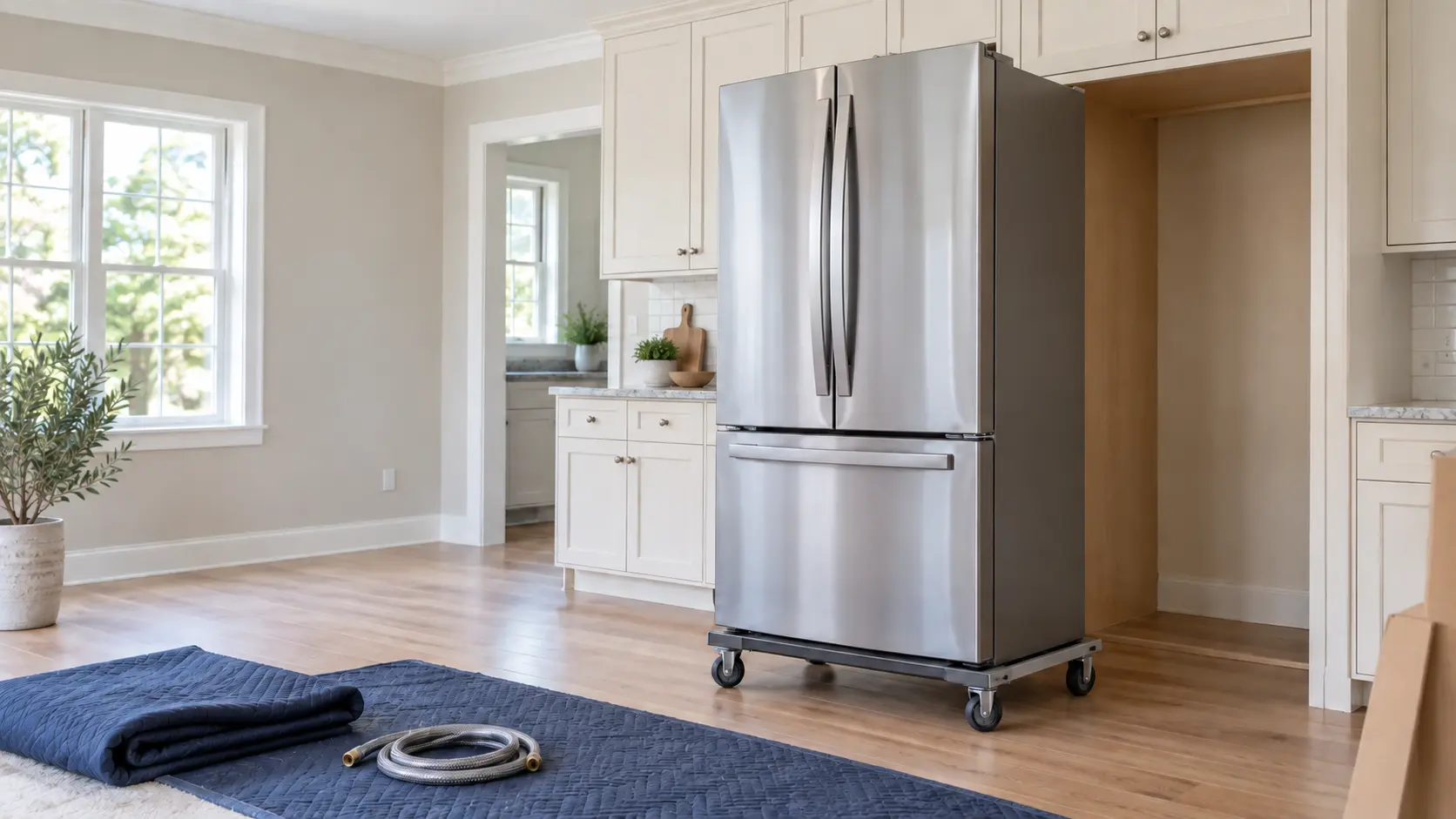
Cold storage
Setting a new refrigerator, freezer, wine or beverage unit or ice maker into its opening: measured, connected to water, leveled and started.
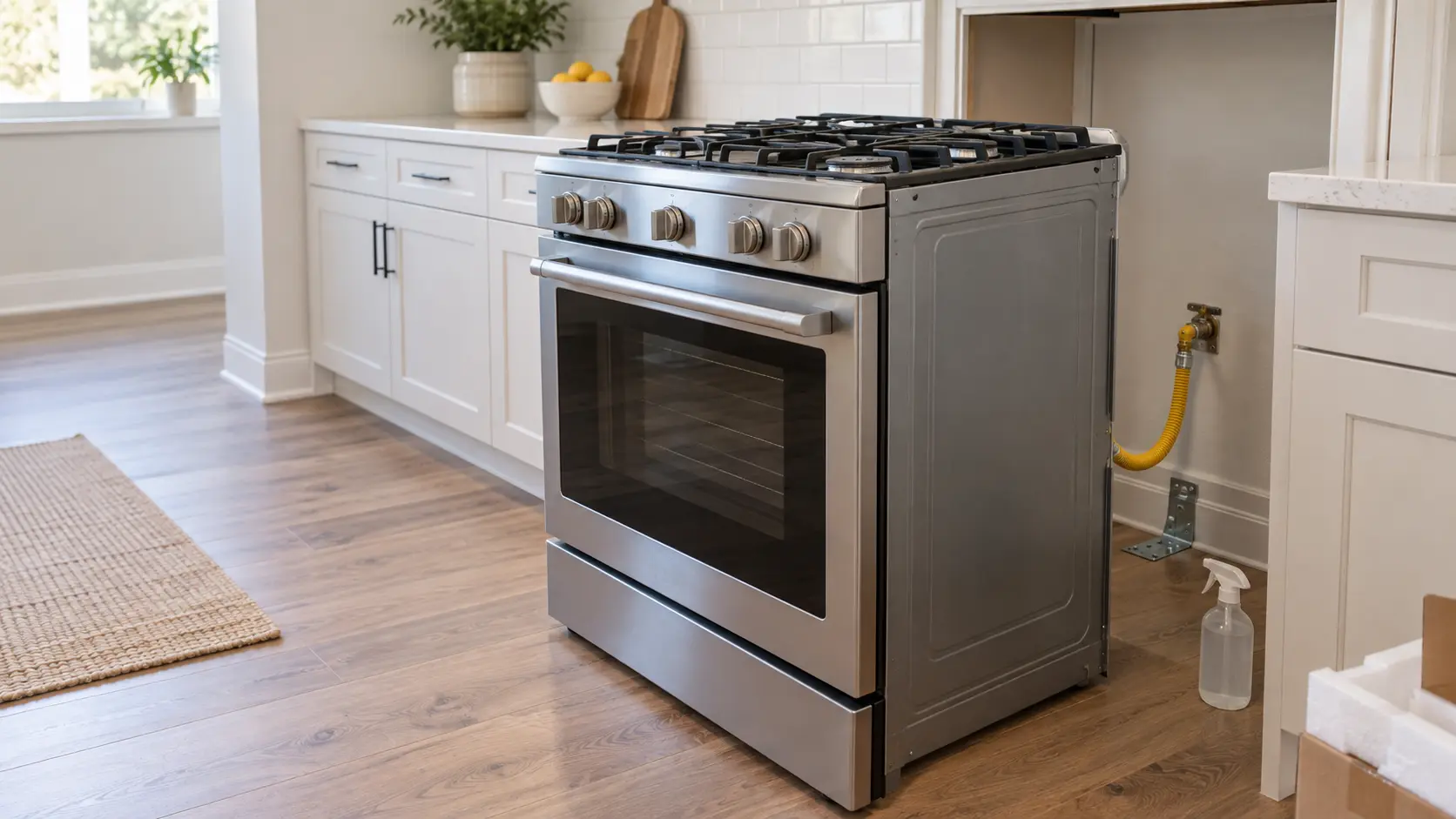
Cooking appliances
Hooking up ranges, cooktops, wall ovens, microwaves and hoods: gas connectors leak-tested, anti-tip brackets fastened, ducts sized and the first light checked.
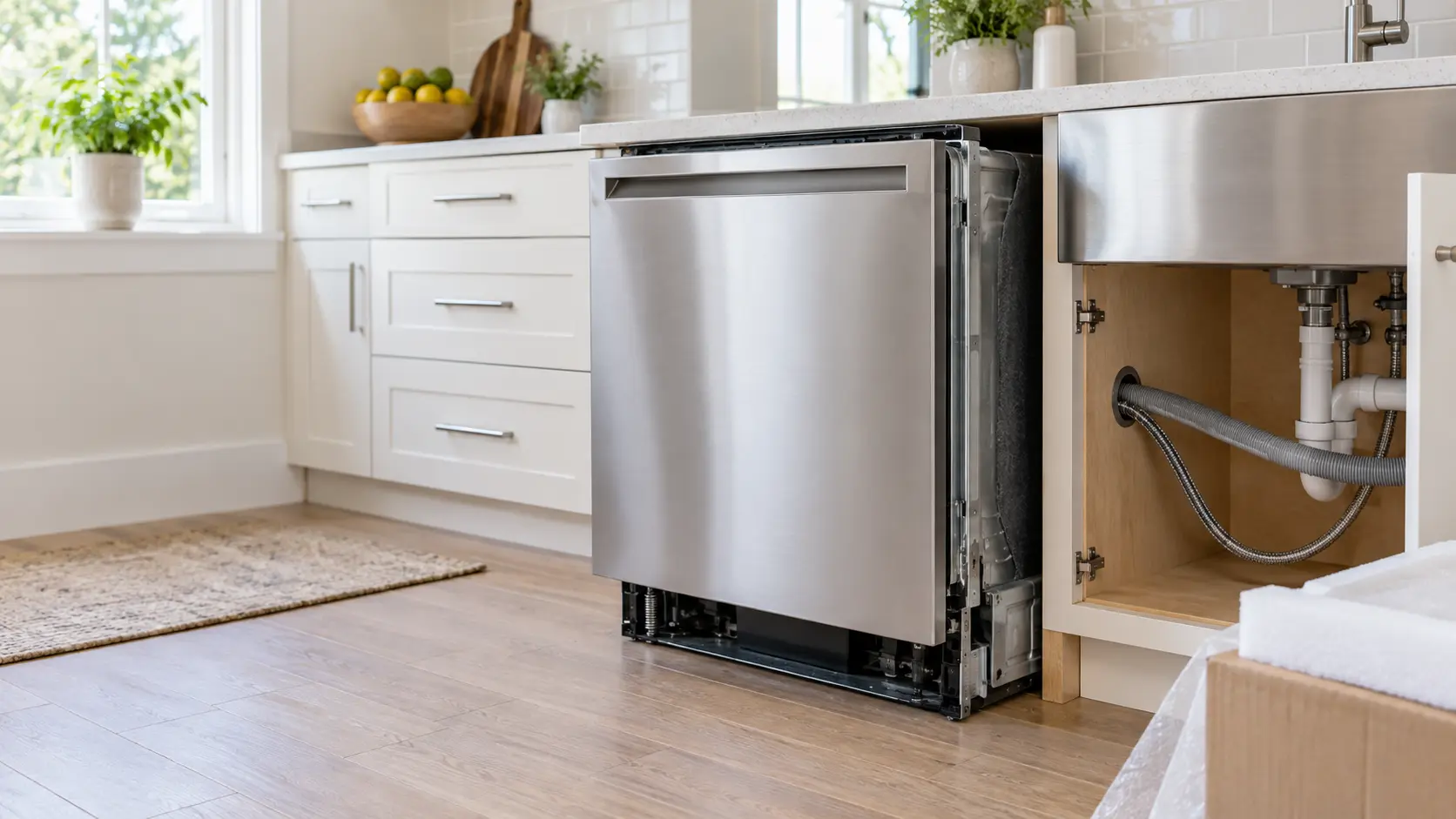
Dish care
Fitting a new dishwasher or dish drawer under the counter: supply line, drain loop or air gap, power, mounting brackets and a first test cycle.
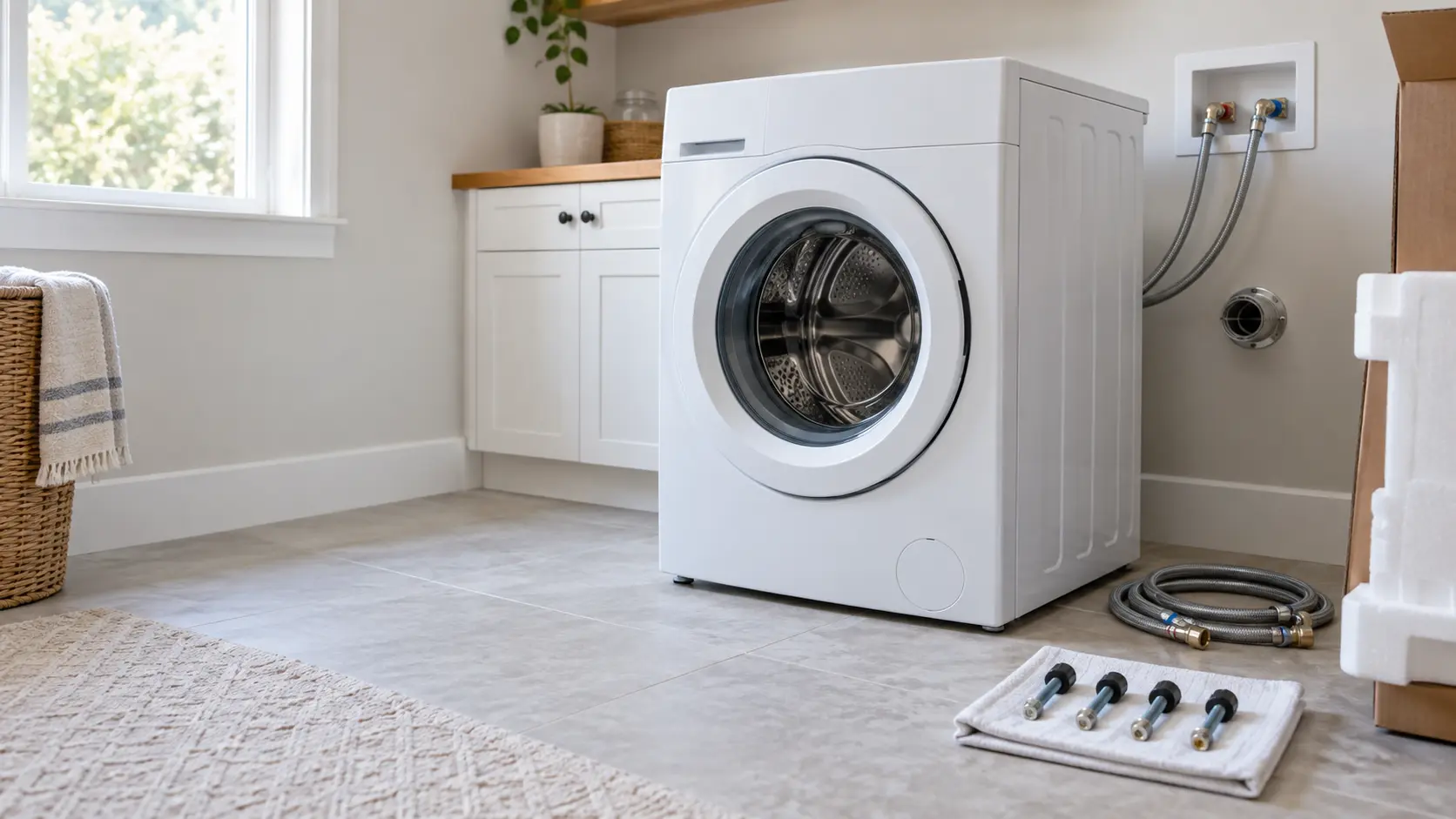
Laundry
Setting up a new washer, dryer or stacked pair: shipping bolts out, hoses on, drain and exhaust run connected, power checked and the machines leveled.
Every kind we serviceAll appliances, side by side
The archive puts the 4 types against each other: how to tell which you own, what fails on each, and which manufacturers build them.
How to tell yoursWhat fails on eachWho makes them Open the type archive
Questions about
the price.
What does the installation trip fee cover?
Why is installation priced in bands and not one number?
Is it cheaper to install several appliances on one visit?
Can the price change after I approve the installation?
Back to your everyday
Let’s get your appliance working again.
Three short steps online, or one call. Tell us what you are seeing and pick a window that works.