
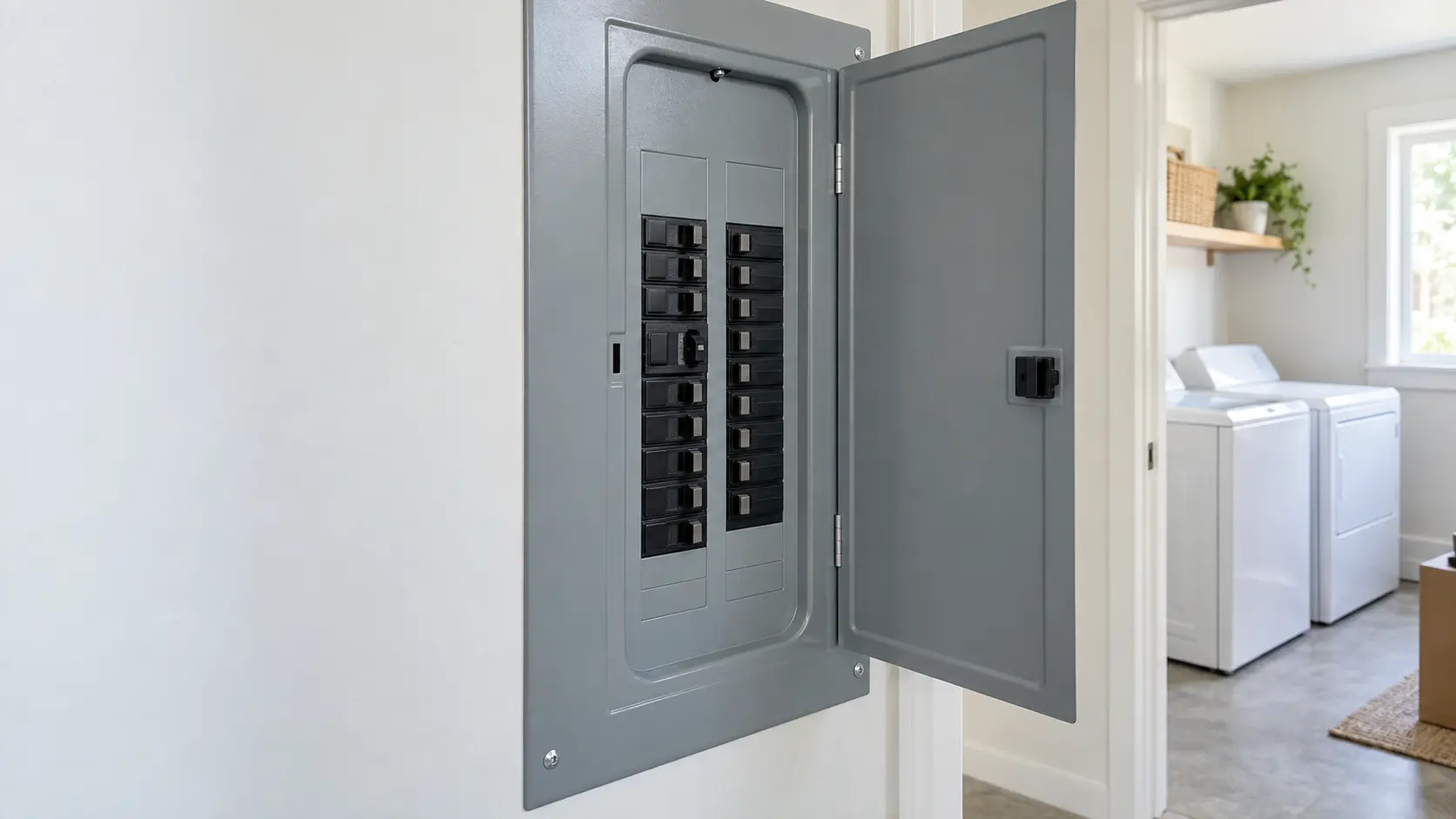

Breaker Trips on the First Run: Leave It Off and Find Out Why
When the breaker trips on the first run, power to a newly installed appliance is cut the moment it starts to heat, spin, cool or pump.
Mon–Sat, 8am–8pm
- Hazard after a hookup
- 5 questions that narrow it
- 6 causes, cheapest first
Book a visit
Three short steps, about a minute.
or call (844) 638-8309
Loading appointment form…
The appointment form couldn’t load. Please try again.
Gas in the air? Get out. Water, smoke or a trip? Power off
When a breaker trips on the first run, switch it off and leave it off. Do not reset it again and again, since each reset pushes current through whatever made it trip. The appliance stays off until the circuit, the cord and the connection have been checked.
What it
usually means.
A circuit breaker opens for one of three reasons: more current than the circuit is rated for, a short between conductors, or current leaking to ground where a GFCI or AFCI breaker is watching for it. When it happens the first time a new appliance runs, the installation is the likely link. A new model may draw more than the one it replaced: an induction range, a larger electric dryer or a column pair on a circuit that already feeds a microwave and a toaster oven. A cord connected to the wrong terminals, a ground strap left in place where a four-wire cord needs it removed, or a nicked wire pinched behind the unit gives a short or a ground leak. Water spilled into a junction box during the plumbing makes a GFCI trip. And a new appliance with a transit-damaged part can pull a breaker out on its own. What does not change is the response. A breaker that trips is protecting the wiring, and resetting it again and again forces current through whatever made it trip, heating a loose connection each time. Switch it off, leave it off, and have the circuit, the cord and the connection looked at; a heavier circuit is an electrician's work.
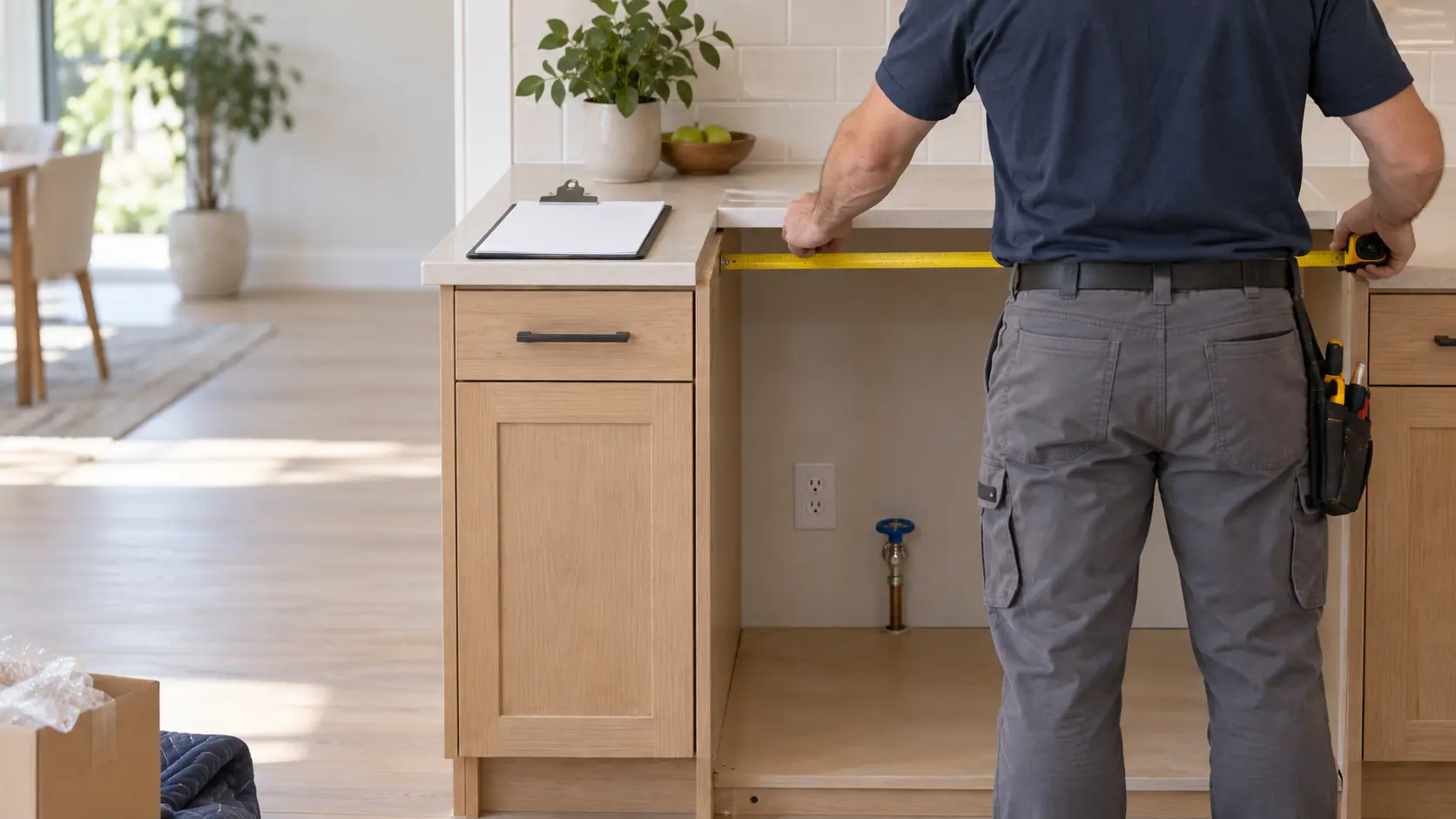 The 6 causes, cheapest first
Answer these first
Does the breaker trip the instant the appliance is switched on, or only when it starts to heat, spin or cool?
Is it a standard breaker, or one with a test button, marked GFCI or AFCI?
Does that breaker also feed counter receptacles, lights or a second appliance?
Is there any burning smell, discoloration on the plug or buzzing from the wall?
Did the new appliance replace a smaller one, or one that ran on gas instead of electricity?
Check these
before you book.
Breaker trips on the first run: 5 checks, and none of them costs anything.
Leave the breaker in its off position and switch the appliance's own controls off.
Resist flipping it back on over and over as a test.
Notice whether there is a smell of burning or any scorching on the plug or the receptacle, without touching them.
Also worth checking
- Write down the breaker's rating and whether it has a test button, and photograph the appliance nameplate.
- Book a visit, and an electrician if the nameplate asks for more than the breaker supplies.
The causes,
cheapest first.
6 things breaker trips on the first run: leave it off and find out why turns out to be, from a circuit too small for the new load to a part that shorted inside the new appliance.
The cost guide-
01 no installation
A circuit too small for the new load
A bigger model can need more amperage than the old circuit carries. The nameplate and the breaker are compared; if the circuit is too small, an electrician upgrades it, and the appliance stays off until then.
-
02 low
A cord wired to the wrong terminals
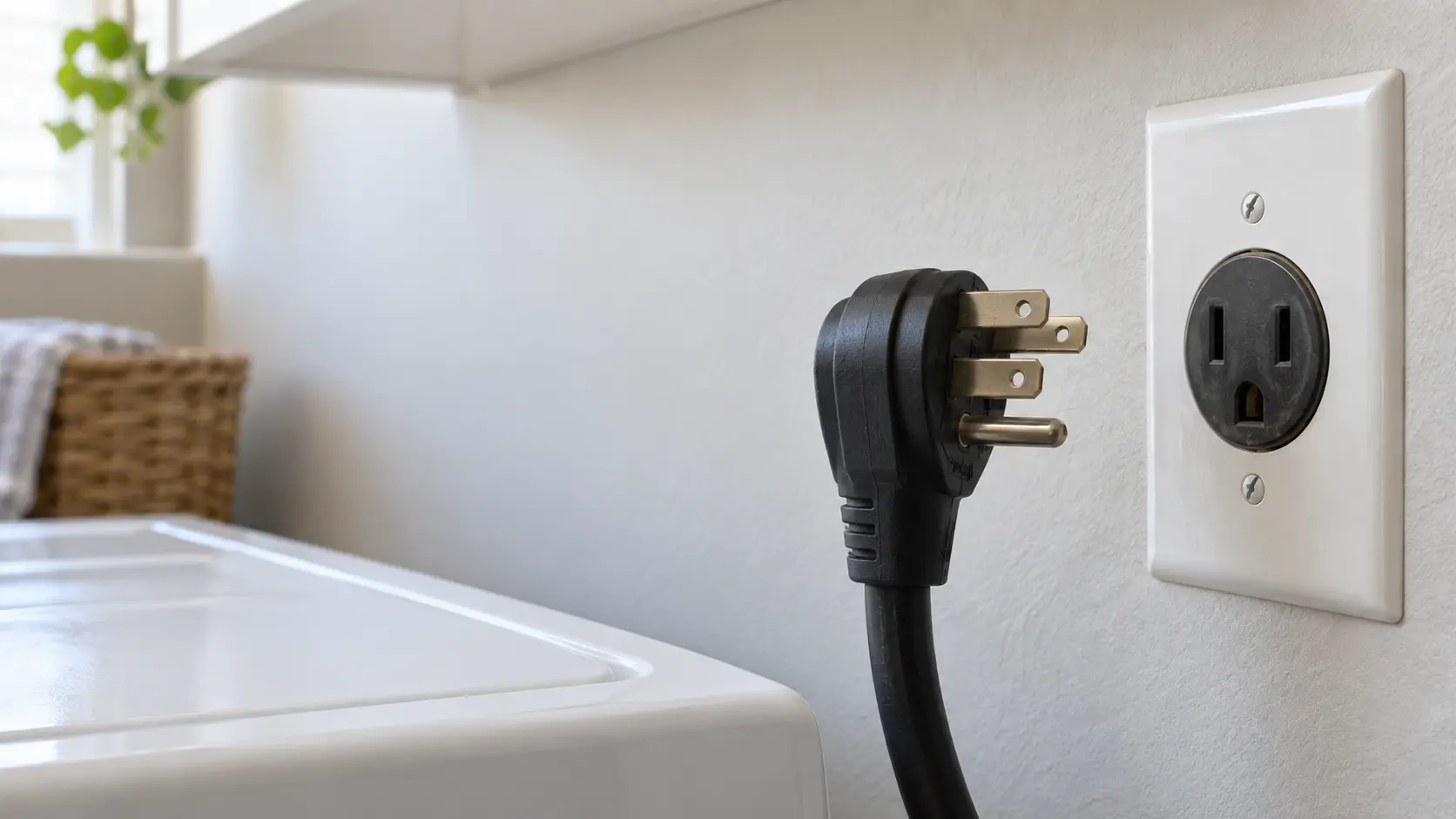
Range and dryer cords land on a terminal block with neutral, hot and ground positions. A crossed wire or a ground strap left in on a four-wire cord can trip the breaker or leave the cabinet live; it is corrected with the power off.
-
03 low
A wire pinched as the unit was set back
The cord or a hard-wired conduit behind a dish care machine or a wall oven can be crushed against a frame edge. The appliance is pulled out with the breaker off, and the damaged cord or whip is replaced.
-
04 low
Water in a junction box or receptacle
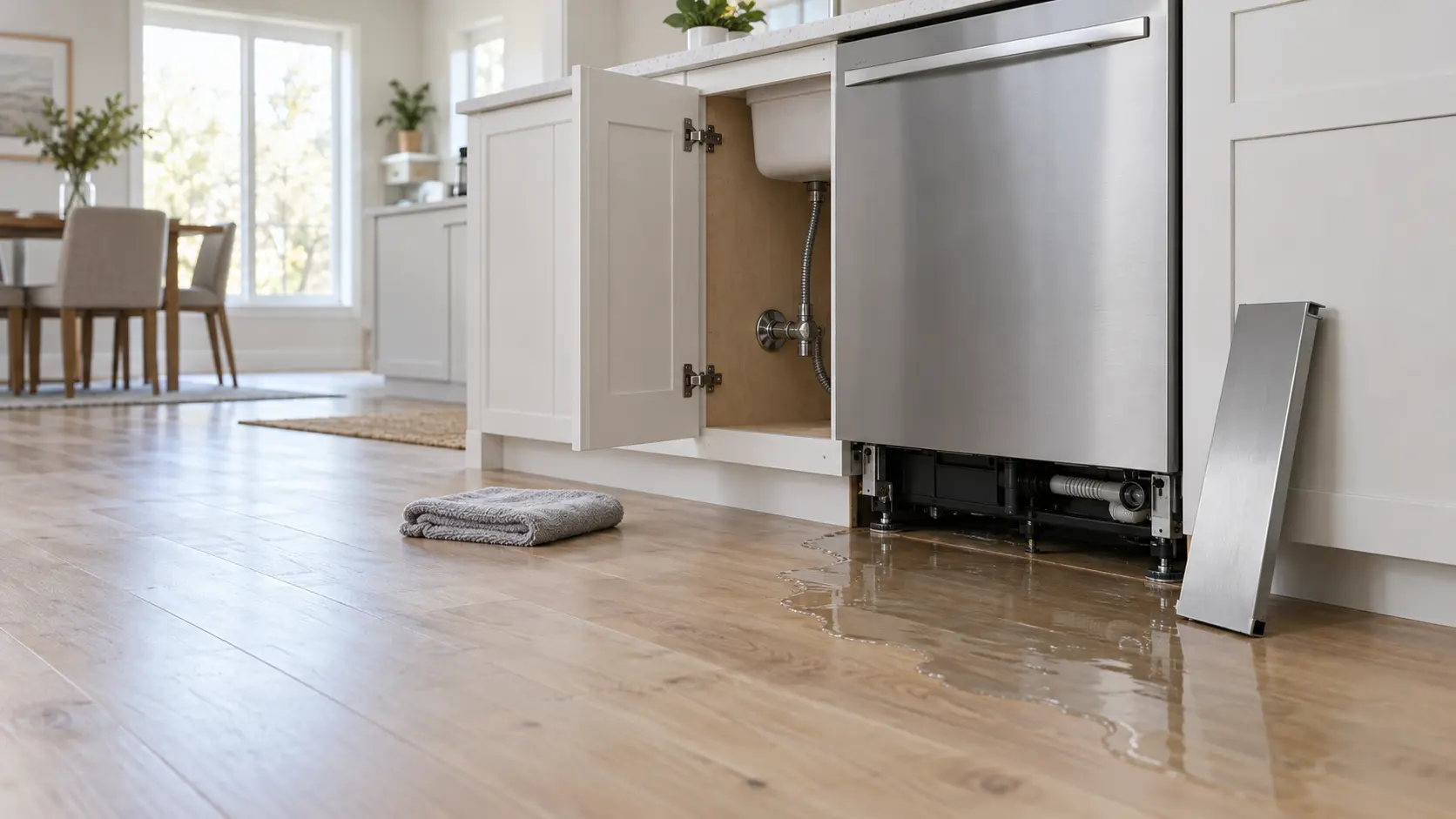
A drip during the plumbing that reaches a junction box or a receptacle under a sink trips a GFCI. The water is found and stopped first; the box dries out before power is restored.
-
05 low to moderate
A shared circuit overloaded on the first use
A new unit plugged into a circuit that also feeds other appliances can trip it when both run. Separating the loads is the fix, and a new dedicated circuit is added by an electrician.
-
06 moderate
A part that shorted inside the new appliance
With the circuit, the cord and the connections all correct, a new unit that still trips its breaker has an internal short. That is the maker's warranty, or our sister repair site outside it.
What else
it could be.
Most often confused with burning smell on the first run: when it is normal and when to stop, then plug does not fit the outlet: cords, receptacles and circuits.
All problemsCodes that come with it
Also related

The makes
it happens on.
37 makes on this site; breaker trips on the first run: leave it off and find out why can show up on any of them. Each mark opens that make's own page.
All 37 brandsBreaker Trips on the First Run: Leave It Off and Find Out Why,
where we come out.
9 metros, each with its own page.
All service areasTampa BayFL · 31 areas
Miami / South FloridaFL · 47 areas
New York MetroNY · 75 areas
HoustonTX · 36 areas
ChicagoIL · 50 areas
Los AngelesCA · 95 areas
San DiegoCA · 31 areas

Questions about
breaker trips on the first run: leave it off and find out why.
The breaker held on the second try. Can the appliance be used now?
Why does a GFCI trip with a new dish care machine or laundry machine?
Can a bigger breaker be fitted so the new appliance runs?
How do I read what the new appliance needs?
Back to your everyday
Still seeing breaker trips on the first run: leave it off and find out why?
Book with what you checked above — 5 answers save the technician the first part of the visit.