


Gas Hookup and Leak Check
A new gas appliance joined to your shutoff with a new connector, every joint leak-tested, flames read.
Mon–Sat, 8am–8pm
- Low to moderate cost band
- 5 steps on the visit
- 3 problems it answers
Book a visit
Three short steps, about a minute.
or call (844) 638-8309
Loading appointment form…
The appointment form couldn’t load. Please try again.
What the gas hookup and leak check
involves.
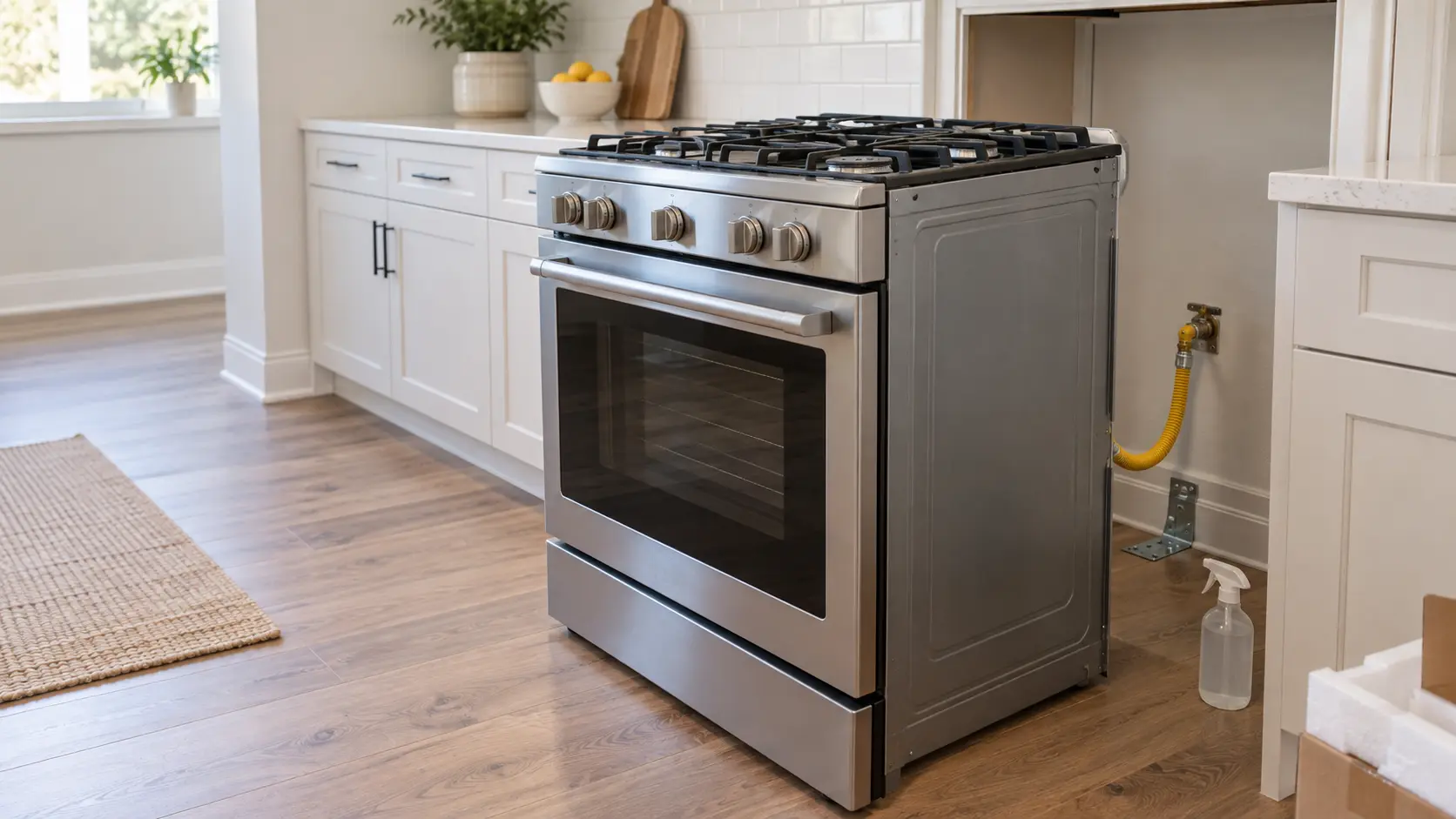
A gas hookup and leak check joins a new gas appliance to the shutoff valve that is already there, and proves the joint is tight before anything is lit. It covers ranges, cooktops and rangetops, wall ovens and gas dryers. The first thing looked at is the valve: it has to be within reach once the appliance is in place, it has to turn, and its outlet has to suit a flexible connector. If there is no shutoff, or the line has to be extended or moved, that is a plumber's job before the installation. The connector is new, rated for the appliance, and only as long as it needs to be, without sharp bends or a route across a hot surface. Pipe threads get sealant rated for gas; flare fittings get none. With the valve open, each joint, the connector ends and the appliance regulator are sprayed with a leak solution and watched for bubbles; a combustible gas detector is used as a second check where it helps. On propane, the model's conversion kit is fitted first. Then comes the first light: every burner, the oven, the broiler or the dryer's burner, with the flame read for a steady blue shape and the igniter checked for a clean light.
How the visit goesWhat it usually costsLow to moderate · New gas range, cooktop, wall oven or dryer connected with a new connector, conversion kit fitted if needed, every joint leak-tested and the first flame read
A like-for-like swap on natural gas, with a working valve right behind the unit, sits at the light end. A propane conversion, a pro-style range with many burners or a valve that has to be replaced at the stub moves it up.
Answers 3 problemsGas Smell After a Hookup: Leave the House, Then Call
Igniter Clicking After a Gas Hookup: Air in the Line or a Wet Cap · Appliance Installation Code on a New Unit: Setup Modes and Hookup Messages
Comes up most onCooking appliances
Laundry
Codes that lead hereGAS · Burner does not ignite during commissioning
LG GAS — a new gas laundry hookup not getting supply.
Gas hookup and leak check,
step by step.
Light every burner, oven and broiler, or run the dryer on heat, and read the flame and the ignition.
Confirm the fuel, the shutoff valve's position and condition, and whether the model needs its propane conversion kit.
Fit a new flexible connector of the right size and length, with gas-rated sealant only on the pipe threads.
Open the valve and test every joint and the regulator with leak solution, and with a gas detector where it helps.
Set the appliance in place without kinking the connector, then fasten the anti-tip bracket on a range.
Light every burner, oven and broiler, or run the dryer on heat, and read the flame and the ignition.
The problems
it answers.
3 of them, from gas smell after a hookup: leave the house, then call to appliance installation code on a new unit: setup modes and hookup messages.
All problems
Gas Smell After a Hookup: Leave the House, Then Call
6 causes, cheapest first
Before you call
Tell us this when you book
- The appliance and model being connected, and whether it is replacing another gas appliance in the same place
- Whether the house uses natural gas or propane from a tank
- Where the shutoff valve is, and whether it turns easily or has not been moved in years
- Anything you noticed about the old hookup: a smell, a kinked connector or a valve hidden behind the old unit
It also answers
Low to moderate,
on the site's scale.
A like-for-like swap on natural gas, with a working valve right behind the unit, sits at the light end. A propane conversion, a pro-style range with many burners or a valve that has to be replaced at the stub moves it up.
Read the full cost guideWhere it
comes up most.
Most bookings: Cooking appliances, Laundry.
All appliance typesCodes that lead here
Often the same visit
The makes
we see it on.
37 makes on this site, and the gas hookup and leak check on any of them. Each mark opens that make's own page.
All 37 brandsGas hookup and leak check,
where we come out.
The home, the climate and the building all change how the gas hookup and leak check goes. These notes are about that, metro by metro.
All service areasTampa BayFL · 31 areas
Where a Tampa Bay home runs on a propane tank rather than utility gas, a gas hookup starts with the maker's conversion kit, orifices and regulator set for propane, and the leak check follows at every joint before the first burner is lit.
OrlandoFL · 30 areas
Natural gas reaches some Orlando neighborhoods and skips others, so a gas hookup there begins by confirming which fuel the house has and whether the new unit shipped set for it, then ends with a soap-solution leak check on each fitting.
Miami / South FloridaFL · 47 areas
Gas cooking is uncommon in South Florida towers but found in many older houses, and where a gas hookup is booked the technician fits a new connector sized to the appliance, never the old one, and checks each joint for bubbles before lighting.
New York MetroNY · 75 areas
In a New York galley kitchen the gas shutoff often hides in a narrow slot behind a 20- or 24-inch cooking unit, and a gas hookup there sets the new connector so it folds without a kink as the unit slides back, then leak-checks each joint before a burner is lit.
HoustonTX · 36 areas
Many Houston kitchens cook on gas, and a gas hookup for a new pro-style unit there checks that the existing line and shutoff are the size its spec sheet calls for, since a larger appliance on a small line needs a licensed plumber before it is connected.
ChicagoIL · 50 areas
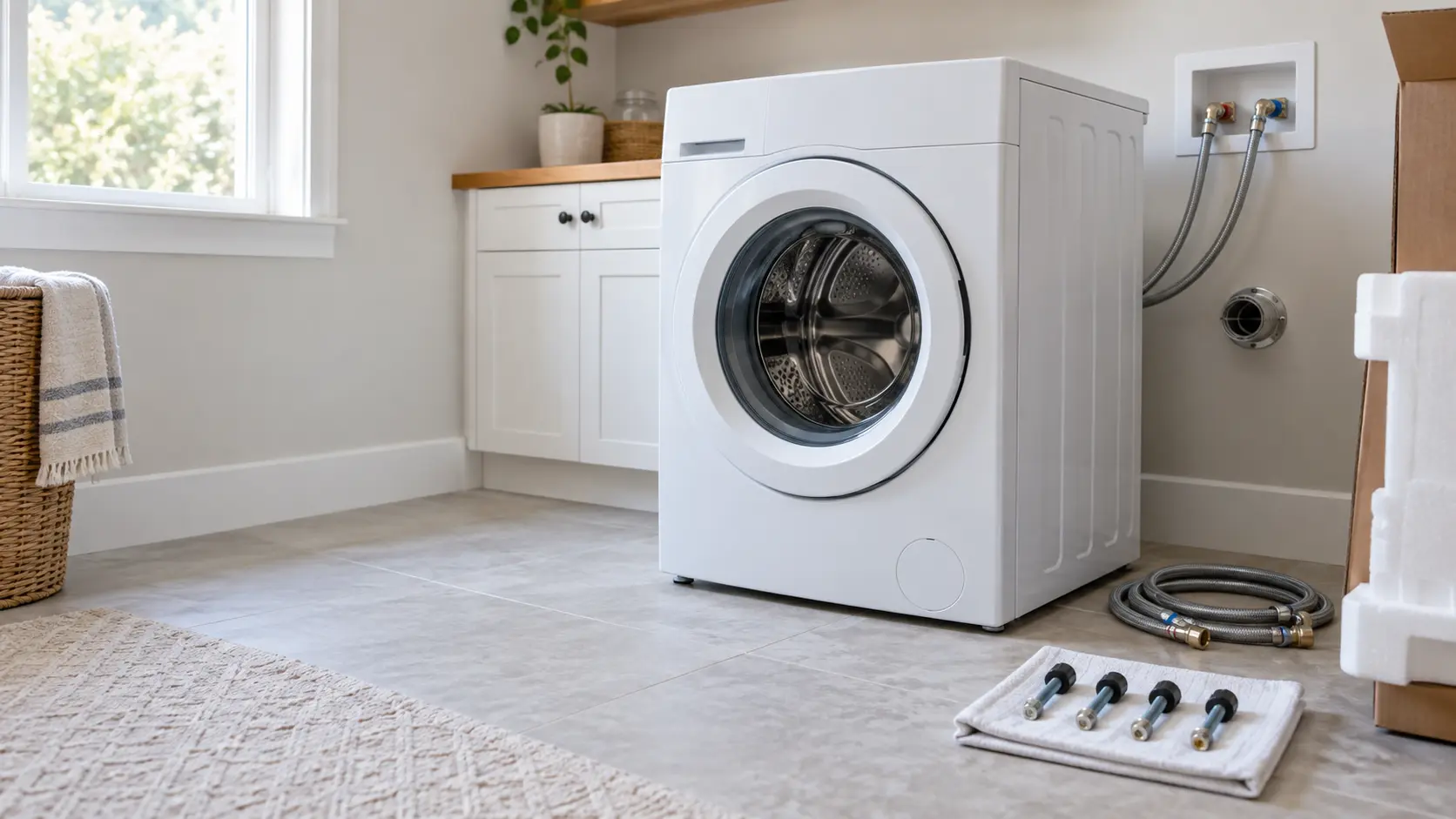
Chicagoland basement laundries often have a gas line waiting for the dryer, and a gas hookup there fits a new connector to the new machine and leak-checks it, while a pair moving up to a first-floor closet needs a licensed plumber to run the line before it is connected.
Los AngelesCA · 95 areas
In Los Angeles a new gas hookup cannot be tested if the earthquake valve at the meter has tripped, so the technician confirms gas is flowing first, then connects, leak-checks every joint and lights each burner in turn.
San DiegoCA · 31 areas
San Diego's backcountry homes often cook on propane, and a gas hookup there fits the maker's propane conversion before connection, so burners burn with a steady blue flame rather than the tall yellow flame of an unconverted unit.
San Francisco Bay AreaCA · 74 areas
Bay Area gas hookups increasingly run the other way, with an old unit disconnected and the line capped by a plumber for an induction swap, but where gas stays, the new connector is fitted and leak-checked at each joint before first light.

Questions about
the gas hookup and leak check.
Is it safe to reuse the connector that came off the old appliance?
What is the leak solution sprayed on the joints?
Who runs a new gas line if the kitchen does not have one?
Back to your everyday
Ready to book the gas hookup and leak check?
Have these to hand: the appliance and model being connected, and whether it is replacing another gas appliance in the same place, whether the house uses natural gas or propane from a tank, where the shutoff valve is, and whether it turns easily or has not been moved in years, anything you noticed about the old hookup: a smell, a kinked connector or a valve hidden behind the old unit.