
Laundry Exhaust Crushed, Loose or Blowing Into the Room
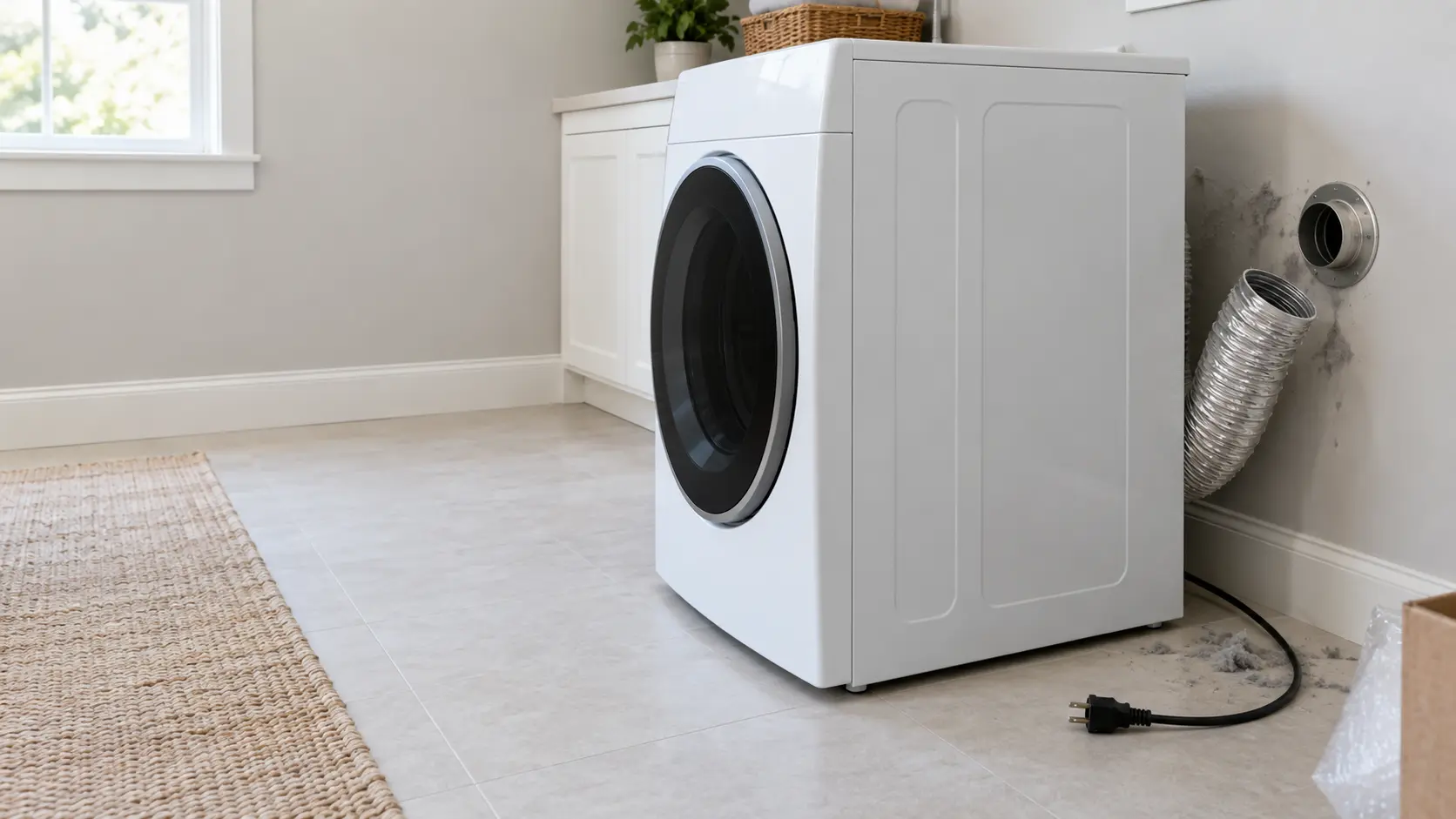
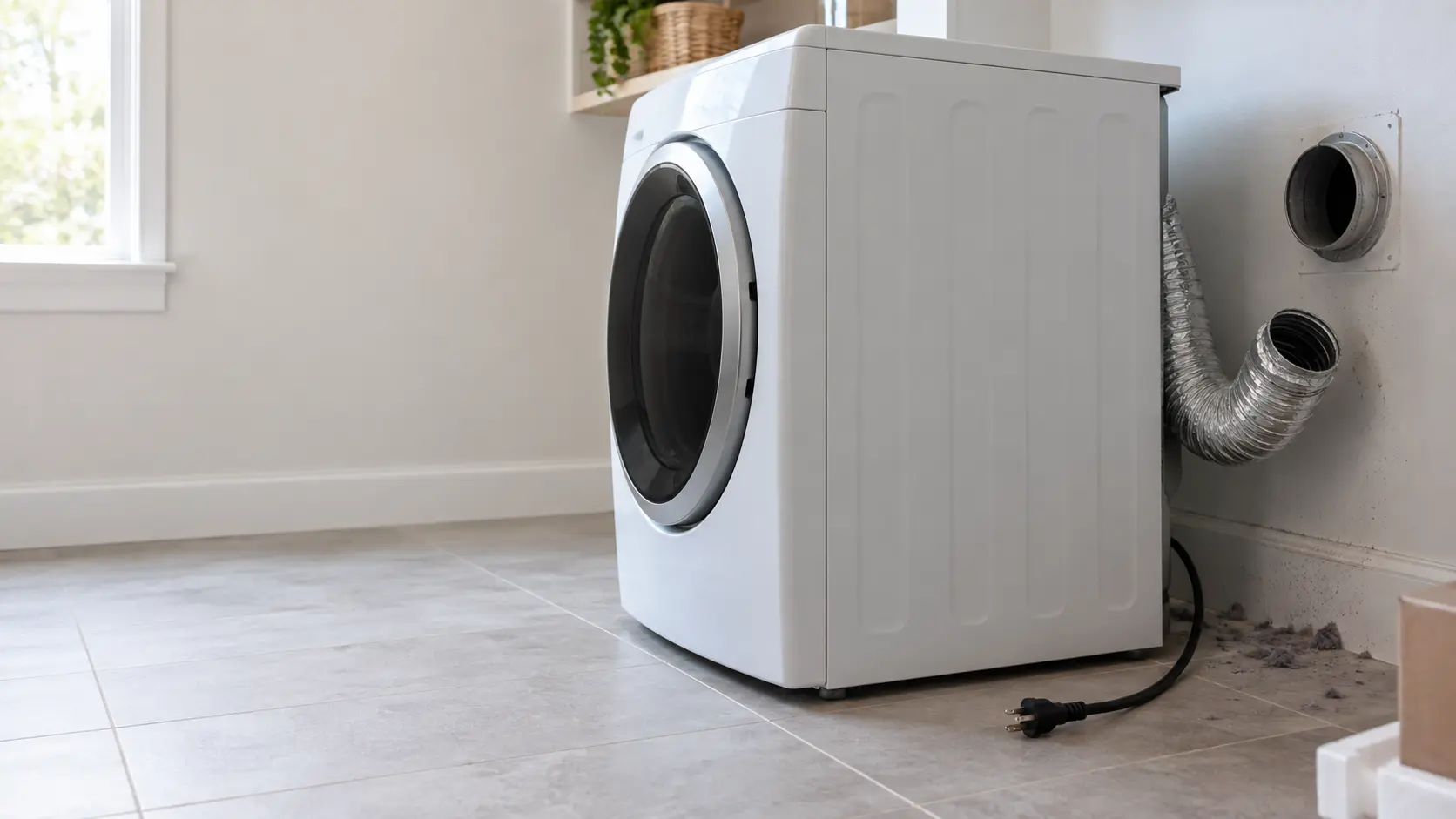
A laundry exhaust disconnected, crushed or venting into the room means a new vented dryer is blowing hot, damp, lint-heavy air behind the machine instead of outdoors.
Mon–Sat, 8am–8pm
- Hazard after a hookup
- 5 questions that narrow it
- 6 causes, cheapest first
Book a visit
Three short steps, about a minute.
or call (844) 638-8309
Loading appointment form…
The appointment form couldn’t load. Please try again.
Gas in the air? Get out. Water, smoke or a trip? Power off
End the load and pull the plug at once. Do not run it again until the exhaust is connected with metal duct to a run that ends outside the house. If you see smoke, leave the door closed on the load, get everyone out and call 911 from outside.
What it
usually means.
A vented dryer moves a large volume of hot, moist air, carrying fine lint, through its outlet and out of the house. On installation day that path is rebuilt in a tight space: the machine is connected to the wall collar with a short transition, then pushed back. If the transition slips off its collar, folds flat against the wall, or was never connected because the machine was set in place first, the air goes where it can. The signs show up in the first loads: a laundry room that turns humid, lint on the wall and the floor behind the machine, a smell of warm lint, a cabinet too hot to rest a hand on, loads that stay damp, and an airflow or vent warning on the display of many newer models. A gas dryer venting into the room also releases combustion products into it, which is its own danger. Lint gathering around a hot cabinet is a fire risk. Nothing about this can wait for the next load. The cycle is stopped, the machine unplugged, and it is not run again until a metal transition connects it to a run that ends outside, with every joint taped and airflow at the outside hood confirmed.
 The 6 causes, cheapest first
Answer these first
Is the laundry room noticeably warmer and more humid when the machine runs?
Is there lint on the wall, the floor or the back of the machine behind it?
Outside, does the exhaust hood flap open and push warm air during a cycle?
Is the transition behind the machine foil, plastic or metal, and is it still on its collars?
Does the display show an airflow, vent or exhaust message?
Check these
before you book.
Laundry exhaust disconnected: 5 checks, and none of them costs anything.
End the cycle, then pull the plug, or use the breaker when the plug is hidden behind the machine.
On a gas machine, close its gas shutoff valve too if it is within easy reach.
Remove any hot load and spread it out to cool, and let the machine cool with its door open.
Also worth checking
- Look behind the machine from the side, without dragging a gas unit away from its connector.
- Do not run the machine again until the exhaust is connected to a run that ends outside.
The causes,
cheapest first.
6 things laundry exhaust crushed, loose or blowing into the room turns out to be, from a transition slipped off the wall collar to an exhaust that ends indoors.
The cost guide-
01 low
A transition slipped off the wall collar
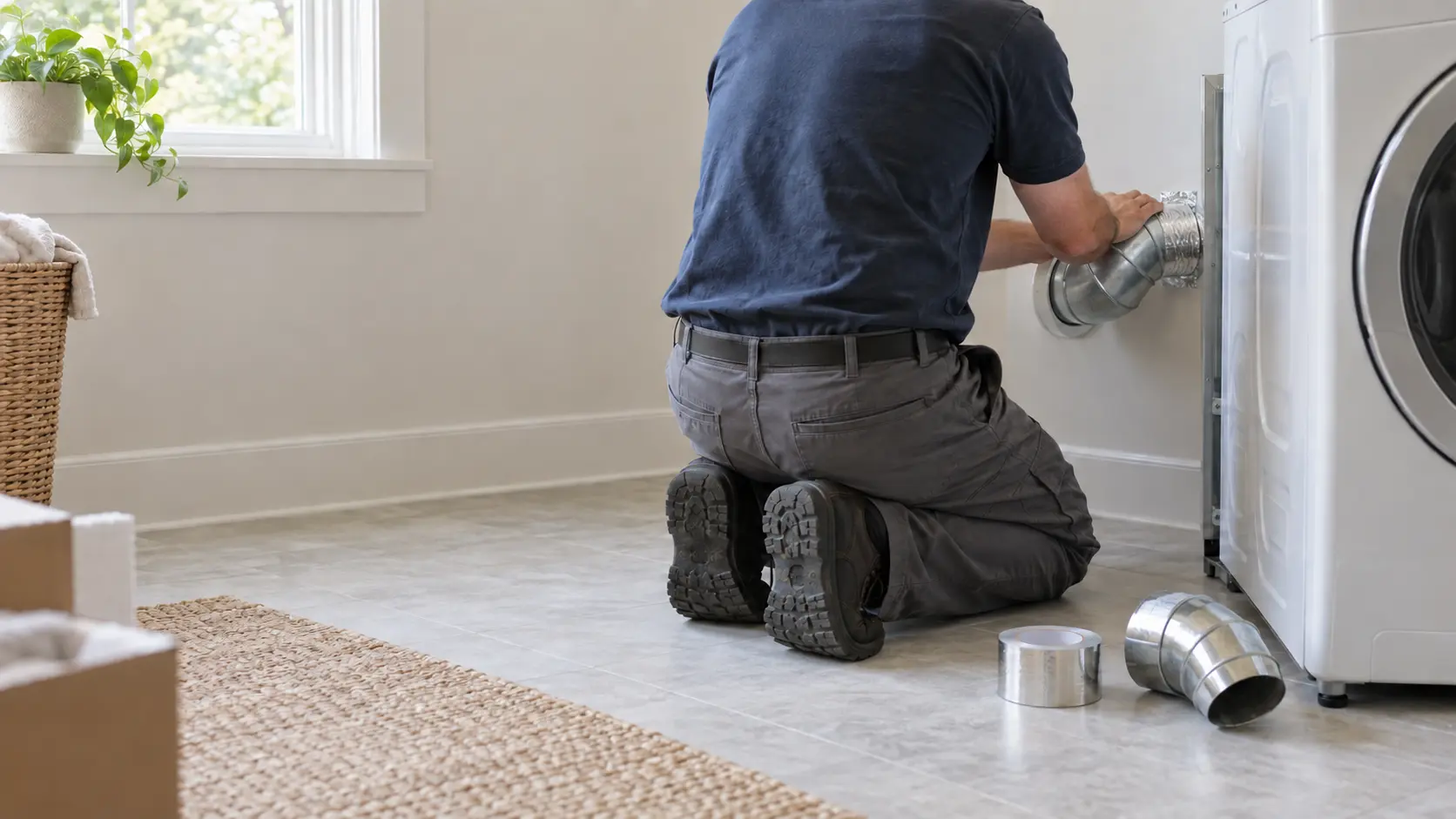
Pushing the machine back pulls a loose transition off the collar, and it blows into the gap behind. It is reconnected in the direction of airflow and taped, then the machine is set back while someone watches the joint.
-
02 low
A transition folded flat behind the machine
A long round transition in a shallow space crushes when the machine goes back. It is shortened, or replaced with a periscope transition that fits the gap without folding.
-
03 low
Foil or vinyl duct carried over from the old machine
The old flexible duct often goes back on the new machine because it was already there. It sags, tears and traps lint, and it is replaced with metal before the machine is used again.
-
04 low to moderate
A stacked pair connected after it was set
Behind a stack in a closet, the exhaust joint cannot be reached once the pair is in place, so it is easy to leave it loose. The stack is pulled out and the transition connected and taped first.
-
05 moderate
A wall run that is blocked, crushed or too long
The joint behind the machine may be fine while the run inside the wall is packed with old lint, crushed or longer than the new model allows. The run is cleaned or rebuilt where it can be reached.
-
06 moderate
An exhaust that ends indoors
Some older installations end the duct in an attic, a crawl space or a garage. A new run to a hood outside the house is needed before the new machine runs, planned on a site check.
What else
it could be.
Most often confused with burning smell on the first run: when it is normal and when to stop, then new unit vibrating or walking across the floor.
All problems


The makes
it happens on.
37 makes on this site; laundry exhaust crushed, loose or blowing into the room can show up on any of them. Each mark opens that make's own page.
All 37 brandsLaundry Exhaust Crushed, Loose or Blowing Into the Room,
where we come out.
9 metros, each with its own page.
All service areasTampa BayFL · 31 areas
Miami / South FloridaFL · 47 areas
New York MetroNY · 75 areas
HoustonTX · 36 areas
ChicagoIL · 50 areas
Los AngelesCA · 95 areas
San DiegoCA · 31 areas

Questions about
laundry exhaust crushed, loose or blowing into the room.
Can a laundry machine be run with the exhaust open into the room for just one load?
Is an indoor lint trap kit an acceptable way to vent a new machine?
How can I check the exhaust is working without moving the machine?
Why does the new machine show a vent warning when the old one never did?
Back to your everyday
Still seeing laundry exhaust crushed, loose or blowing into the room?
Book with what you checked above — 5 answers save the technician the first part of the visit.