

Cooking
Appliance Installation
Hooking up ranges, cooktops, wall ovens, microwaves and hoods: gas connectors leak-tested, anti-tip brackets fastened, ducts sized and the first light checked.
Mon–Sat, 8am–8pm
- 4 things that fail on it
- 30 makes build it
- 7 problems it shows
Book a visit
Three short steps, about a minute.
or call (844) 638-8309
Loading appointment form…
The appointment form couldn’t load. Please try again.
Is yours
a cooking appliance?
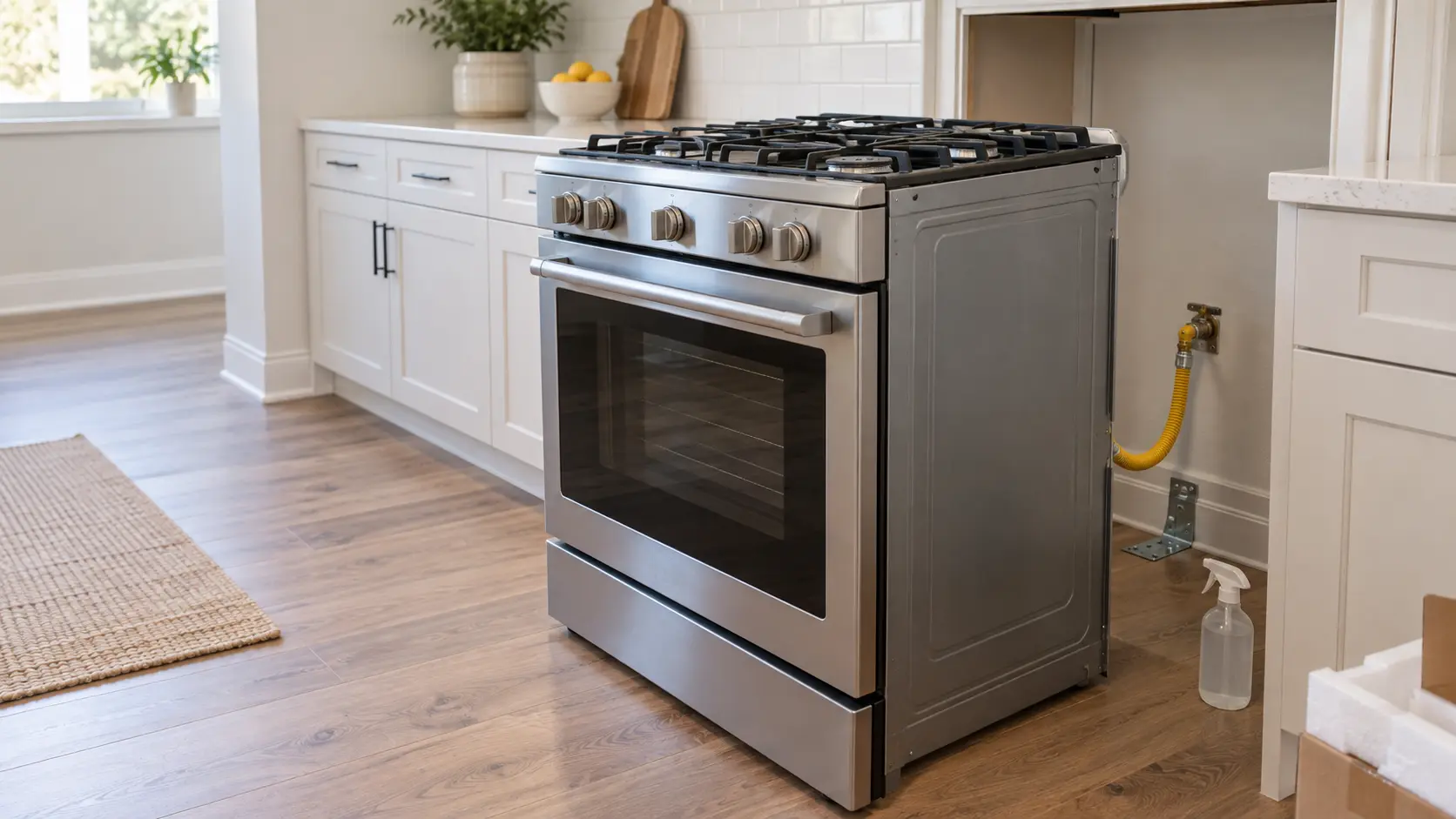
A cooking appliance installation is the group with the most connections that can go wrong, because heat comes from gas, from a heavy electric circuit, or from both at once. A gas range or cooktop is connected with a new flexible connector, never the old one, to a shutoff valve that is reachable once the unit is in place; every joint is tested with a leak solution before the burners are lit, and the flames are read for color and height. A model going onto propane gets the maker's conversion kit first, with its orifices and regulator setting, because natural gas parts on a propane supply burn tall and yellow. An electric range or wall oven needs the circuit and the receptacle or junction box its nameplate asks for; if the house does not have them, an electrician adds them before the appliance arrives. Freestanding and slide-in ranges get an anti-tip bracket screwed into the floor or the wall and a check that the rear foot actually sits in it. Wall ovens and over-the-range microwaves hang on cabinetry that has to carry their weight. A hood or downdraft is only as good as its duct: the right diameter, a short run, a damper that opens and, above a certain fan size, makeup air. The first run burns off factory oils, so a window stays open.
 What fails on a cooking appliance
How to tell
It cooks or it clears the air over cooking: a range, a cooktop or rangetop, a wall oven, a speed or steam oven, a microwave, a warming drawer or a hood.
Its power comes from a gas line, a heavy electric circuit or both, and its nameplate lists the fuel, the voltage and the amperage it expects.
A freestanding or slide-in model has an anti-tip bracket in the carton, and a gas model has a pressure regulator somewhere near its inlet.
A hood, a downdraft or an over-the-range microwave with a fan has a duct size and a maximum run printed in its installation instructions.
Not yours?Cold storageDish careLaundry
What fails
on this design.
On a cooking appliance: an old connector on a new appliance, the anti-tip bracket left in the box, fuel, orifices and regulator that do not match, ducts that are too small or too long.
The problems it showsAn old connector on a new appliance
A gas connector that has been bent, kinked or moved once already should not be moved again. Reusing it saves a small part and risks the one leak the whole installation is meant to rule out.
The anti-tip bracket left in the box
Open an oven door and the whole appliance becomes a seesaw. Without its bracket, a child standing on the door or a heavy roasting pan can tip the whole appliance forward, and this is the step most often skipped on a hurried delivery.
Fuel, orifices and regulator that do not match
A cooking appliance ships set for natural gas unless ordered otherwise. On propane it needs its conversion kit fitted, or the flames lift, burn yellow and leave soot on every pan.
Ducts that are too small or too long
A strong hood fan on a narrow duct, a run with several elbows or a damper stuck shut moves little air and makes a lot of noise. Adding a bigger fan without makeup air can also pull fumes from a water heater back into the house.
Getting at it,
and whether to.
Before the day, find the gas shutoff behind or beside the old appliance and the breaker for the cooking circuit, and tell us if either is missing.
What installations costOn the visit
- Tell us the fuel in your house, natural gas or propane, so the conversion kit can be fitted before the unit is set in place if it is needed.
- Clear the counter on both sides and the cabinet above a hood or an over-the-range microwave, since the installation reaches into both.
- Have the nameplate details of the new model, or the model number, so the connector, the cord or the duct parts come on the truck.
Repair or replace
A cooking appliance that no longer lights or heats is a repair question first, and our sister repair site for that appliance can tell you whether it is worth it. When replacement wins, match the new unit to what the kitchen already has: the same fuel, the same width, a cord or connector that reaches the existing outlet or valve. Switching from electric to gas, adding a pro-style range with a bigger burner load, or moving the appliance to a new wall brings a new gas line or a new circuit, and that belongs to a licensed plumber or electrician before the installation can happen.
Book a visit for a cooking applianceThe problems
it shows.
On a cooking appliance, most often gas smell after a hookup: leave the house, then call.
All problems
Gas Smell After a Hookup: Leave the House, Then Call
6 causes, cheapest first

Igniter Clicking After a Gas Hookup: Air in the Line or a Wet Cap
6 causes, cheapest first

Hood Not Drawing Smoke: Duct Size, Damper and Makeup Air
6 causes, cheapest first

Breaker Trips on the First Run: Leave It Off and Find Out Why
6 causes, cheapest first
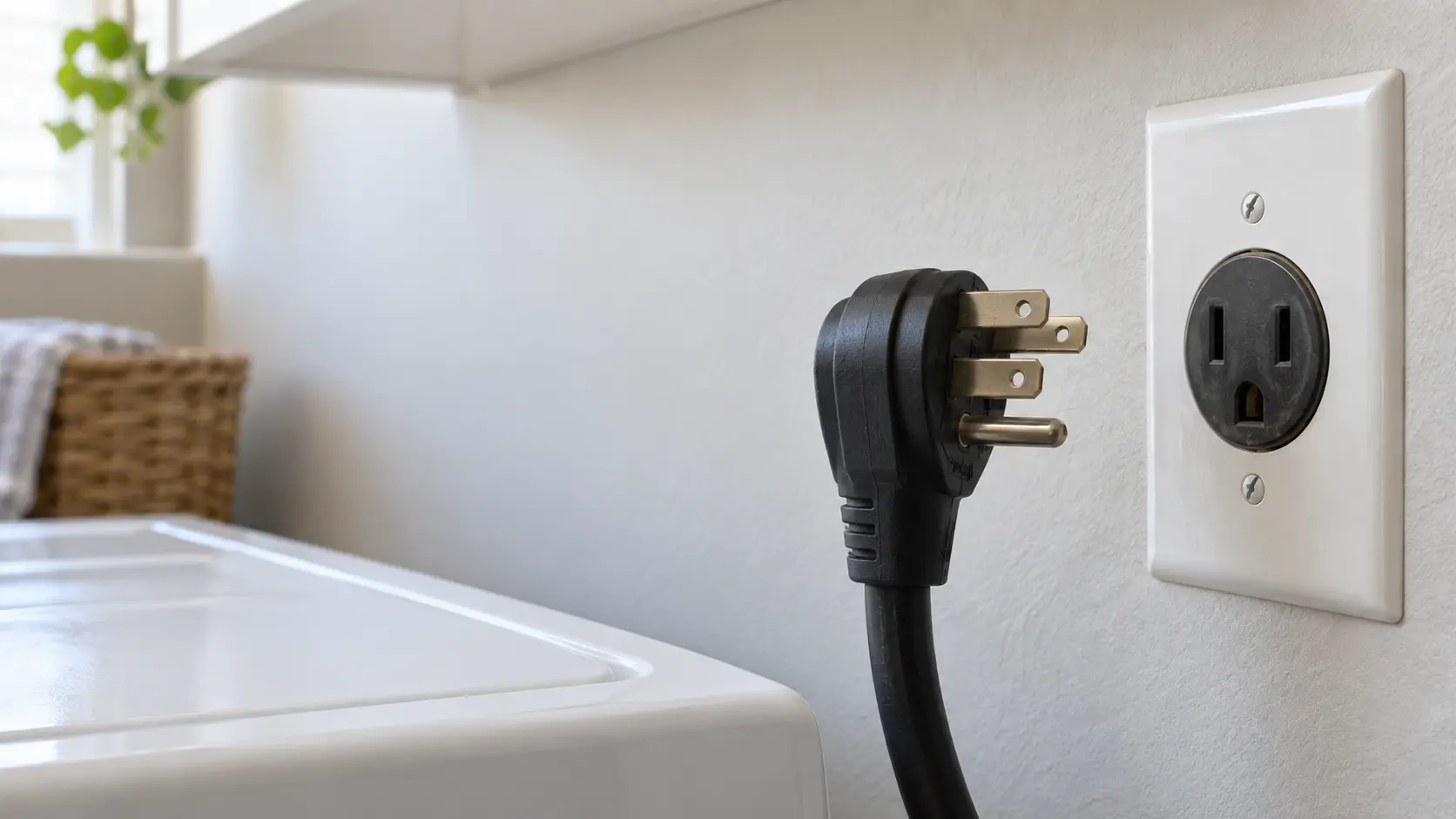
Plug Does Not Fit the Outlet: Cords, Receptacles and Circuits
6 causes, cheapest first

Burning Smell on the First Run: When It Is Normal and When to Stop
6 causes, cheapest first

Appliance Installation Code on a New Unit: Setup Modes and Hookup Messages
8 causes, cheapest first
Who builds
a cooking appliance.
30 of the makes on this site build a cooking appliance. Each mark opens that make's own page.
All 37 brandsCooking appliances installation,
where we come out.
9 metros, each with its own page.
All service areasTampa BayFL · 31 areas
Miami / South FloridaFL · 47 areas
New York MetroNY · 75 areas
HoustonTX · 36 areas
ChicagoIL · 50 areas
Los AngelesCA · 95 areas
San DiegoCA · 31 areas

Questions about
cooking appliances.
Why is a new gas connector used on every cooking appliance hookup?
What does a propane conversion kit change?
Does every hood installation need makeup air?
Back to your everyday
Is it a cooking appliance?
Say so when you book — it changes what the technician brings and how the visit is planned.