


appliance installation specialists
Measured twice,
fitted once,
run on day one.
A new appliance fitted to its opening, its hookups and the maker's instructions.
Connected, leveled and run once with you watching.
- Gas hookups with a leak check
- Water, drain and exhaust connections
- Built-in, panel-ready and stacked
What to expect
Experienced technicians
More than 12 years in appliance repair
Upfront pricing
The cost of the repair in writing, before any work begins
OEM parts on order
Original manufacturer parts ordered against your model number, never third-party substitutes
Warranty on our workmanship
Every repair is backed by a warranty on the work we performed
Your next step
to a working appliance.
A few details now.
A little less to worry about.
Say what is going in
The new appliance and its model, what it replaces, and whether it is freestanding, built-in or stacked.
Pick a day after delivery
Choose a date once the carton is in the house, or the delivery day itself if the store drops it at the door.
Tell us where it goes
The address, the adult who will be home, and a number we can reach that day.
The model number of the new appliance is the single most useful thing you can send us, because the maker's installation instructions for that exact model set the cutout, the clearances, the hookups and the parts the job needs. It is printed on the order confirmation, the delivery paperwork and a label on the carton; once the unit is unpacked it also sits on a rating plate inside a door, on a tub edge or on the back. Add the model of the old unit if one is coming out, and we arrive carrying the connector, hose, duct or bracket that model calls for.
or call (844) 638-8309
Loading appointment form…
The appointment form couldn’t load. Please try again.
Four steps,
and no surprises.
The three steps in the form are how you book. These four are what actually happens once a technician is standing in your home.
The opening and the hookups, checked first
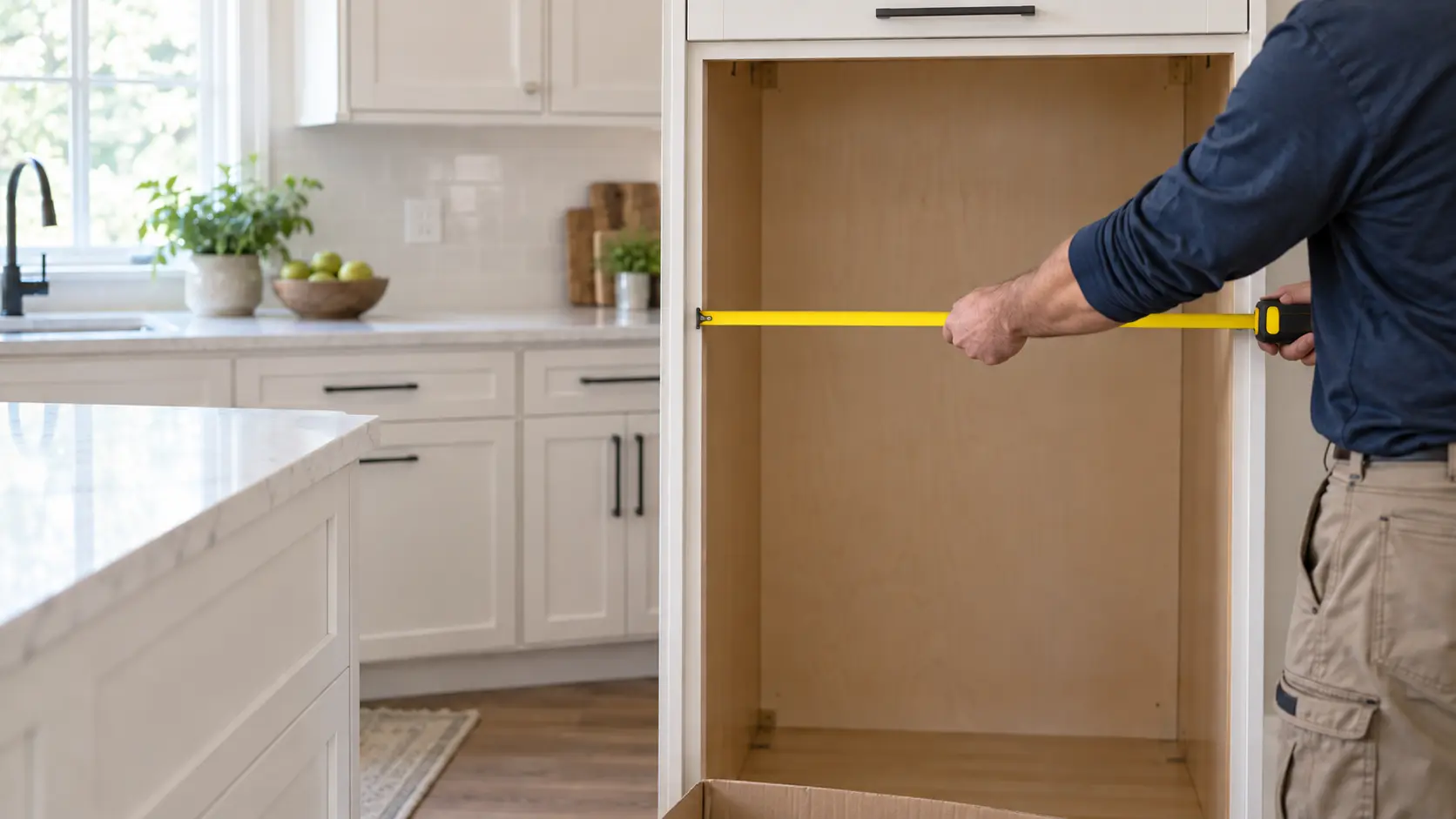
Before the carton is cut, the technician measures the opening against the maker's cutout drawing and looks at what is waiting behind it: the gas shutoff, the water valve, the drain, the outlet and the exhaust path. Anything that needs a new circuit, a new gas line or a plumber's rough-in is named then, before anything is fixed in place.
Connected the way the instructions say
The old unit disconnected and moved out, the new one unpacked and its shipping blocks removed, then the gas connector, supply line, drain hose, exhaust duct or power cord fitted with the parts the maker lists. Every gas joint gets a leak check and every water joint is watched under pressure.
Set in, leveled and secured
The appliance slides into place without crushing a hose or a duct, the feet are set until it sits level and the doors meet the cabinet line, and the anti-tip bracket, mounting clips, panel kit or stacking kit goes on as the instructions show.
A first run with you there
The appliance runs a first cycle or heats up while you watch, showroom and demo modes are switched off, and you are shown the shutoffs and the controls that matter. You keep the installation instructions, a note of what was connected and anything the house still needs, such as an outlet an electrician should replace.
Not every appliance
breaks the same way.
A new refrigerator, freezer, wine unit, beverage unit or ice maker counts as cold storage. Anything that heats food, gas or electric, from a range or a wall oven to a cooktop, a steam oven or a microwave, and the hood above it, is a cooking appliance. A dishwasher, and the disposer it drains through, is dish care. A washer and a dryer, together with the duct that carries the dryer's air outdoors, make up laundry. Which group is your new appliance joining?
All appliance types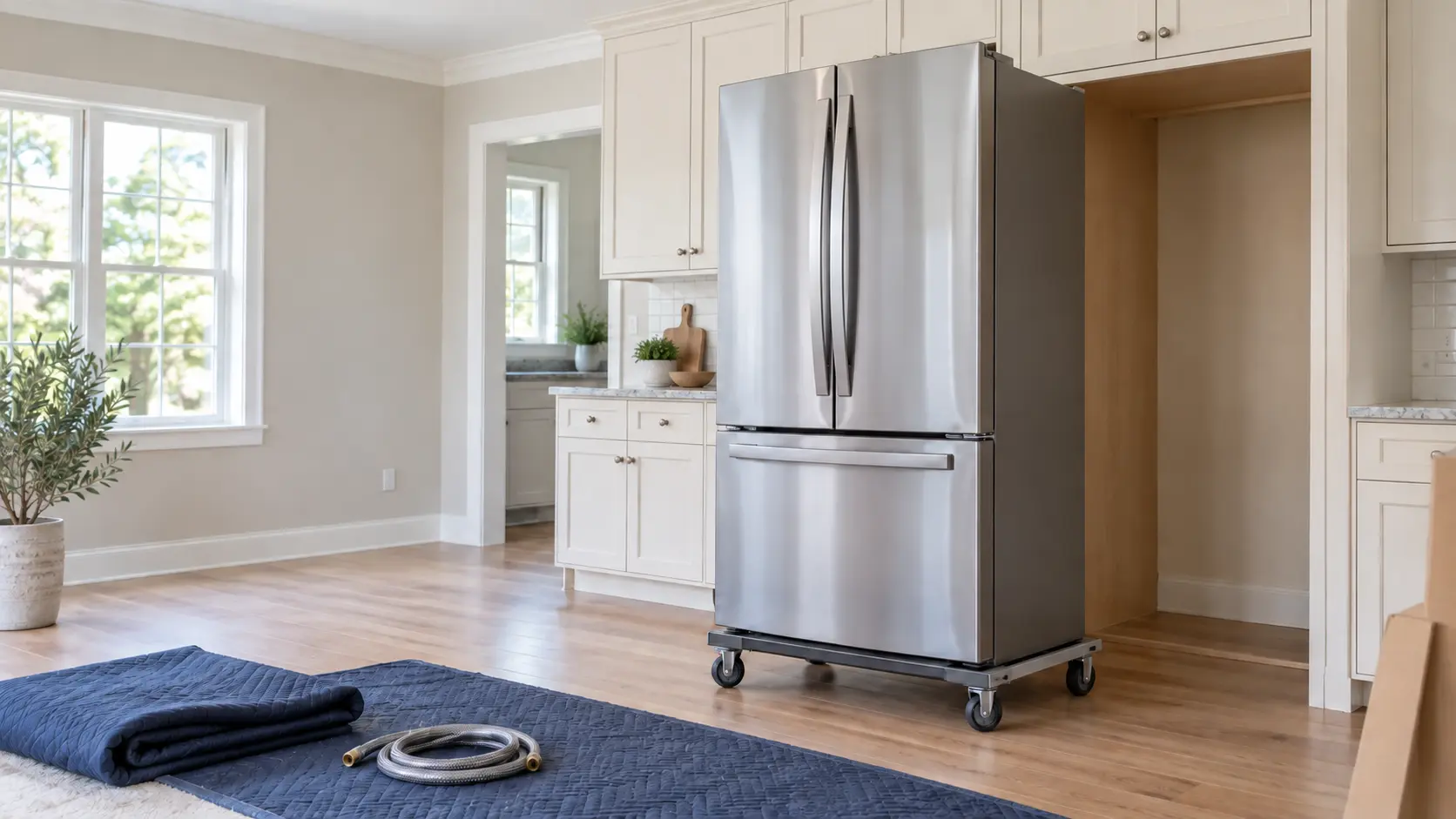
Cold storage
Setting a new refrigerator, freezer, wine or beverage unit or ice maker into its opening: measured, connected to water, leveled and started.
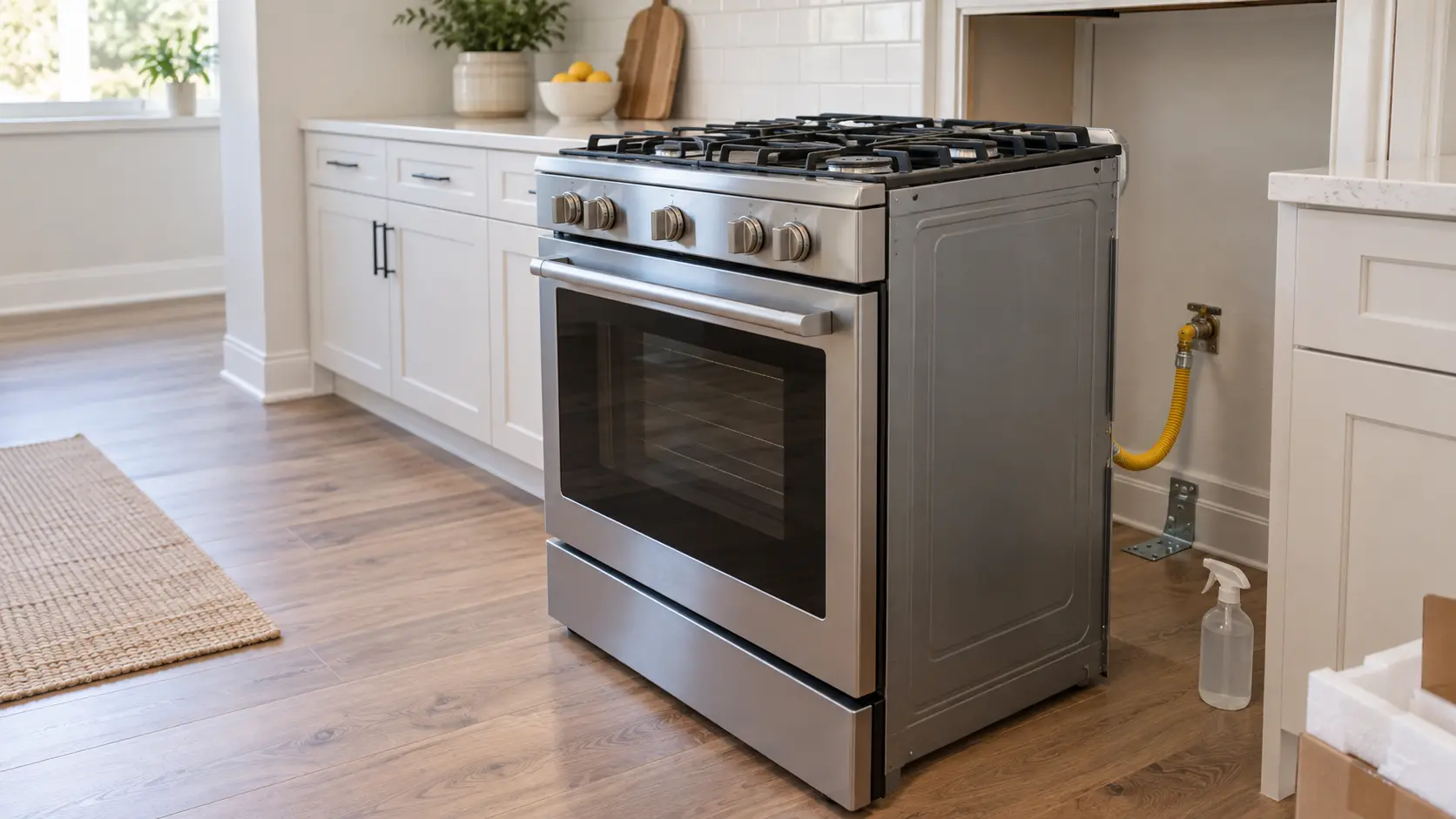
Cooking appliances
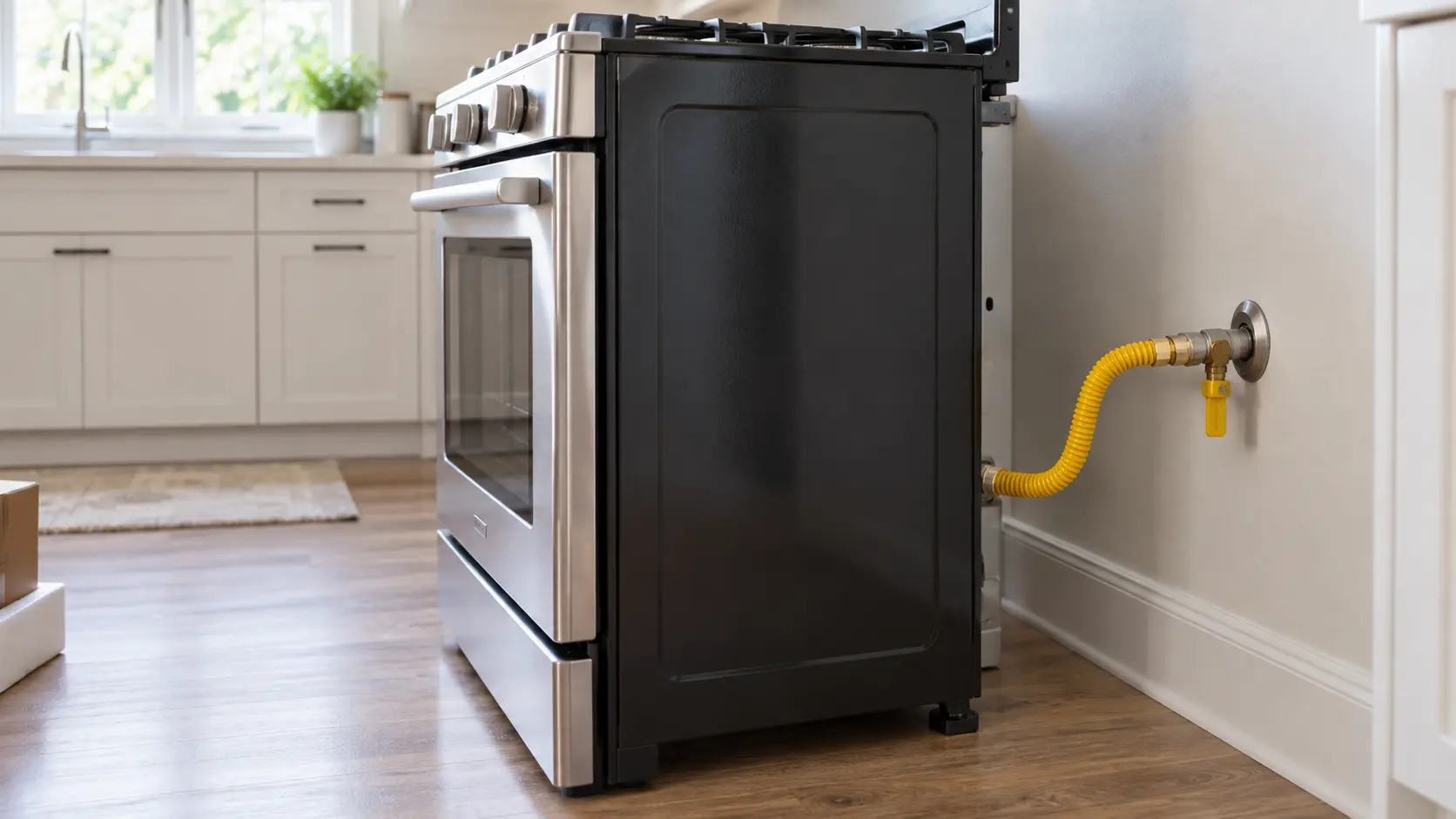
Hooking up ranges, cooktops, wall ovens, microwaves and hoods: gas connectors leak-tested, anti-tip brackets fastened, ducts sized and the first light checked.
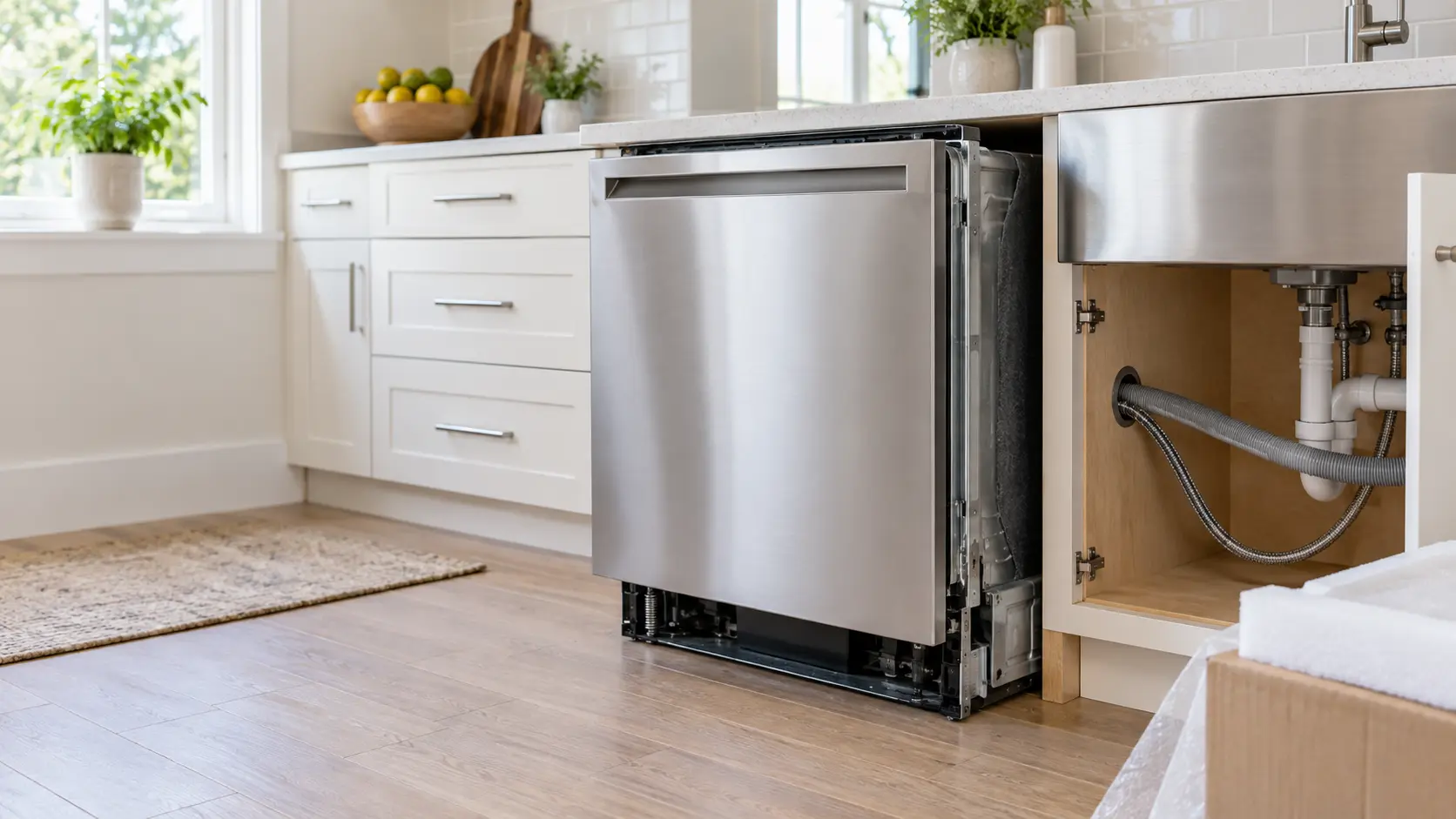
Dish care
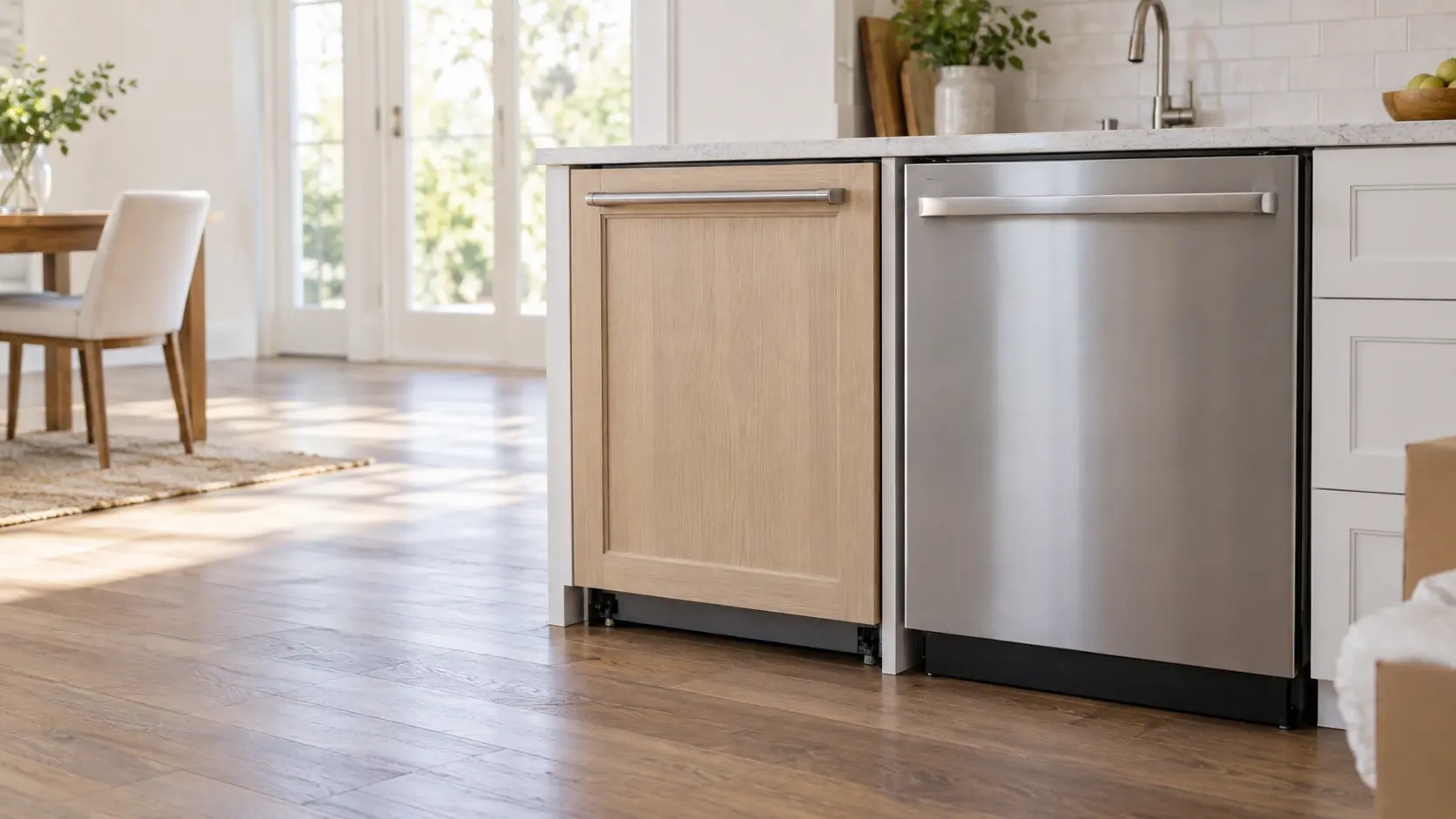
Fitting a new dishwasher or dish drawer under the counter: supply line, drain loop or air gap, power, mounting brackets and a first test cycle.
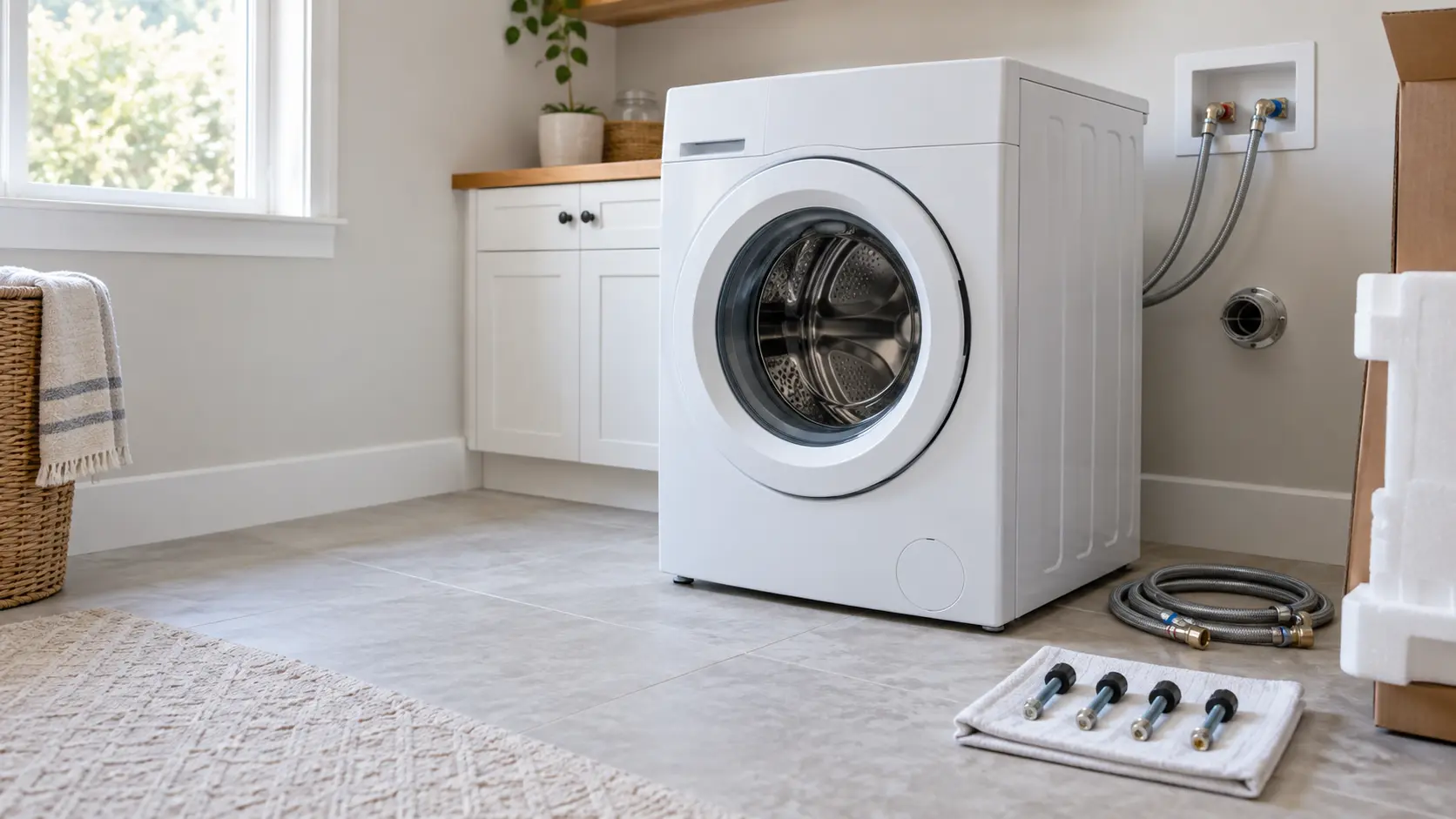
Laundry
Setting up a new washer, dryer or stacked pair: shipping bolts out, hoses on, drain and exhaust run connected, power checked and the machines leveled.
Every kind we serviceAll appliances, side by side
The archive puts the 4 types against each other: how to tell which you own, what fails on each, and which manufacturers build them.
How to tell yoursWhat fails on eachWho makes them Open the type archiveA door that sits proud.
A new pair that walks on spin.
Maybe the new unit arrived and the opening came up half an inch short, the plug on the cord does not match the outlet behind it, the dish care machine left water standing in the sink, the ice bin is still empty a day later, the igniter keeps ticking, the hood barely lifts the steam, or the new laundry pair drifts across the floor on its first spin. Pick the thing you noticed first; its page walks through which part of the install usually explains it, what you can check with the power off and the valves closed, and which installation step puts it right.
 All 17 problems
Gas Smell After a Hookup: Leave the House, Then Call
A gas smell after a hookup is the rotten-egg odor that turns up behind a newly connected cooking appliance or laundry machine, at the connector, the valve or the burners.
Water Leak After an Install: Close the Supply Valve First
A water leak after an install is water on the floor, a drip behind the kick plate or a wet cabinet in the first days after a new appliance was connected to water or a drain.
Burning Smell on the First Run: When It Is Normal and When to Stop
A burning smell on the first run is an oily, hot or electrical odor from a new appliance the first time it heats, spins or cools after its installation.
Breaker Trips on the First Run: Leave It Off and Find Out Why
When the breaker trips on the first run, power to a newly installed appliance is cut the moment it starts to heat, spin, cool or pump.
Laundry Exhaust Crushed, Loose or Blowing Into the Room
A laundry exhaust disconnected, crushed or venting into the room means a new vented dryer is blowing hot, damp, lint-heavy air behind the machine instead of outdoors.
New Appliance Not Level: Rocking Cabinets and Uneven Gaps
A new appliance not level rocks when pressed at a corner, sits out of line with the counter, or shows a gap that widens from one side to the other.
Familiar brands. Expert care.
For the brands
in your home.
Independent repair service. Not affiliated with, authorized or endorsed by any manufacturer. Brand names and model numbers are the property of their respective owners and are used here for identification only, to describe the appliances we service.
What an installation
usually costs.
Weigh an installation against what a poor one leads to, not against doing it yourself for nothing. A gas connector leak-tested at the joints, a supply line with a real stop valve and a drain with its high loop take an hour or two; a slow leak under a new floor, a range that tips or a dryer exhaust folded behind the wall can cost far more than the appliance did. The price of an installation is mostly set by what the house already has. When the gas valve, the water stop, the drain, the receptacle and the exhaust are where the new unit needs them, the job is short. When one of them is missing, the missing piece is often the work of a licensed plumber or electrician, and it is better to know that before the delivery date than on it. A site check before you order is the cheapest way to find out.
| Installation | Relative cost | Notes |
|---|---|---|
| New gas range, cooktop, wall oven or dryer connected with a new connector, conversion kit fitted if needed, every joint leak-tested and the first flame read | low to moderate | A like-for-like swap on natural gas, with a working valve right behind the unit, sits at the light end. A propane conversion, a pro-style range with many burners or a valve that has to be replaced at the stub moves it up. |
| New supply line and quarter-turn stop for a refrigerator, ice maker, dish care machine or laundry pair, flushed and tested under pressure | low | One braided line onto a valve that already works is a short job. Replacing a saddle valve, a long run to an island or two machines with hot and cold hoses each takes a little longer. |
| Drain hose routed through a high loop, an air gap or into a standpipe, disposer knockout removed, first drain checked | low | Reusing a sound drain connection with a new clamp is modest. Fitting a new countertop air gap, a drain pump for an ice maker or a standpipe adapter adds parts and time. |
| Metal exhaust transition and reachable wall run fitted from a new dryer to the outside hood, joints taped, airflow confirmed | moderate | A short run straight through the wall behind the machine is the lighter end. A long run with several elbows, a roof or soffit exit, a closet that needs a periscope transition or a booster fan is the fuller job. |
| Wall, island, insert or downdraft hood mounted and ducted outdoors at full size, damper and cap fitted, fan and lights tested | moderate to highest | Swapping a hood onto an existing duct of the right size is the lighter case. A new route through a wall or roof, an island hood hung from the ceiling or ducting enlarged to meet a bigger fan takes much longer. |
| Built-in column, integrated drawer, wall oven or panel-ready model set to its cutout, anchored, connected and its panels or trim aligned | highest | One built-in into a cutout made for it is the lighter end of the top step. A column pair, several drawers with panels, a heavy unit carried up stairs or a first fit after a kitchen remodel makes it the fullest job here. |
| Laundry pair stacked with the maker's kit or raised on pedestals, leveled, connected and run together | low to moderate | Pedestals under a pair on an open floor are modest. A stack in a tight closet, with the dryer's exhaust and fuel connected before it goes back, is the fuller visit. |
| Anti-tip bracket fastened and engaged, leveling legs set, doors squared on a range, cold storage unit, dish care machine or laundry machine | lowest | A bracket into a wood floor and four legs turned is the smallest job on this page. Tile over concrete, a heated floor that moves the bracket to the wall or several appliances in one trip add a little time. |
| Old appliance shut off, disconnected, capped and carried out, opening cleaned, disposal or recycling arranged | low | A plugged-in unit on the ground floor is quick. A hard-wired or gas unit, a heavy built-in, a basement or an upper floor, and cold storage that needs refrigerant recovery sit higher. |
9 metros,
one appliance.
Where a home stands changes what an install involves: high-rise deliveries booked around a freight elevator, split-levels with a turn on the stairs, older houses whose outlets and gas stubs predate today's appliances, crawlspaces and slabs that decide how a drain or an exhaust run is routed, and propane homes beyond the gas mains that need a conversion kit. A note sticks to the housing of its area and what that housing asks of a new install; sightseeing is left to others.
All service areasTampa BayFL · 31 areas
Across Tampa Bay, installing an appliance often begins with whether the house has gas at all, since many homes here are all-electric and some run on a propane tank. On slab houses the laundry pair usually stands by the garage or against an exterior wall, which keeps exhaust runs short, while houses raised after a storm add steps to the delivery path. Near the water, new outside caps and vents are fitted to stand up to hurricane winds, and many owners book their installation for the months before the storms arrive.
OrlandoFL · 30 areas
Across Greater Orlando, installing an appliance often means upgrading a builder's unit in a newer subdivision or furnishing a vacation rental between guests. Natural gas reaches some neighborhoods and not others, so the fuel is confirmed before a cooking unit is bought, and upstairs laundries mean the pair is carried up and set over a drain pan. For rental homes, installation is booked through a property manager, with the old unit removed and the new one tested in a single visit.
Miami / South FloridaFL · 47 areas
Across South Florida, installing an appliance is shaped by towers and block walls. Condo associations set rules on freight elevators, laundry machines and the paperwork needed before a delivery, and many units cannot vent a laundry or a hood outside, so ventless models are chosen from the start. Houses built of concrete block make a new wall opening harder to cut, and in the hurricane zone any new outside cap must meet the local code for wind, so an installation here usually works with the openings a house already has.
New York MetroNY · 75 areas
Across the New York metro, getting an appliance installed is often a matter of stairs and building rules. Walk-ups mean counting flights and measuring the tightest landing, while elevator buildings mean booking the freight car and filing paperwork with the managing agent. Many co-ops and condos require approval before a laundry pair or a vented machine is installed, and gas work in a multifamily building follows the building's own schedule, so the managing agent's calendar sets the installation date as often as the owner does.
HoustonTX · 36 areas
Across Greater Houston, installing an appliance often meets a garage laundry, a slab floor and a house raised after a flood. Many kitchens cook on gas, so a gas hookup is common, and where a larger unit needs a bigger line, a licensed plumber adds it before installation day. After a flood, homeowners often replace several appliances at once, and an installation then waits until the house is dry, the outlets checked by an electrician and the water and drain lines confirmed sound.
ChicagoIL · 50 areas
Across Chicagoland, installing an appliance often means basement stairs and old walls. Many laundries sit below grade, so a new pair is carried down a narrow stair and vented through the rim joist, and older houses may have a gas stub set for an appliance decades old. In the city itself wiring runs in metal conduit by local rule, so a new circuit for an induction cooktop or a new laundry is an electrician's job before installation day, and winter deliveries add salt and snow to the path that has to be protected.
Los AngelesCA · 95 areas
Across Greater Los Angeles, getting a new appliance installed has two local habits. Earthquake country means tall units and cooking appliances are anchored and a gas hookup checks that the earthquake shutoff at the meter is open before the leak test, and hillside lots mean the delivery path is walked before the unit is ordered. Where a kitchen or laundry switches to all-electric, the new 240-volt circuit for an induction unit or heat-pump pair is a licensed electrician's work before installation day.
San DiegoCA · 31 areas
Across San Diego County, installing an appliance is shaped by hillsides, backyard cottages and fire rebuilds. Houses on canyon lots often have steep paths and outside stairs, so the delivery route is walked first, and garage conversions and cottages bring compact units that must fit the space they were planned for. Backcountry homes often run on propane, so cooking units are converted before connection, and houses rebuilt after wildfires receive whole sets of appliances installed against new plans.
San Francisco Bay AreaCA · 74 areas
Across the Bay Area, installing an appliance often starts with a choice between gas and electric, since many cities here steer new construction toward all-electric kitchens and laundries. An induction cooktop or heat-pump laundry pair may need a 240-volt circuit that a licensed electrician adds before the installation day, and an old gas line is capped by a plumber, not left open behind the new unit. Older flats bring steep stairs and narrow halls to the delivery path, and because the region shakes, tall units are anchored to the floor or wall as their makers allow.

Answers before
you book.
The store offers to install it. Why book a separate installation?
Which appliances do you install?
How long does an appliance installation take?
What decides the price of an installation?
Do you run new gas lines or add circuits?
I smell gas right after the hookup. What do I do?
Work out what
you are dealing with.
Split by what you are trying to find out rather than by what part of the appliance it concerns.
All 27 guides
When a new install goes wrong


Gas, power and water at the install
Trying to budget for the install as well as the appliance? The cost has a page of its own, since it turns on the opening, the fuel and the hookups already in place — appliance installation cost.
Back to your everyday
Let’s get your appliance working again.
Three short steps, a window that suits you, and a price for the actual installation before any work starts.