

What should you do the day before delivery?
Walk the route from the front door to the opening with the delivery in mind, because the crew will not have time to solve it for you. Doing this the day before leaves a window to fix whatever you find.
Clear and protect the path
Move furniture, rugs, shoes and wall hangings out of the route, and remove anything breakable from beside every doorway. Measure the narrowest doorway with the door open and trim in place, and compare it with the carton's width on the spec sheet. The delivery path guide goes through doors, stairs and floors in more detail.
Confirm the details with the seller
- The delivery window and a phone contact for the crew, kept on your own phone.
- Whether the crew unpacks, sets in place, connects, or only drops at the curb.
- Whether the old unit is hauled away, and whether that is included.
- Which accessories are sold separately: a power cord, a water line, a gas connector, a vent kit or a stacking kit.
Missing accessories are a common reason a delivery is set in place but not connected, so check the list against the spec sheet rather than assuming.
Which shutoffs should you find and test?
Find every valve and switch the new unit will depend on and make sure each one works before the crew arrives. A valve that has not moved for years can seize or weep when it is turned.
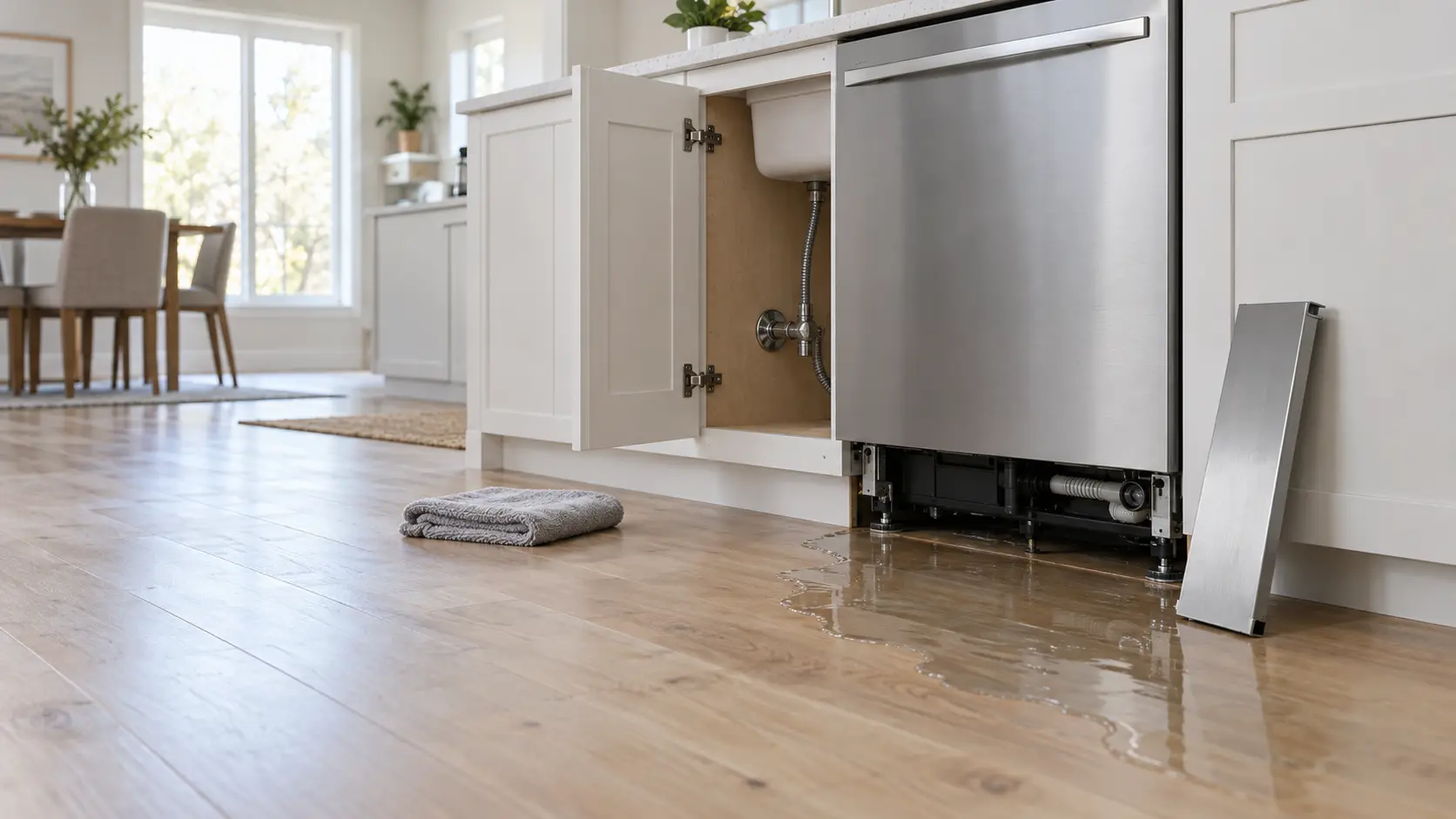
- Water: the small shutoff under the sink or behind the wall box. Close it gently and reopen it, without forcing it, and look for drips.
- Gas: the shutoff on the supply pipe near the old unit. Note where it is; do not force it.
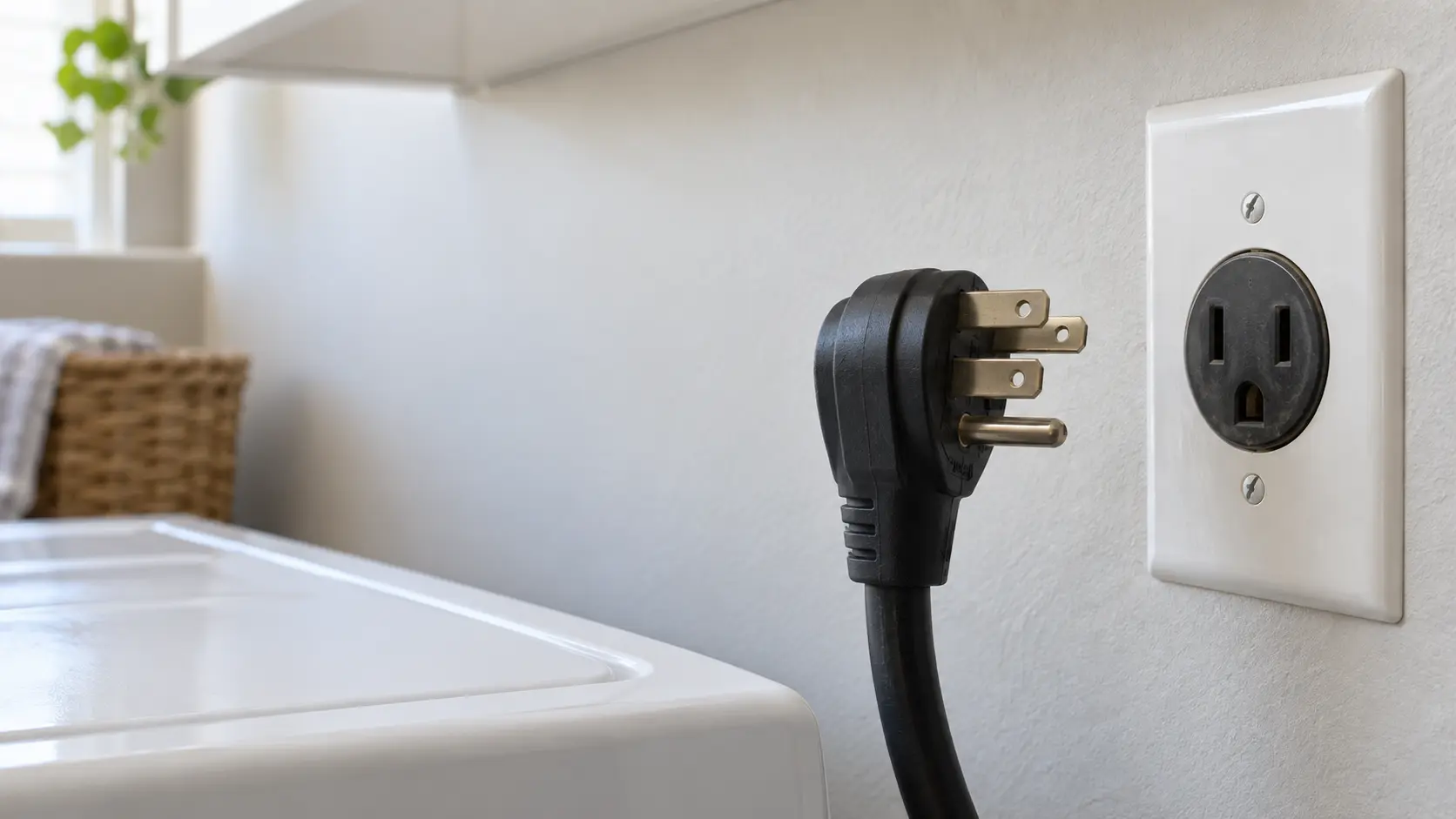
- Power: the breaker for the circuit, labeled, and the outlet itself. Check that the new plug will fit it, since a mismatch is a common surprise; the plug that will not fit the outlet is worth reading beforehand.
- Main water shutoff: know where it is in case a connection fails.
What you should not do yourself
Leave gas connections to a qualified installer or the gas utility, and leave a change to the wiring, or a new outlet, to an electrician. Turning a gas valve to test it is not harmless if the connector behind it is old. For water, replacing a corroded shutoff is a plumber's job, not a delivery-day experiment.

How do you prepare the old unit?
Empty it, clean it, and have it ready to be moved, or the crew will leave it in place. An old unit that is still full, connected and wedged in its opening is a very common reason for a failed install.
Emptying and cleaning
Remove food, clothes, dishes and loose racks, and let anything with water or ice drain and defrost the day before. Wipe it out so that nothing leaks across the new floor protection. Water left in hoses can run out when they are disconnected.
Disconnecting
If the old unit has a plug and a hose, you can unplug it and close the water shutoff. Anything gas-connected, hardwired, or on a rigid vent needs a proper disconnect and removal visit, which also caps the line safely. With a second person, pull the old unit forward only far enough to reach the back, without stretching the hoses or cord, and put cardboard under it so the floor is not scratched.
What should you have in hand on the day?
Have the paperwork, the spec sheet, and a short list of questions at the door, and keep pets and children out of the route. Put the keys, the phone contact and the delivery number where you can reach them.
| Item | Why you need it |
|---|---|
| Order number and spec sheet | Confirms the model and the cutout dimensions |
| Flashlight and tape measure | Checks the opening and any damage |
| Phone | Photographs of the carton and the unit |
| Floor protection and a bucket | Catches drips when hoses come off |
| Towels | Wipes up drips while the crew checks a fitting |
Plan for the hour after the truck leaves as well. Keep the evening free so that you can run the unit once, listen for noises and look under it for moisture, instead of discovering a problem at midnight with nobody to call. Photograph the connections as they were left, because those pictures settle any later question about who did what.
Stay present while the crew works. Ask them to set the unit in the room, not the opening, until you have inspected it; what to check on a new appliance at the door lists the inspection.
What should you ask before the crew leaves?
Ask for a plain statement of what has been connected and what has not, and test what you can while they are still there. A crew that is leaving does not volunteer what it skipped.
- Is the unit level and, where it applies, anchored?
- Was anything left unconnected, such as a vent, a drain or a gas line?
- Are there transit bolts, tape or foam to remove?
- What is the return window if there is a problem?
- Who do I call if something leaks tonight?
Check before they go
Turn on the water or the power and look at the connections with a flashlight for two minutes. A drip at a fitting is easy to have fixed while the crew is present and much harder to claim afterward. If the unit rocks on the floor or the crew skipped the anchor, a leveling and anti-tip visit can finish what was rushed. A pre-installation site check before the booking is the simplest way to avoid most of this list.