
Walk the route before delivery day
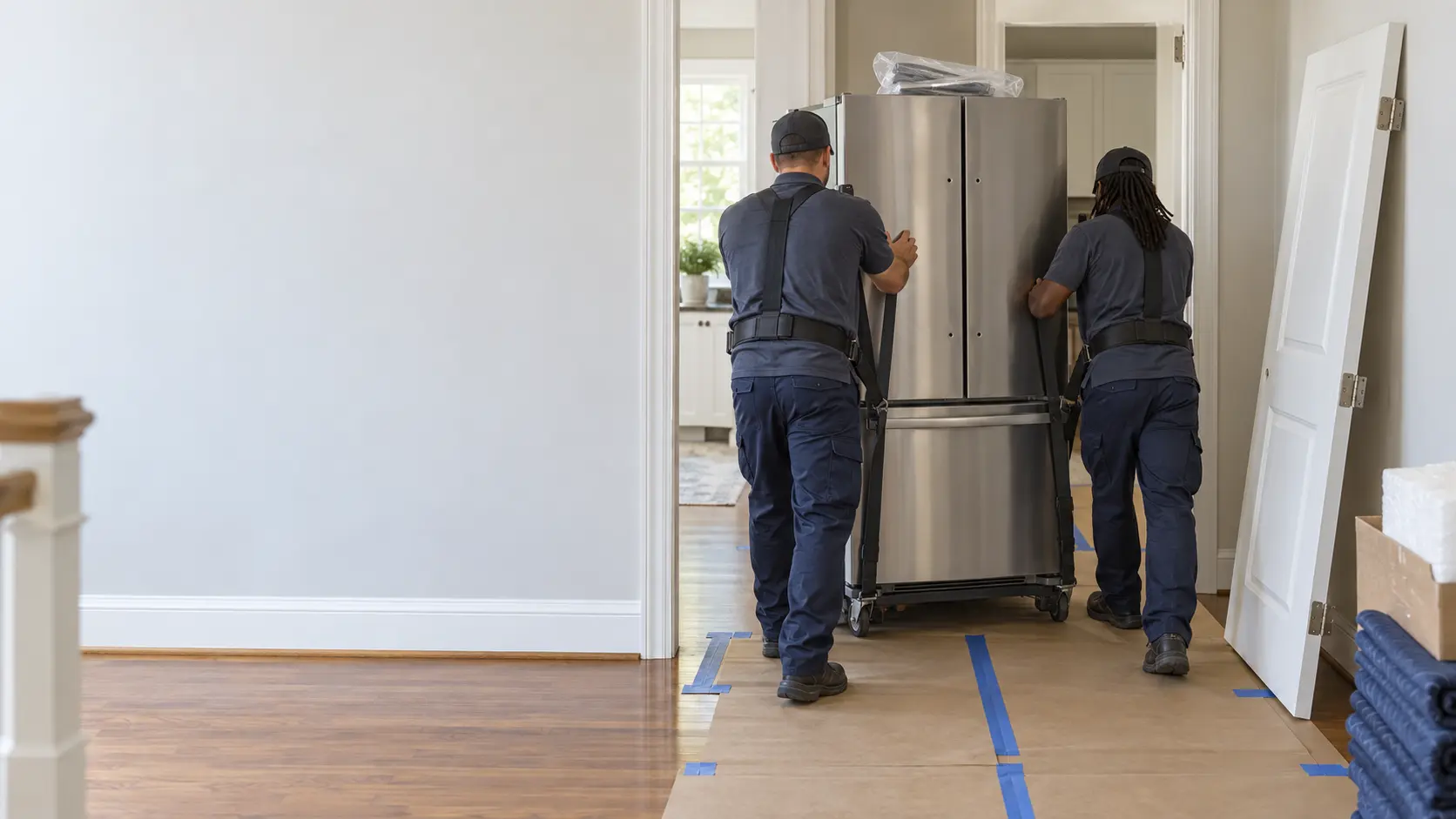
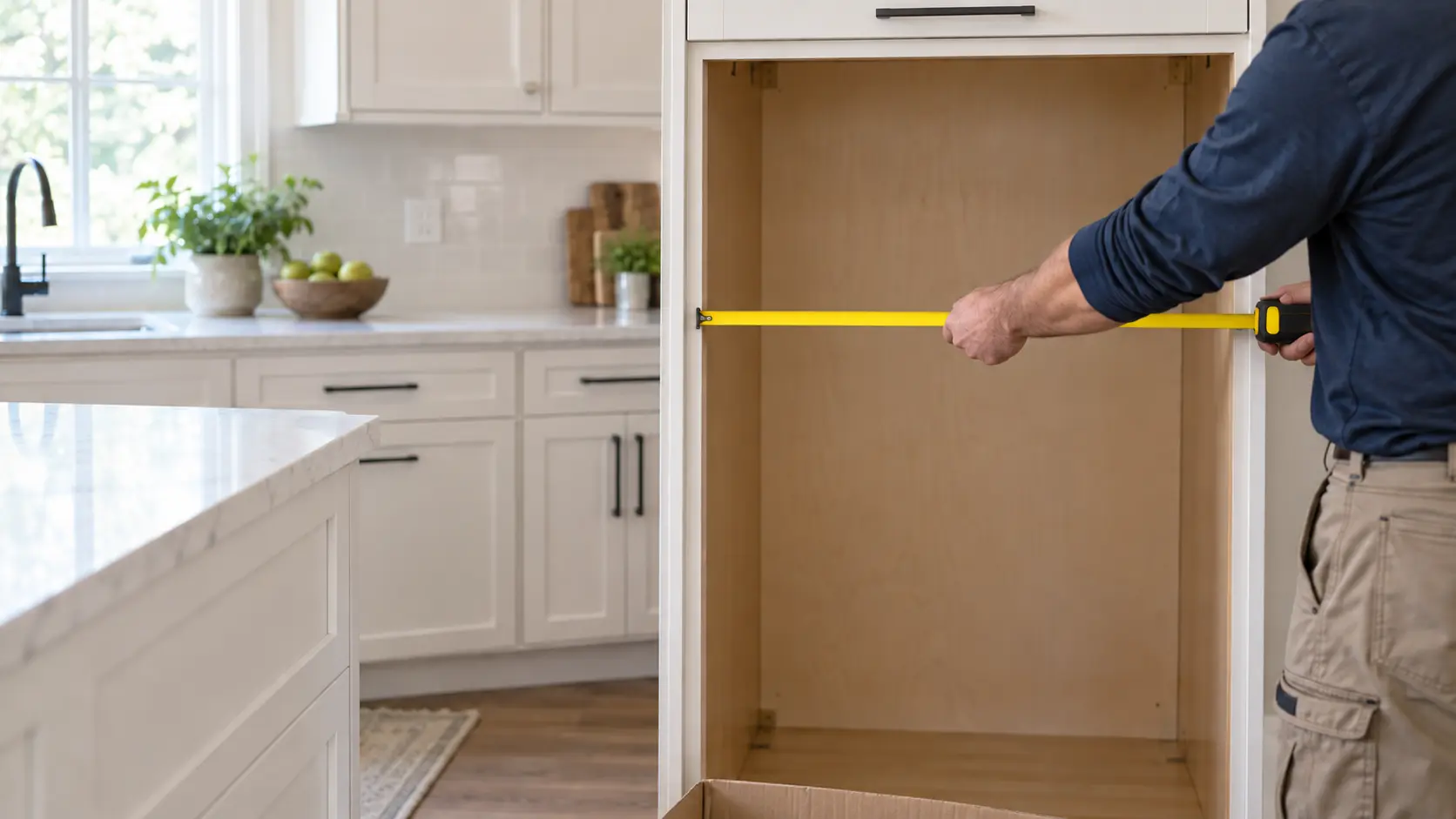
Start at the curb and walk to the opening the way the crew will, noting every point where the appliance has to pass: the front steps, the entry door, hallway turns, interior doors, stairs and the last few feet into the kitchen or laundry. For each one, the question is whether the appliance's smallest side, usually its depth without doors and handles, fits through with the crew's hands and a dolly beside it. Mapping the appliance delivery path is a quarter of an hour with a tape measure and a notepad.
Whirlpool's advice for moving a drying machine applies to any appliance: measure doorways and hallways first, and if the unit is too wide, take off the door or remove the obstruction. Many cold storage doors and handles come off by design, and the installation manual shows how, which can turn a tight doorway into an easy one.
- Narrowest doorway, measured between the door stops with the door fully open
- Hallway turns, measured as a diagonal as well as a width
- Stair width, headroom at the landing and the direction of the turn
- Railings, light fixtures and trim that can be removed for the day
- The last few feet: an island, a peninsula or a closet door that swings in
Measuring a doorway the way movers do
The clear width of a doorway is smaller than the frame. The door itself, standing open, and the stop molding on the frame each take an inch or more. Measure between the stop on one side and the face of the open door on the other; if the appliance is within an inch of that figure, plan to take the door off its hinges before the truck arrives.
Source: Whirlpool — How to move a direct wired dryer — Measure doorways and hallways before moving; if too wide, remove the door or obstructions; use a dolly or appliance mover; True Residential — 42/48 built-in installation manual — 720 and 820 lb; lift only from the sides with moving equipment; tip hazard while uncrating; shipping brackets for moves; floor rated for 150 lb per sq ft; door removal section; tape the water line to the floor; inspect packaging and unit; 30-day cosmetic warranty
Weight: what the floor, the stairs and the crew must carry
Built-in columns are in a class of their own. True's 42- and 48-inch built-ins weigh 720 and 820 pounds, arrive on a skid, and must be lifted only from the sides with appliance moving equipment, never from the front or back and never by the handles, doors or hinges. True warns that they can tip while being uncrated and moved, must not travel without their shipping brackets, and need a floor rated for at least 150 pounds per square foot where they finally stand.
Ordinary appliances carry more than their empty weight once they run. Whirlpool gives 315 pounds for one of its washing machines with water and a load, and asks for a floor that can support it, is level within 1 inch and is not carpet or foam-backed. An upstairs laundry room or an older floor structure deserves a look from underneath before a heavy pair arrives.
Which way up it travels
Each maker says how its appliance may be laid down during handling. GE has its built-in dish care machines laid on their back to remove the shipping base, never on their side, and True walks its built-ins off the back of the skid and guides them upright. If the crew plans to carry anything differently to get it around a turn, check the installation instructions first.
Source: True Residential — 42/48 built-in installation manual — 720 and 820 lb; lift only from the sides with moving equipment; tip hazard while uncrating; shipping brackets for moves; floor rated for 150 lb per sq ft; door removal section; tape the water line to the floor; inspect packaging and unit; 30-day cosmetic warranty; Whirlpool — Electrical supply needed for a washer — Floor must support 315 lb with water and load; maximum slope 1 inch; carpet or foam-backed surfaces not recommended; GE Appliances — Installation instructions, built-in dishwasher — Lay it on its back, not its side; do not kick off the wood base; tips over when the door is opened without the base; report a damaged unit to the dealer or builder immediately

Protecting finished floors on the way in
Rolling a heavy appliance across new hardwood, vinyl or tile concentrates its weight on small wheels and dolly edges. Hardboard or plywood sheets laid along the path spread that load and give the dolly a smooth surface, and they are worth having ready even if the crew brings its own. Ask for them to be taped at the seams so an edge cannot catch.
The floor under the final position has its own requirements. Whirlpool asks for a floor covering installer to confirm the flooring under its freestanding cooking appliances can withstand at least 200°F. GE warns against kicking the wooden shipping base off a dish care machine, which damages it, and notes that the machine will tip forward if its door is opened once that base is removed and before it is secured.
- Sheets of hardboard along the route, seams taped
- Door jambs and stair nosings wrapped where the dolly will pass
- A clear, swept spot in front of the opening for unpacking
- Water line taped to the floor in its marked area before a built-in rolls in, as True directs
Source: True Residential — 42/48 built-in installation manual — 720 and 820 lb; lift only from the sides with moving equipment; tip hazard while uncrating; shipping brackets for moves; floor rated for 150 lb per sq ft; door removal section; tape the water line to the floor; inspect packaging and unit; 30-day cosmetic warranty; GE Appliances — Installation instructions, built-in dishwasher — Lay it on its back, not its side; do not kick off the wood base; tips over when the door is opened without the base; report a damaged unit to the dealer or builder immediately; Whirlpool — Installation instructions, 30-inch freestanding gas ranges (W10658550) — Floor covering under the range must withstand at least 200°F
Inspecting the delivery before the crew leaves
True asks installers to inspect the outer packaging for damage before opening it, to follow its procedure for accepting deliveries, and then to inspect the appliance itself once the packaging is off. Its stainless doors, handles and shelves carry only a 30-day warranty for cosmetic defects, so dents and scratches need to be noted on the paperwork and photographed that day. GE's instructions say that a damaged unit should be reported to the dealer or builder immediately.
Open every door and drawer, look along each side panel in raking light, and check the back for crushed tubing or a bent cord. Refusing or noting damage is far easier while the truck is outside than once the unit is built in.
Source: True Residential — 42/48 built-in installation manual — 720 and 820 lb; lift only from the sides with moving equipment; tip hazard while uncrating; shipping brackets for moves; floor rated for 150 lb per sq ft; door removal section; tape the water line to the floor; inspect packaging and unit; 30-day cosmetic warranty; GE Appliances — Installation instructions, built-in dishwasher — Lay it on its back, not its side; do not kick off the wood base; tips over when the door is opened without the base; report a damaged unit to the dealer or builder immediately
The old appliance on its way out
Household refrigerators and freezers usually leave a home with their refrigerant still inside. EPA's rules make the last person in the disposal chain, such as the scrap recycler or landfill, responsible for making sure the refrigerant is recovered, and require a signed statement naming who recovered it and when if it arrives already empty. A haul-away that simply dumps the unit does not meet that.
Doors come off before an old unit leaves the house. GE tells owners to remove the doors of a refrigerator or freezer being discarded, leave the shelves in place so children cannot easily climb in, and make any lock unusable; its laundry instructions ask for the door of an old drying machine to be removed as well. On a gas appliance, GE has the old flexible connector and ducting discarded rather than kept for the new unit.
Old unit out before the new one comes in
Taking the old unit off its supplies comes first: water closed and capped, gas closed and the connector removed, power switched off. Doing it the day before delivery frees the opening for measuring once more and keeps the crew from working around a live gas or water line.
Source: EPA — Stationary refrigeration safe disposal requirements — Household refrigerators and freezers enter the waste stream with refrigerant intact; the final disposer must ensure recovery and keep a signed statement if it arrives empty; GE Appliances — Side-by-side refrigerator owner's manual (49-60198) — Before discarding an old refrigerator or freezer, take off the doors, leave the shelves in place and make any lock unusable; GE Appliances — Dryer owner's manual and installation instructions (49-3000386) — Remove the door before an old dryer is discarded; disconnect and discard the old flexible gas connector and ducting


