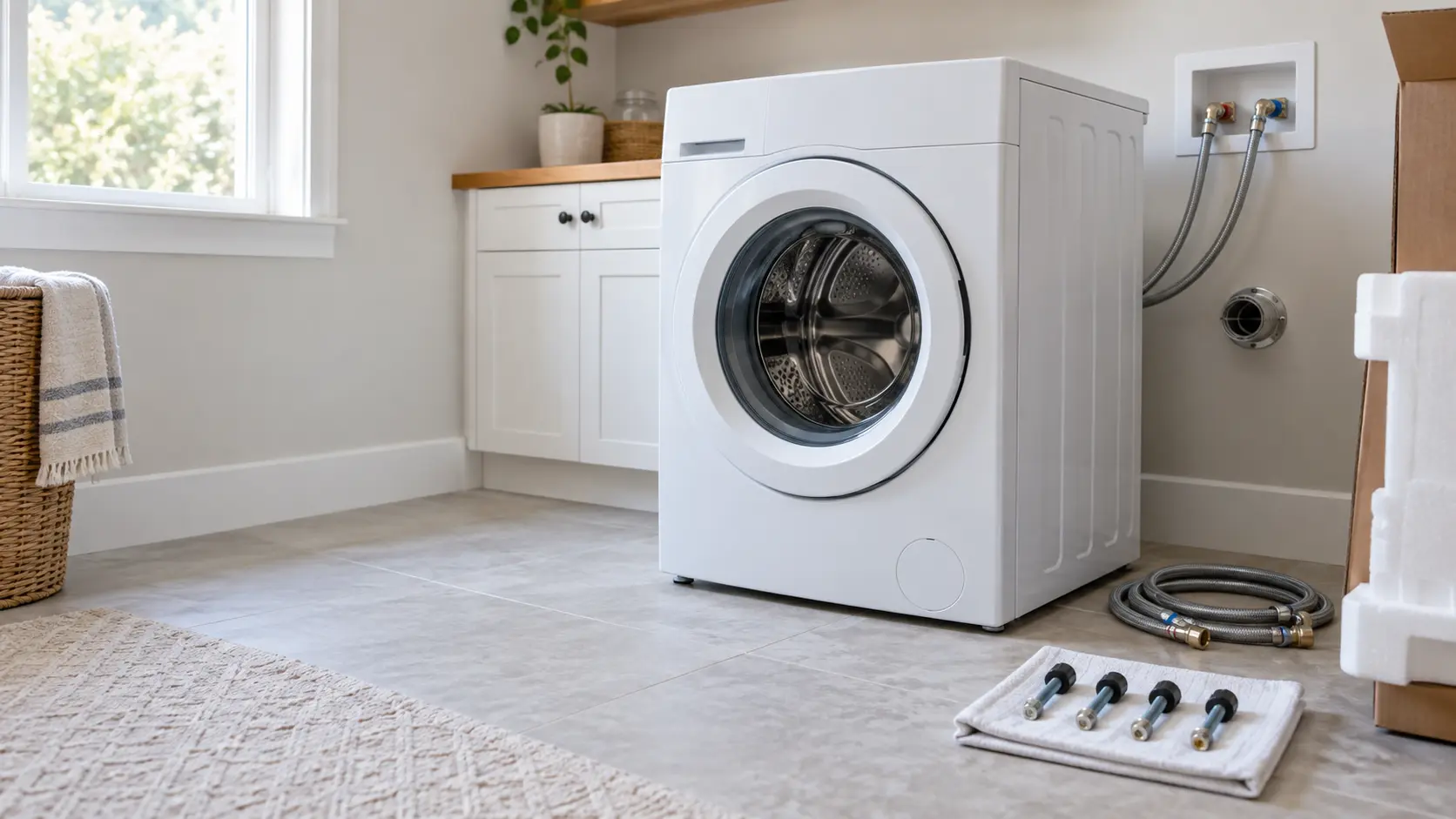


Laundry Installation
Setting up a new washer, dryer or stacked pair: shipping bolts out, hoses on, drain and exhaust run connected, power checked and the machines leveled.
Mon–Sat, 8am–8pm
- 4 things that fail on it
- 15 makes build it
- 7 problems it shows
Book a visit
Three short steps, about a minute.
or call (844) 638-8309
Loading appointment form…
The appointment form couldn’t load. Please try again.
Is yours
a laundry machine?
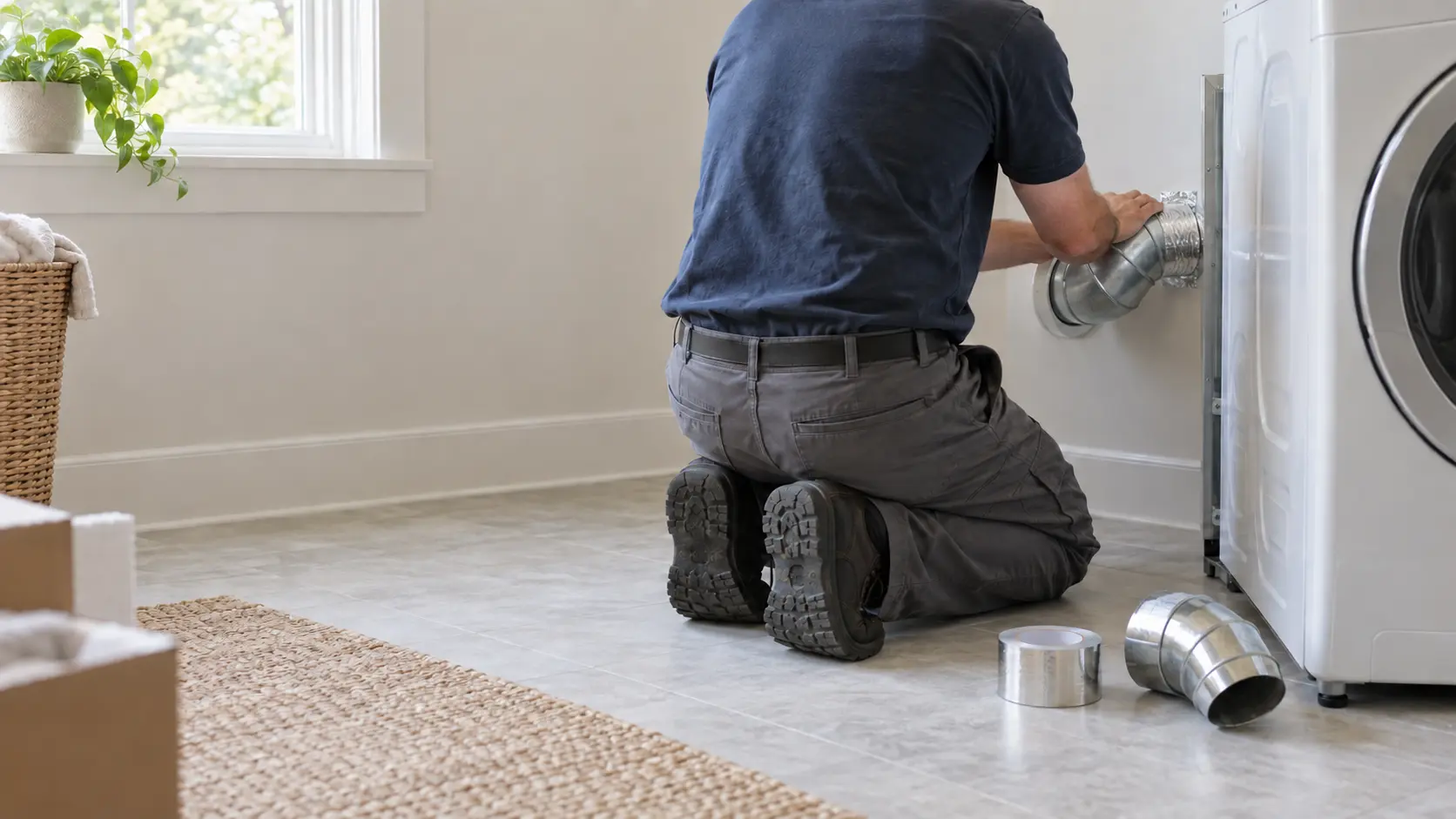
A laundry installation starts with the room itself: the width of a closet, the depth once hoses and the exhaust are behind the machines, the doorway they must pass, and whether the pair will stand side by side, on pedestals or stacked. A new front-loading washer arrives with shipping bolts through its back panel that hold the drum still in transit; they come out before anything else, and running the machine with them in shakes it hard enough to damage it. The washer then gets new fill hoses, a drain hose set into the standpipe or laundry tub at the height the maker gives, and feet adjusted until it sits level and firm on all four corners. A vented dryer needs a rigid or semi-rigid metal transition from its outlet to the wall and a run that reaches the outdoors within the length its instructions allow, with no screws poking into the duct. A gas dryer gets a new connector and a leak test; an electric one needs the right cord for a three-slot or four-slot receptacle, and many need a heavier circuit than a washer. A heat pump or condensing dryer needs no duct but may need a drain. A stacking kit bolts the dryer to the washer's top, and pedestals raise the pair.
 What fails on a laundry machine
How to tell
It cleans or dries clothes: a front-loading or top-loading washer, a vented, condensing or heat pump dryer, a stacked pair, or an all-in-one combination.
A washer carries shipping bolts or a transit block from the factory and takes hot and cold fill hoses and a drain hose.
A dryer takes either a gas connector and a household plug, or a heavy cord for a dedicated circuit, and a vented model needs an exhaust outlet.
The instructions give minimum clearances for the closet, a maximum exhaust length and a standpipe height, and a stacking kit is sold for the pair.
Not yours?Cold storageCooking appliancesDish care
What fails
on this design.
On a laundry machine: transit bolts still fitted, a foil exhaust pushed against the wall, a drain hose set too low or pushed too far in, a cord that does not match the outlet.
The problems it showsTransit bolts still fitted
The bolts that lock the tub for transport are the step most often forgotten. The first spin shakes the whole machine, walks it across the floor and can damage the suspension before the first week is out.
A foil exhaust pushed against the wall
Thin foil or plastic duct kinks as soon as the machine is set back. It traps lint, slows drying and becomes a fire risk; a metal transition, kept short and straight, is what the makers call for.
A drain hose set too low or pushed too far in
A drain hose below the level the maker asks for, or sealed tight into the standpipe, siphons water out during the fill. The washer fills and drains at once and never finishes its cycle.
A cord that does not match the outlet
Dryers and many ranges ship without a cord. A three-wire cord where a four-wire receptacle is installed, or the reverse, means the cord is changed to match, never the receptacle forced.
Getting at it,
and whether to.
Measure the doorway and every turn on the way to the laundry room, and the closet depth with room left for hoses and the exhaust.
What installations costOn the visit
- Show us the water shutoffs behind the machines and whether they turn; a valve that has not moved in years is often seized.
- Tell us whether the dryer is gas or electric, and what the receptacle looks like, with a photo if you can, so the right cord comes along.
- Clear the path outside to the exhaust hood on the wall or roof, since the run is checked from both ends during the installation.
Repair or replace
A laundry machine that has stopped spinning or heating is often worth a repair, and our sister repair site for that appliance can say so. When you replace, the smoothest installation keeps the same layout: the same fuel for the dryer, the same receptacle, an exhaust that already reaches the outdoors in a short run. Moving the pair to another room, going from side by side to stacked in a closet, or switching a dryer from gas to electric can bring a new circuit, a new gas line or a new exhaust through the wall, and those parts are planned before the machines are ordered.
Book a visit for a laundry machineThe problems
it shows.
On a laundry machine, most often laundry exhaust crushed, loose or blowing into the room.
All problems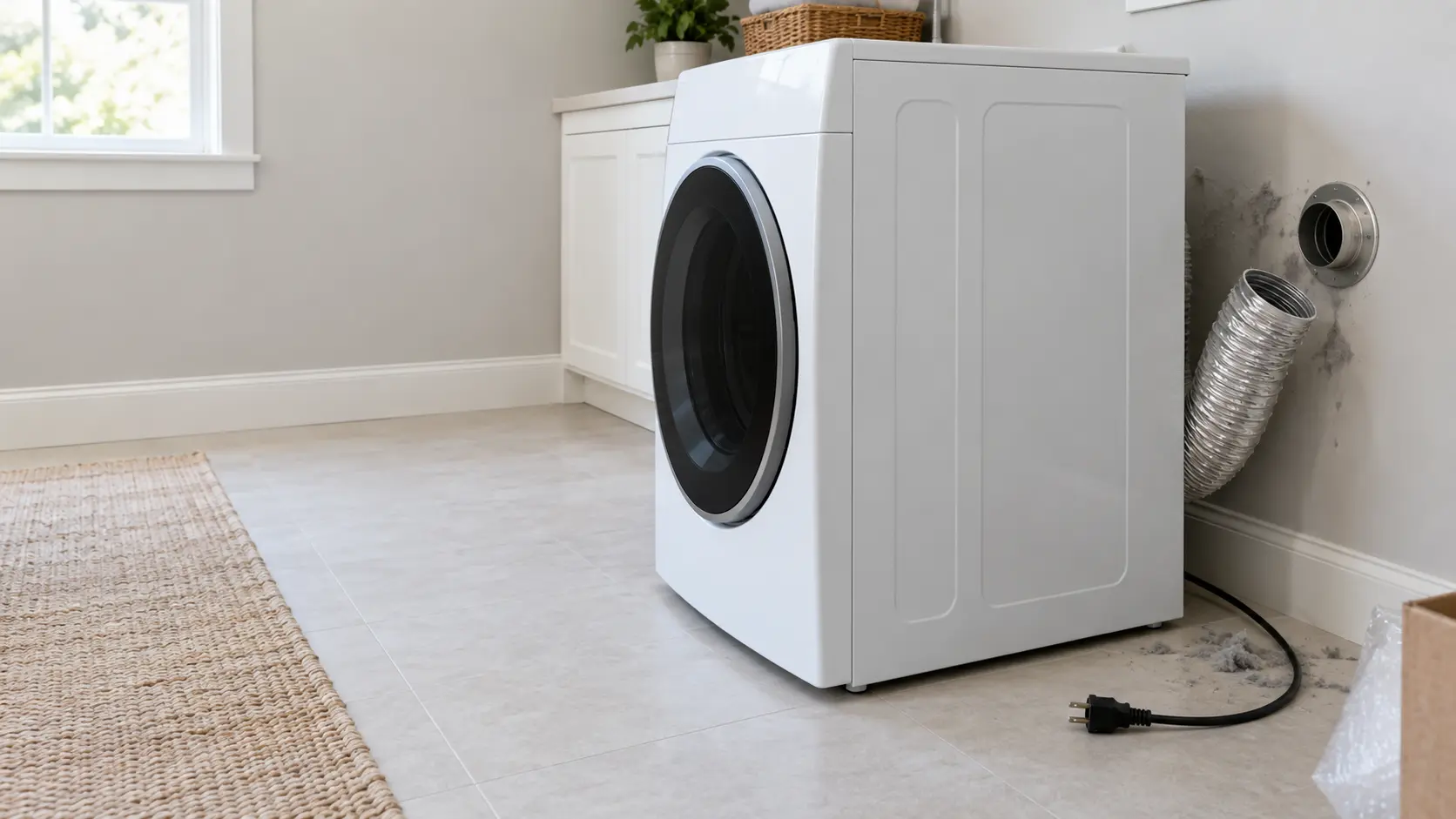
Laundry Exhaust Crushed, Loose or Blowing Into the Room
6 causes, cheapest first

New Unit Vibrating or Walking Across the Floor
6 causes, cheapest first
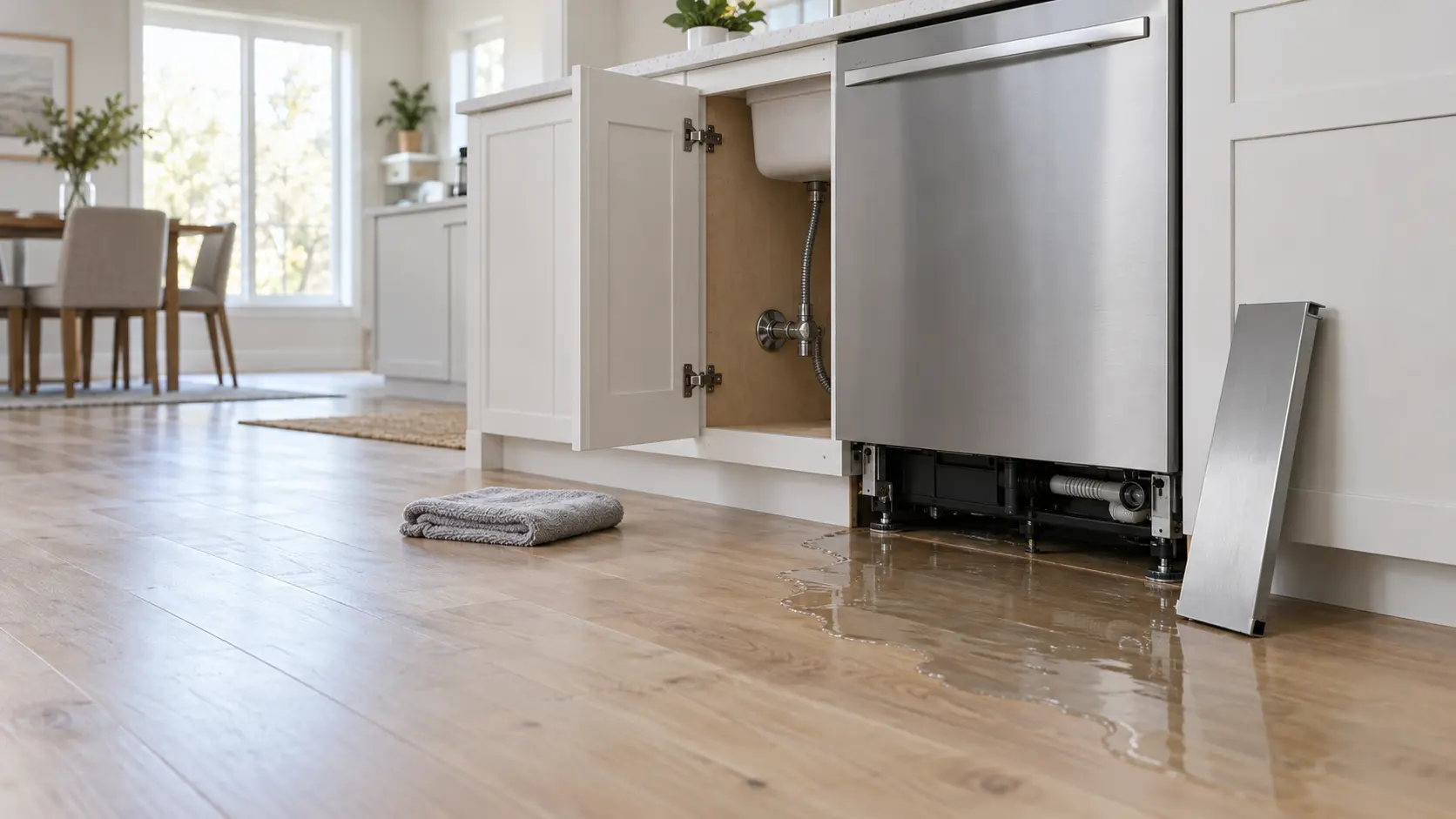
Water Leak After an Install: Close the Supply Valve First
6 causes, cheapest first

Drain Backing Up After an Install: Plug, Loop and Standpipe
6 causes, cheapest first
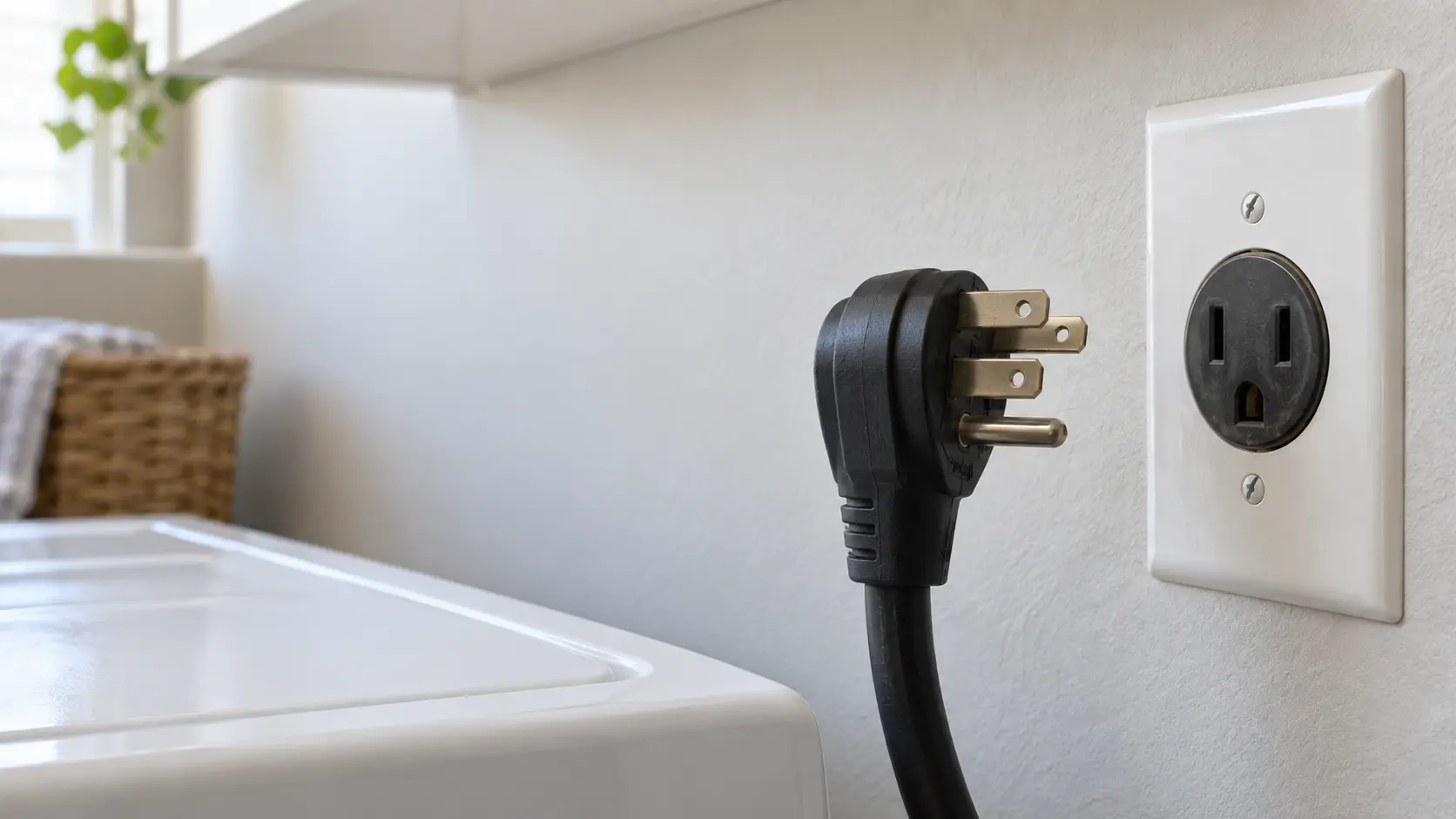
Plug Does Not Fit the Outlet: Cords, Receptacles and Circuits
6 causes, cheapest first

Water Hammer After a Hookup: Banging Pipes When a Valve Shuts
6 causes, cheapest first

Appliance Installation Code on a New Unit: Setup Modes and Hookup Messages
8 causes, cheapest first
Who builds
a laundry machine.
15 of the makes on this site build a laundry machine. Each mark opens that make's own page.
All 37 brandsLaundry installation,
where we come out.
9 metros, each with its own page.
All service areasTampa BayFL · 31 areas
Miami / South FloridaFL · 47 areas
New York MetroNY · 75 areas
HoustonTX · 36 areas
ChicagoIL · 50 areas
Los AngelesCA · 95 areas
San DiegoCA · 31 areas

Questions about
laundry machines.
Where do the shipping bolts go once they are out?
How long can a laundry exhaust run be?
Can a new pair be stacked if the old one stood side by side?
Back to your everyday
Is it a laundry machine?
Say so when you book — it changes what the technician brings and how the visit is planned.