


Appliance
Installation Code on a New Unit: Setup Modes and Hookup Messages
An appliance installation code is a message a new unit shows because of how it was set up: a demo mode, a water or drain alert, a vent warning or a power check.
Mon–Sat, 8am–8pm
- 5 checks before you book
- 5 questions that narrow it
- 8 causes, cheapest first
Book a visit
Three short steps, about a minute.
or call (844) 638-8309
Loading appointment form…
The appointment form couldn’t load. Please try again.
What it
usually means.
A new appliance's first hours are when its display has the most to say, and most of what it says is about the installation rather than the machine. Some messages are modes, not problems at all: showroom or demo mode that keeps the compressor or the heating elements off, a Sabbath mode that silences the display, a shipping lock, or a first-run calibration that makes a new washer or dish care machine take longer than its label says. Others are reports about the hookups: no water, or too little, when a valve is partly closed or a filter is full of air; a drain that is too slow because a hose is kinked, set too high or blocked by a disposer plug; an airflow warning from a laundry machine whose exhaust is crushed; an unbalanced load or an out-of-level cabinet; a burner that did not prove flame while air was still in a new gas line; a power or voltage message when a cord is wired to the wrong terminals; a warm alarm while cold storage is still on its first cool-down; or a sensor that reads open because a harness was left unplugged at the installation. All of those clear when the setup is corrected. A code that means a part has failed is a different matter: it belongs to the maker's warranty on a new unit, or to our sister repair site for that appliance by make and model.
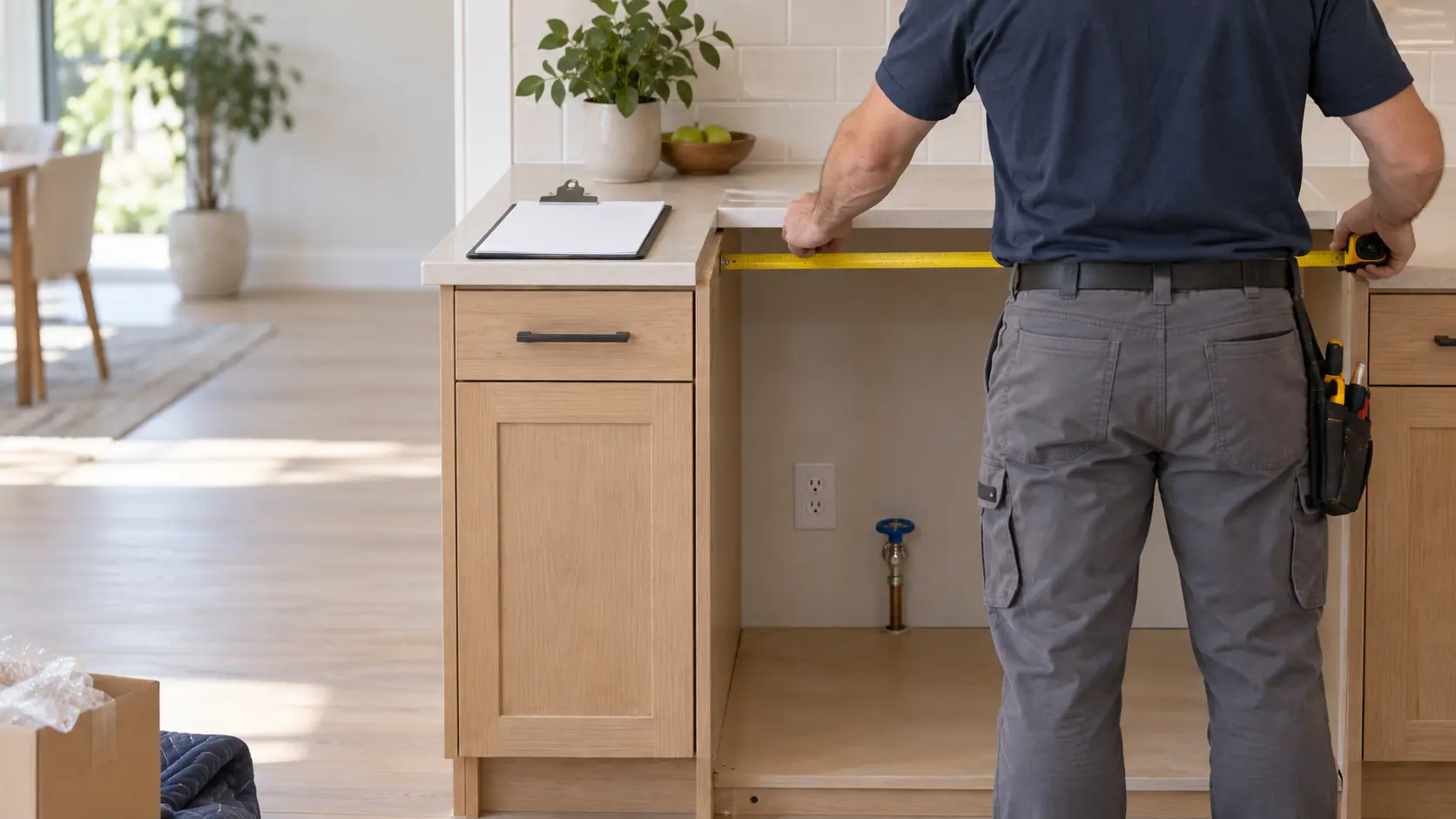 The 8 causes, cheapest first
Answer these first
What exactly is on the display: a word, a symbol, a letter and number, or a flashing light?
Which of the new units is showing it, and what does its rating plate give as make and model?
Did it appear on the very first run, or after the appliance had worked for a while?
Was anything changed during the installation: doors reversed, a harness moved, a conversion kit fitted?
Does it clear after the setup is corrected and the appliance is restarted, or come straight back?
Check these
before you book.
Appliance installation code: 5 checks, and none of them costs anything.
Take a photo of the display, or a short video of a flashing light, before switching anything off.
Find it in the guide printed for your exact model number, or in the code pages on this site, sorted by make.
Check the obvious setup points first: modes in the menu, valves fully open, shipping bolts out, exhaust connected.
Also worth checking
- Switch the appliance off at its controls, wait a minute, and restart it after correcting the setup.
- If the code comes straight back, book a visit and send the photo with the model number.
How soon does it need a visit?
Most installation codes can wait for a convenient visit. Five situations cannot, and each has its own page: a gas smell after a hookup, a water leak after an install, a burning smell or a breaker that trips on the first run, and a laundry exhaust that is disconnected.
The causes,
cheapest first.
8 things appliance installation code on a new unit: setup modes and hookup messages turns out to be, from setup modes, not failures to connections and sensors.
The cost guide-
01 no installation
Setup modes, not failures
Demo or showroom mode, a Sabbath mode, a shipping lock or a first-run calibration can look like a problem. The manual shows how to leave each mode, and the first calibration run is simply allowed to finish.
-
02 lowest
Level and balance
An unbalance or level code on a new laundry machine often means shipping bolts in, a foot off the floor or a single heavy item. The bolts come out, the feet are set and the load is spread.
-
03 lowest
First cool-down
A warm alarm in the first day on cold storage is often just the unit still cooling from room temperature, or a door not yet sealing. The door is checked, and the alarm is reset once the unit is cold.
-
04 low
Water supply and drain
A partly closed valve, an unflushed filter, a kinked supply line, a drain hose set too high or a disposer plug left in sets a water or drain code. The connection is corrected and the cycle restarted.
-
05 low to moderate
Vents and ducting
A laundry machine that measures restricted exhaust on its first loads warns about it. The transition and the run are checked from the machine to the outside hood before it runs again.
-
06 low
Gas and first light
A burner that fails to prove flame while air is still leaving a new line, or with orifices that do not match the fuel, sets an ignition code. The line is purged by lighting, or the conversion kit is fitted.
-
07 low to moderate
Power and wiring
A cord on the wrong terminals, a missing ground, reversed polarity or a voltage below what the nameplate asks for sets a power message. It is checked with the breaker off; circuit changes go to an electrician.
-
08 low
Connections and sensors
A harness, a door switch or a sensor plug left disconnected after doors were reversed or a part was removed for the delivery path reads open. It is reconnected with the power off; a code that stays is a repair.
-
What it costs
Every installation on the site's cost scale, side by side
Open the cost guide
What else
it could be.
Most often confused with cold storage slow to cool on the first day, then new unit vibrating or walking across the floor.
All problems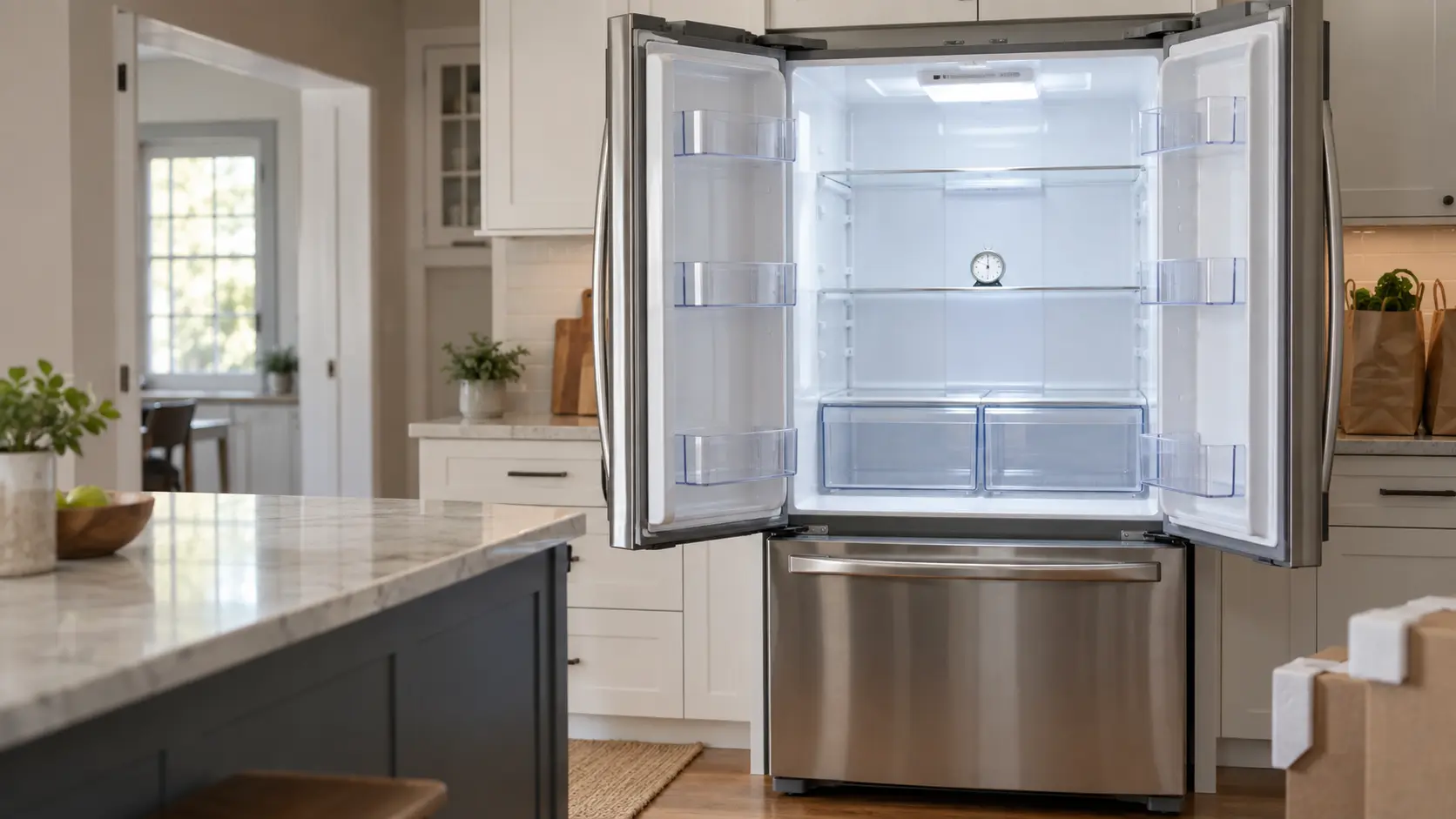


The makes
it happens on.
37 makes on this site; appliance installation code on a new unit: setup modes and hookup messages can show up on any of them. Each mark opens that make's own page.
All 37 brandsAppliance Installation Code on a New Unit: Setup Modes and Hookup Messages,
where we come out.
9 metros, each with its own page.
All service areasTampa BayFL · 31 areas
Miami / South FloridaFL · 47 areas
New York MetroNY · 75 areas
HoustonTX · 36 areas
ChicagoIL · 50 areas
Los AngelesCA · 95 areas
San DiegoCA · 31 areas

Questions about
appliance installation code on a new unit: setup modes and hookup messages.
Why does a brand-new appliance show a code on its first run?
What is demo mode, and how does it get turned on?
Can an installation code void the warranty?
The same code means something else on another make. Why?
Back to your everyday
Still seeing appliance installation code on a new unit: setup modes and hookup messages?
Book with what you checked above — 5 answers save the technician the first part of the visit.