


Burning Smell on the First Run: When It Is Normal and When to Stop
A burning smell on the first run is an oily, hot or electrical odor from a new appliance the first time it heats, spins or cools after its installation.
Mon–Sat, 8am–8pm
- Hazard after a hookup
- 5 questions that narrow it
- 6 causes, cheapest first
Book a visit
Three short steps, about a minute.
or call (844) 638-8309
Loading appointment form…
The appointment form couldn’t load. Please try again.
Gas in the air? Get out. Water, smoke or a trip? Power off
A steady oily smell during an empty first heat is expected. Smoke, a sharp hot-plastic smell or any smell from the cord or the wall is not: switch the breaker off, do not reset it again and again, and leave the appliance off until the connection and the heat path have been checked. If there are flames, leave and call 911 from outside.
What it
usually means.
Almost every new appliance that heats gives off some odor on its first use. Ovens, ranges and wall ovens are coated with protective oils in the factory, and the insulation around the oven cavity has binders that cure the first time it gets hot; that is why makers ask for an empty burn-in with the window open before any food goes in. A new dryer can smell of warm metal and packing dust, and a new refrigerator may smell of plastic for a day or two. That smell is steady, oily or plastic, and it fades over one or two runs. A different smell is a warning: the sharp, acrid odor of hot plastic insulation, a fishy smell, a buzzing or crackling sound at the back, smoke coming from a cord, a receptacle or a junction box, or packing foam or a shipping strap left touching a heating element or a burner. Those mean something is overheating now. A loose connection on a cord or a terminal block overheats because the current passes through a small contact point, and a cord that is the wrong type for the circuit can do the same. The rule is plain: breaker off, and the appliance stays off until the wiring, the packing and the heat path have been checked.
 The 6 causes, cheapest first
Answer these first
Is the smell oily and even through the cavity, or sharp, acrid and coming from the back or the cord?
Is there visible smoke, and if so from inside the oven or drum, or from the wall behind the unit?
Were all the packing, shipping straps and foam blocks removed before the first run?
Is the cord, the plug or the wall receptacle warm to the back of your hand once the breaker is off?
Did the maker's instructions call for an empty burn-in, and was it done with a window open?
Check these
before you book.
Burning smell on the first run: 5 checks, and none of them costs anything.
If there is smoke or a sharp electrical smell, switch the appliance's breaker off; do not keep resetting it to try again.
Flames, or smoke that keeps rising after the power is cut, mean everyone leaves at once and 911 is called from the yard or the street.
With the power off and the unit cool, look inside the cavity or drum for packing, film or tape and remove it.
Also worth checking
- Do not touch the plug or the receptacle while the circuit is live; check them for scorching only with the breaker off.
- If it was only a steady oily smell in an oven, finish the empty burn-in with a window open and the hood running.
The causes,
cheapest first.
6 things burning smell on the first run: when it is normal and when to stop turns out to be, from factory oils burning off on the first heat to a part damaged in transit.
The cost guide-
01 no installation
Factory oils burning off on the first heat
The protective coating inside a new oven or on a new element smells for the first hour or two of heating. Run the maker's empty burn-in with a window open, and the smell fades with each use.
-
02 no installation
Packing left inside the cavity or drum
Foam blocks, a plastic film on a rack, tape on a burner cap or a manual left in a drum scorch at the first heat. With the breaker off and everything cool, every piece of packing is found and removed.
-
03 low
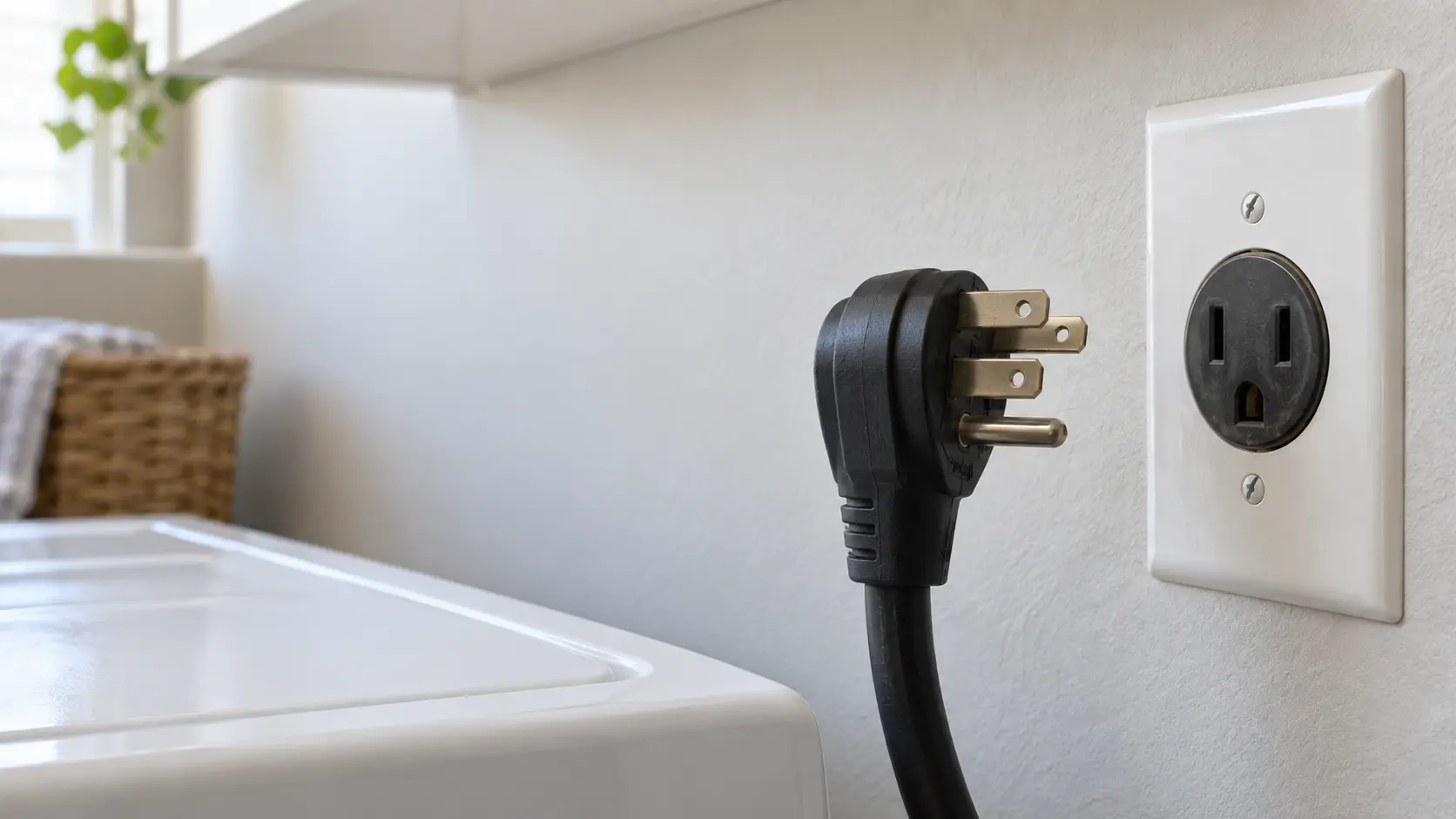
A cord connection left loose
The terminal screws where a range or dryer cord joins the appliance must be tight. A loose one heats up under load, discolors the block and smells of hot plastic. The connection is checked and remade on a visit.
-
04 low to moderate
The wrong cord or receptacle for the circuit
A cord rated lower than the circuit, or a receptacle forced to fit a plug it was not made for, overheats under a heating load. The cord is matched to the receptacle and the nameplate; the receptacle itself is an electrician's to change.
-
05 low to moderate
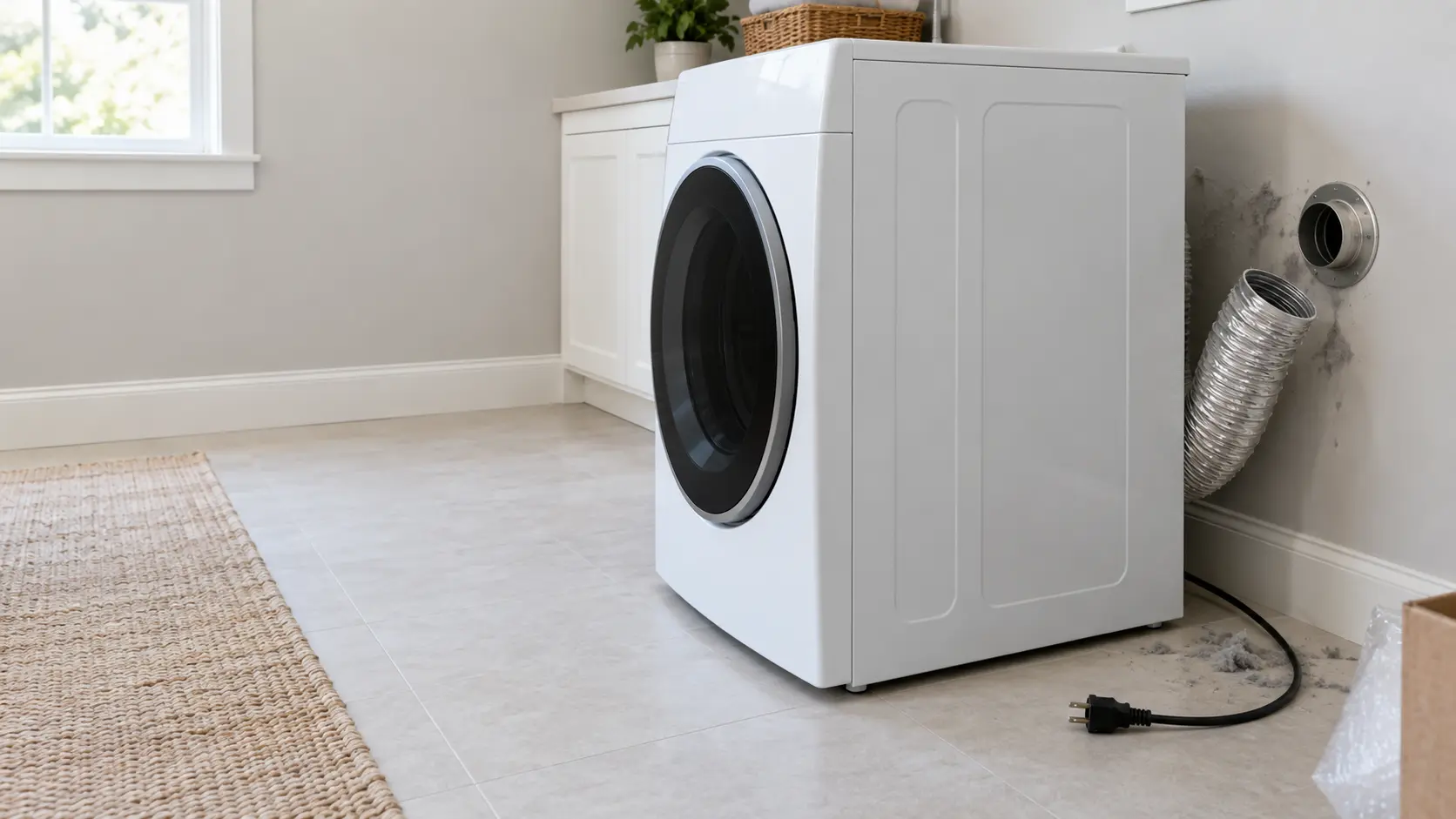
An exhaust or vent left blocked at the first run
A new dryer with its exhaust not connected, or an oven vent covered by a trim piece, keeps its heat in. The heat path is opened before the next run, and nothing is run while it is closed.
-
06 moderate
A part damaged in transit
A wire pinched in shipping, a cracked element or a motor that binds can overheat from the first minute. When the installation checks all find nothing, it is the maker's warranty, or our sister repair site outside it.
What else
it could be.
Most often confused with breaker trips on the first run: leave it off and find out why, then plug does not fit the outlet: cords, receptacles and circuits.
All problems

The makes
it happens on.
37 makes on this site; burning smell on the first run: when it is normal and when to stop can show up on any of them. Each mark opens that make's own page.
All 37 brandsBurning Smell on the First Run: When It Is Normal and When to Stop,
where we come out.
9 metros, each with its own page.
All service areasTampa BayFL · 31 areas
Miami / South FloridaFL · 47 areas
New York MetroNY · 75 areas
HoustonTX · 36 areas
ChicagoIL · 50 areas
Los AngelesCA · 95 areas
San DiegoCA · 31 areas

Questions about
burning smell on the first run: when it is normal and when to stop.
How long should a new oven smell on its first heat?
Is the burn-in smell harmful to pets?
The smell came from behind the unit, not inside it. What is that telling me?
Can I plug the unit into an extension cord until the right outlet is fitted?
Back to your everyday
Still seeing burning smell on the first run: when it is normal and when to stop?
Book with what you checked above — 5 answers save the technician the first part of the visit.