

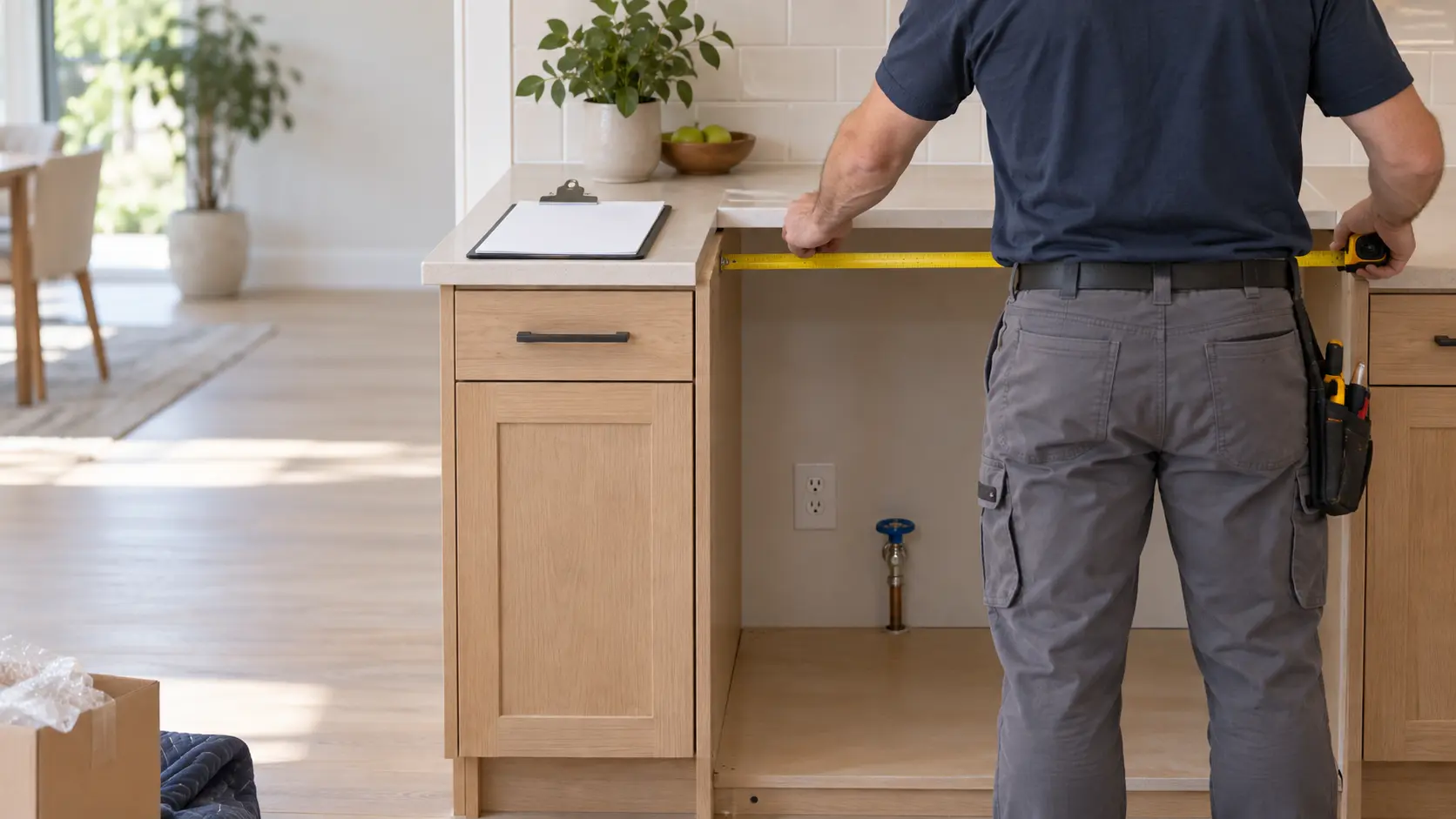
What should you check on the carton before it is opened?
Start with the box, because it is the first witness to what happened in the truck. A crushed corner, a punctured side or a carton that has been taped shut a second time tells you where to look hardest once the packaging comes off.
Signs on the outside
Look for crushed or torn corners, forklift punctures, water stains, and a carton that sits visibly off-square. Check that the arrows point up. A box marked "this side up" that arrives lying on its back may have been transported that way, and some units should not travel tilted.
Take the photographs first
Photograph the carton from all four sides with the crew still in the room, then shoot the label and the carton's condition together so the model and serial numbers sit in the same frame as any damage. Pictures taken before the packaging is cut are the strongest evidence you will have.
How do you inspect the unit itself?
Remove the packaging in the room where the unit will go, or in the doorway, and go over it in a fixed order so nothing is skipped. A flashlight held at a low angle shows dents that a ceiling light hides.
- Front, sides and top: dents, scratches, rubbed-through finish, and ripples in the sheet metal.
- Corners and lower edge: the spots that hit door frames on the way in.
- Glass and displays: chips, cracks, a spiderweb at an edge, a control panel that wobbles.
- Door or lid: open and close it, and check that the gap is even all the way around.
- Feet and wheels: every leveling foot present and turning freely, no bent rollers.
- Loose parts: racks, trays, drawers, handles, brackets and hoses in the box that the paperwork lists.
Connections and cords
Look at what you cannot easily replace in the field: gas inlet threads, water inlet fittings, the power cord's insulation and plug, and any pre-attached hoses. A bent or dented inlet is a reason to refuse the unit, because the connection will not seal properly however carefully it is tightened later.

What does a useful damage record look like?
A useful record is specific, dated and signed by both sides before the crew leaves. Vague notes such as "possible damage" are easy to dispute; precise ones are not.
| Item | Weak note | Strong note |
|---|---|---|
| Dent | "Dented" | "Dent about 2 in. wide, lower left front corner, paint cracked" |
| Glass | "Cracked" | "Crack from top edge of door glass, 4 in. long, visible from outside" |
| Carton | "Box damaged" | "Right side of carton crushed, forklift puncture near label" |
| Missing part | "Parts short" | "No lower rack, no drain hose; paperwork lists both" |
Write the notes on the delivery receipt itself, ask for a copy, and photograph the signed page. If the crew refuses to let you note damage, photograph that too, and write the date, time and the crew member's name from the truck or the badge.
What the notes should not say
Avoid guesses about cause, and avoid promises such as "will be fine". State what you see, not what you think it means. The seller's claims desk will decide the rest from your photographs.
Accept, accept with notes, or refuse?
Judge the damage by what it does to the appliance, not by how it looks from across the room. Cosmetic marks on a side that will be hidden between cabinets are a different category from a bent frame.
- Refuse: damage that affects function or safety, such as a bent frame, a dented gas or water inlet, broken glass, a door that will not close, a cut cord, or water inside the carton.
- Accept with notes: a small mark on a hidden side, a scratch that a touch-up pen could cover, or a missing minor accessory the seller will mail.
- Accept: no visible damage, parts complete, and a clean inspection.
Refusing is not rude and is not the end of the order. The seller reschedules or replaces the unit, and the crew takes the damaged one back. Installing it first can complicate that: once a unit has been connected and run, many sellers treat it as used. If you are unsure whether a mark matters, a pre-installation site check can look at the opening and the unit together before anything is connected.
If the old unit is still in place
Do not let the crew leave with the new unit sitting in the hallway while the old one is still connected and in the way. Decide beforehand who will disconnect and remove the old appliance, and have it done before the new one is signed for, so there is room to inspect properly.
What if the damage shows up after the crew has gone?
Report it the same day, in writing, with the photographs. Many sellers set a short window for reporting concealed damage, and the clock usually starts at delivery, so check the terms on your order.
Stop using the unit if you notice an issue on its first run: a burning smell, a grinding noise, water where there should be none. Plenty of early quirks are harmless and settle on their own, and why a new appliance acts up on its first run sorts the harmless from the serious. For problems that trace back to a rushed hookup instead of transit, read the install shortcuts behind early service calls.
Keep the carton, foam and corner protectors until you are sure the unit is sound. A seller will usually want the damaged unit returned in its packaging, and a good first week after installation routine catches the problems that only appear under load. Walking the route the crew will take also prevents damage in the first place; the delivery path guide covers doors, stairs and floors.


