
What does a gas appliance hookup include?
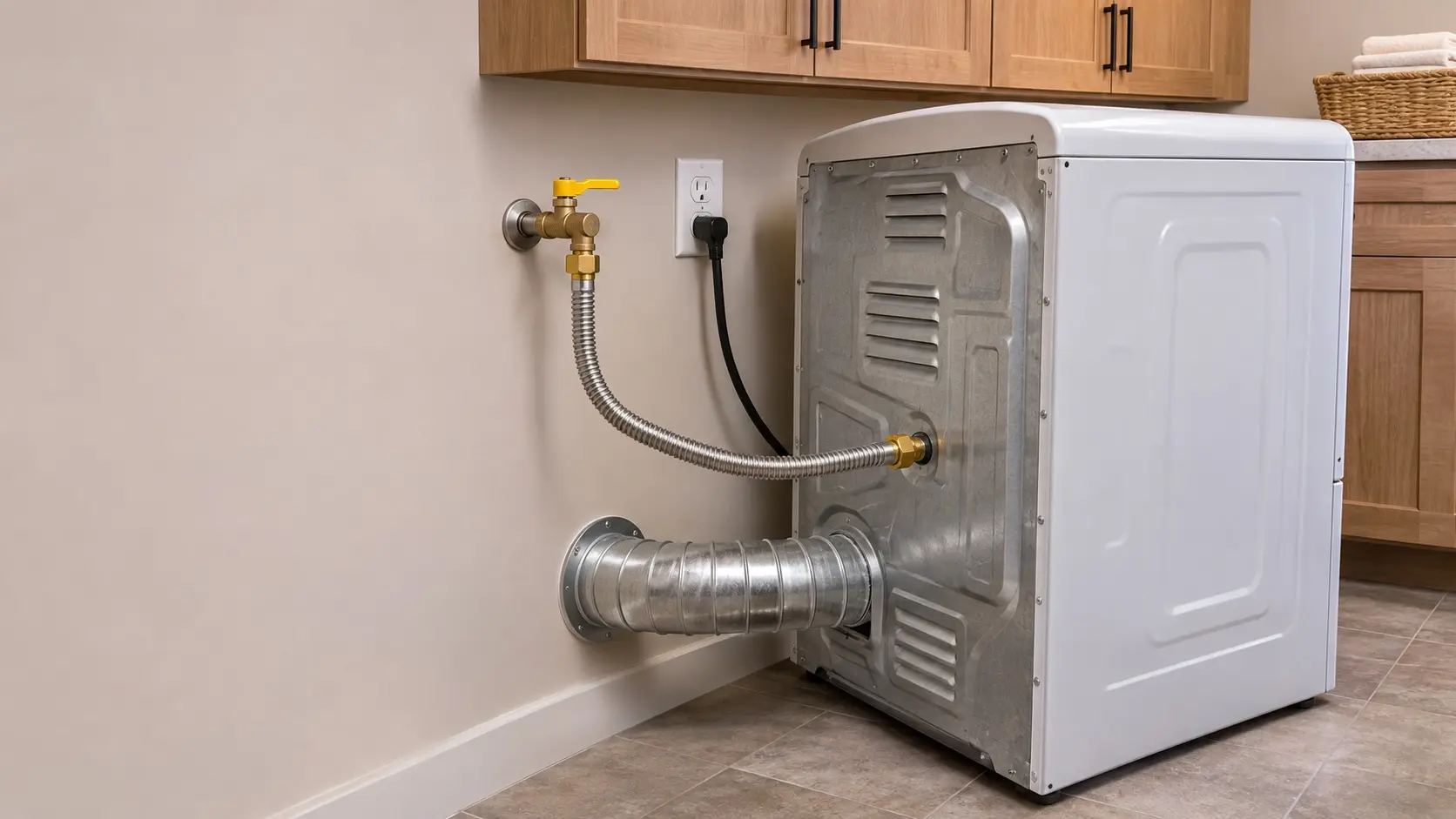
A gas appliance hookup includes four parts: the fuel connection, a plain electrical supply, the piece that is particular to the appliance and a leak test. Gas does not replace electricity; a gas appliance still needs power for its igniter, controls and motors.
- Gas: a shutoff valve near the appliance and a connector between the valve and the appliance.
- Power: a grounded 120-volt outlet, not the large 240-volt receptacle of an electric model.
- The appliance's own piece: a metal exhaust vent for a laundry dryer, an anti-tip bracket and a level stance for a cooking appliance.
- Proof: every gas joint tested before the appliance is used.
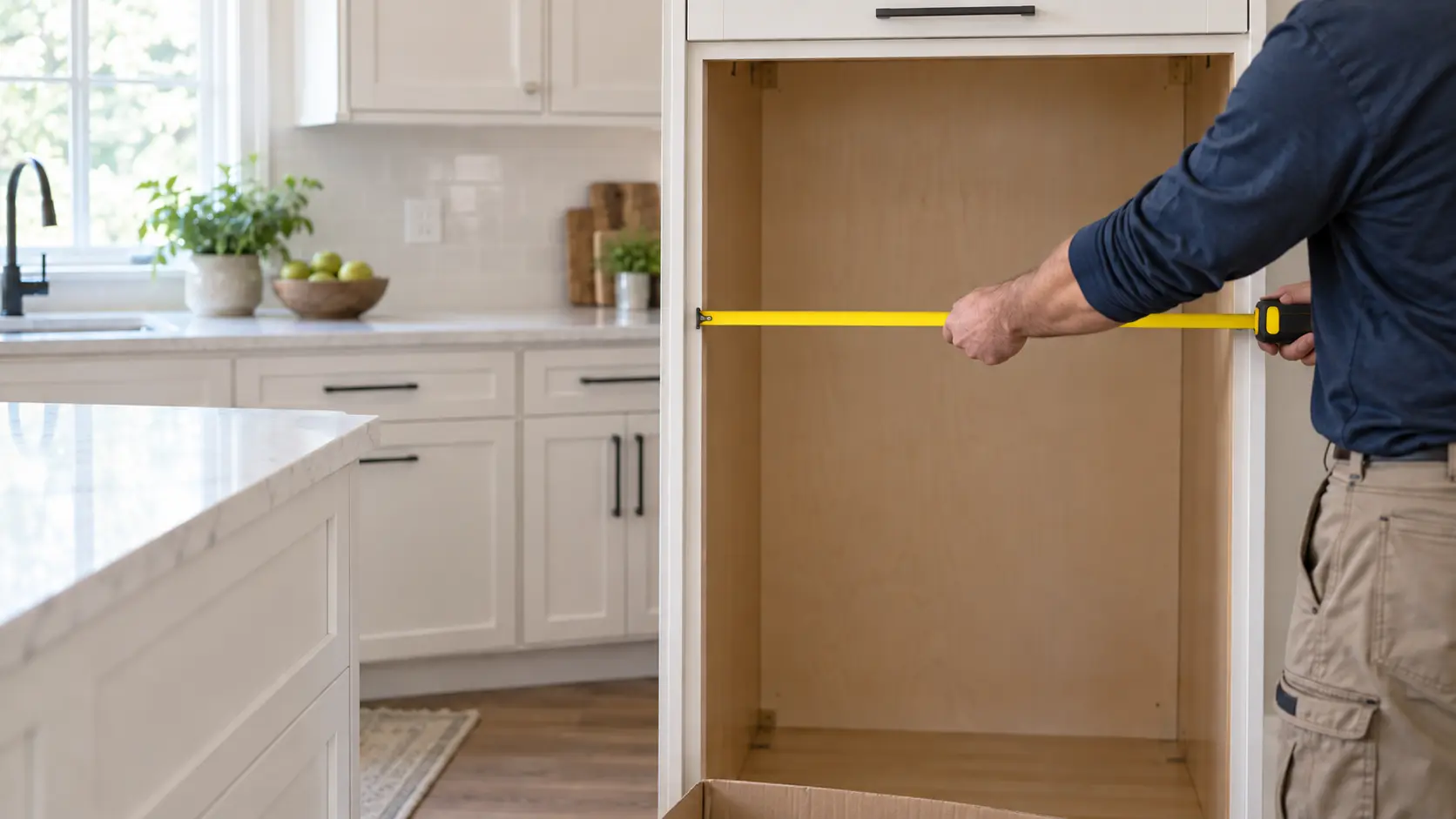
Walk behind the space before delivery and look for each of them. The most common surprise is a room that was wired for an electric appliance with no gas stub at all, or a stub with no valve. The gas connectors, conversion kits and the leak test guide covers the fittings in more depth.
What does the gas connection need?
The gas connection needs a manual shutoff valve close to the appliance, a new listed connector and a leak test on every joint. The installation instructions for many gas dryers spell each of these out, and the same pattern applies to cooking appliances.
The shutoff valve
The instructions call for an individual manual shutoff valve near the dryer, easy to reach for opening and closing. They also call for a plugged test tapping on the supply line, upstream of the appliance connection, where a gauge can attach. If the wall stub has no valve, adding one is a job for a qualified installer or the gas utility, and not an optional extra; the gas hookup and leak check service covers it.
The connector
The instructions recommend a new flexible stainless steel connector, design-certified by the American Gas Association or CSA, where local codes permit. An adapter and sometimes an elbow may sit between the connector and the dryer to prevent kinking. They say not to use copper tubing with natural gas. Reusing the previous appliance's connector is not what the instructions describe, and one that has been bent, crushed or dragged behind a machine is not a part to trust.
Natural gas or propane
Many gas dryers leave the factory set for natural gas and can be converted with the right kit. The manual says the conversion must be made by a qualified technician, who also confirms the propane supply pressure is within the maker's limit. High elevation can call for a kit or a reduced burner rating, so check your manual. If your home runs on propane or sits high in the mountains, say so when you book.
The leak test
Once the valve is opened, every connection is tested by brushing on a non-corrosive leak-detection solution; bubbles show a leak, and any leak found is corrected. Sniffing is not a test. The manual also requires the appliance to be disconnected from the supply piping during any pressure test of the gas line.

What power does a gas appliance need?
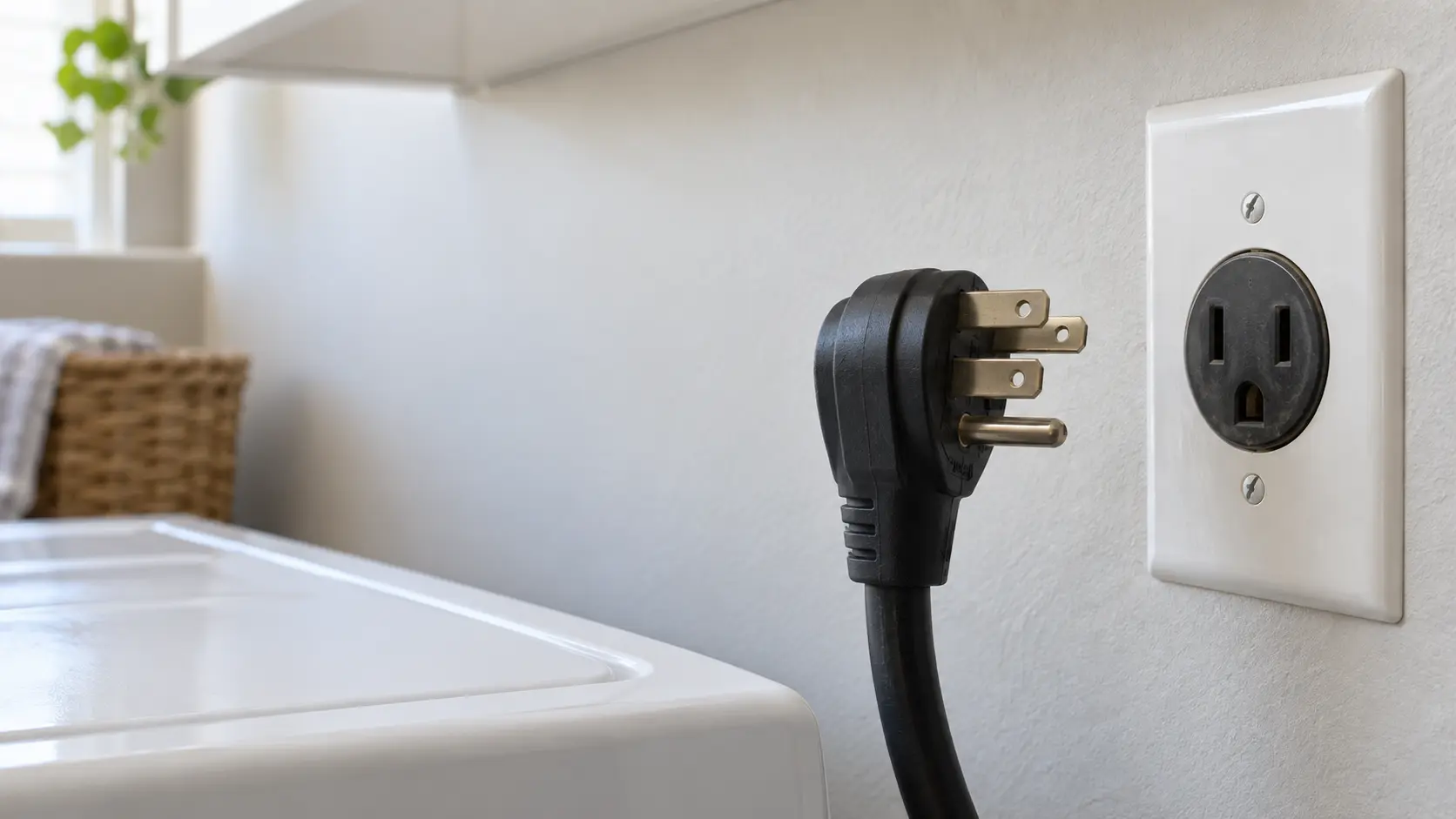
A gas appliance needs a grounded 120-volt outlet, and nothing larger. The dryer instructions for many models specify a 120-volt AC supply on a fused circuit, recommend a separate circuit and say not to use an extension cord. Gas range instructions likewise call for a 120-volt circuit with correct polarity and a grounded chassis.
A gas appliance plugged into a 240-volt electric receptacle is not a workable swap. If the plug does not fit the outlet, the manual says not to modify the plug and to have a proper outlet installed by a qualified electrician. That is the pattern behind the plug that does not fit the outlet problem, and the circuit and outlet a new appliance needs guide covers it across appliance groups.
A dead outlet leaves a gas appliance as cold as an electric one: the burner ignites electrically and the controls run on the same supply.
What is the appliance-specific piece?
For a gas laundry dryer it is the vent; for a gas cooking appliance it is stability and the hood. These are the parts most often skipped, because the previous appliance's setup is simply reused.
| Appliance | Particular piece | What the maker specifies |
|---|---|---|
| Gas dryer | Exhaust vent | 4-inch heavy metal duct to the outdoors; no plastic, no foil; hood clear of the ground and snow |
| Gas range | Anti-tip bracket | Engaged on the rear foot; the range must not tip forward when the back is lifted |
| Both | Level stance | Adjustable feet set so the appliance does not rock |
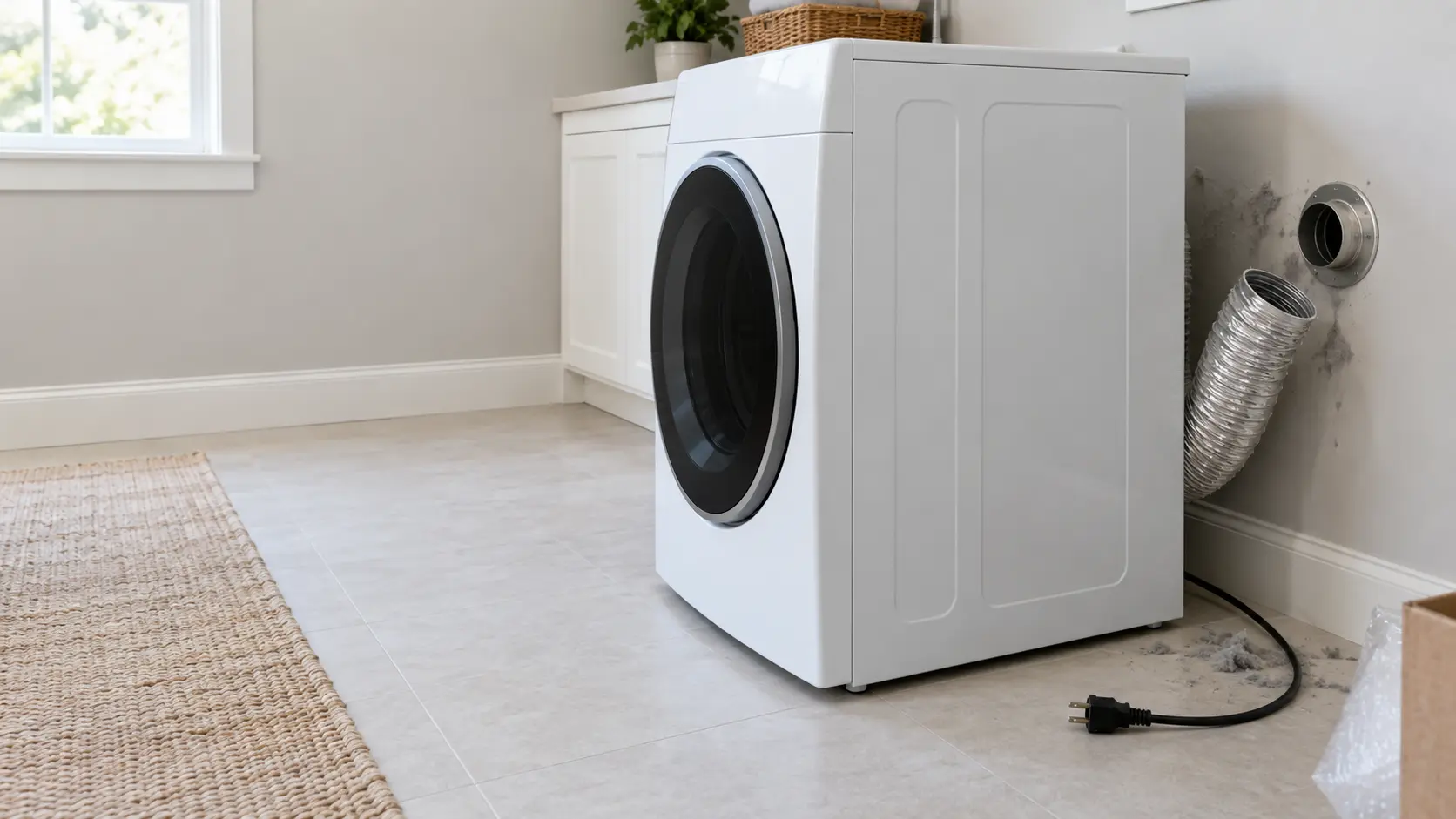
The CPSC says lint in the dryer or duct blocks airflow and builds heat, and advises replacing plastic or foil accordion duct with rigid or semi-rigid metal. Manuals add that venting should be cleaned regularly. Dryer exhaust carries burner combustion products along with moisture, so a disconnected or crushed duct is more than a lint problem. The water, drain and exhaust rough-ins guide shows what belongs in the wall first, and a laundry exhaust run installation covers a new duct.
On the cooking side, Manuals describe a tilt test for the anti-tip bracket: a rear that lifts without resistance means the foot is not engaged. The anti-tip brackets guide explains why the bracket is required.
Source: CPSC — Overheated clothes dryers can cause fires (publication 5022) — lint blocks airflow and builds heat; replace plastic or foil duct with rigid or semi-rigid metal
Who should do the hookup, and what should you ask?
The gas connection belongs with a qualified installer or the gas utility, never the owner, and the rules about who may do it vary by state and city. NFPA recommends that gas dryers be inspected by a qualified professional to make sure the gas line and connection are intact and free of leaks, and the maker's manual treats propane conversion as a qualified technician's job.
Many homeowners can handle unpacking, leveling the feet and fitting vent clamps. The gas connection, a conversion and any new gas stub are different, because an error there is a leak rather than a nuisance. A store delivery crew may set a plug-in electric appliance and decline a gas one, so confirm what delivery includes; the store delivery install or an independent installer guide sets out the choice. Removing the old appliance is part of the same visit and is described on the old appliance disconnect and removal page.
A checklist for the day
- The shutoff valve is present, reachable and turns freely.
- A grounded 120-volt outlet is within cord reach with no extension needed.
- The vent run is metal, 4 inches, clean and exits outdoors, if the appliance is a dryer.
- The path to the room is clear so the appliance is not forced past the stub.
- The installer can name the leak test they will do before leaving.
Source: NFPA — Clothes dryer safety tip sheet — gas dryers should be inspected by a qualified professional to confirm the gas line and connection are intact and leak-free