What each route means in practice
Installation bought with the appliance is scheduled with the delivery, done by the crew that brings the unit, and defined by the line on the order. It is built for the common case: the same size of appliance, the same fuel, the same spot, with working hookups already on the wall. When the job matches that description, it is convenient and hard to beat.
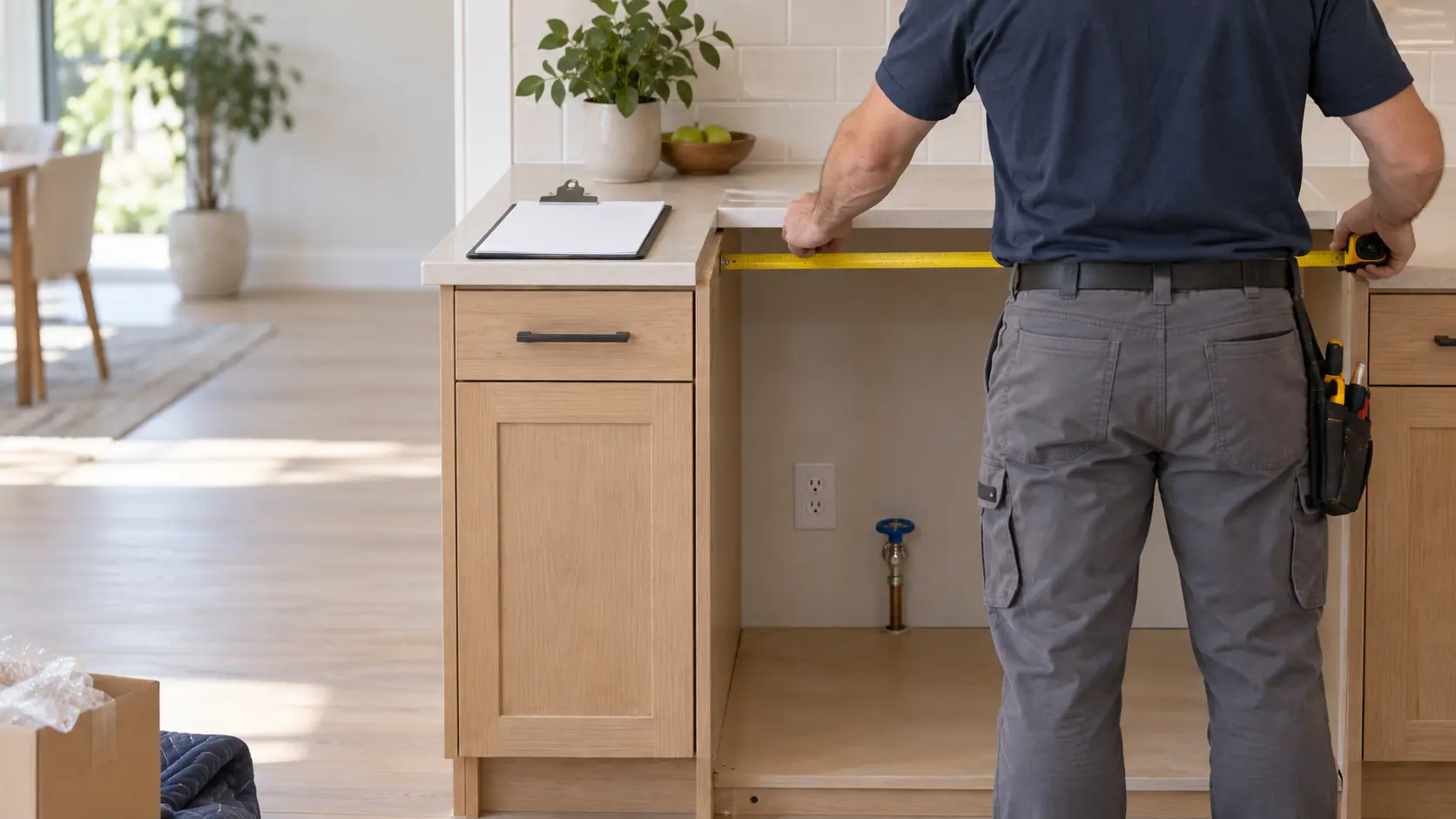
An independent appliance installer is booked around the home rather than the order. The scope starts from what is on site: the opening, the path in, the gas stub, the receptacle, the drain. That suits jobs where something has to change, and it suits appliances bought online or moved from another house, which arrive with no installation attached at all. We are an independent installer, not the maker's or a store's, and we say so because it shapes what we answer for.
Questions to ask either one before the date
The same questions separate a good installation from a quick one, whoever does it. Ask them in writing and keep the answers with the order, because on delivery day the crew works from what is written, not from what was said in the showroom.
- Is a new gas connector, water line, drain hose or power cord included, or is the old one reused?
- Who levels the unit and fastens the anti-tip bracket to the floor or wall?
- Is the gas connection leak-tested before the crew leaves, and how?
- Who disconnects and removes the old unit, and where does it go?
- What happens if the unit does not fit the opening or the hookup does not match?
- Who do I call if a joint leaks in the first week?
The parts that decide the outcome
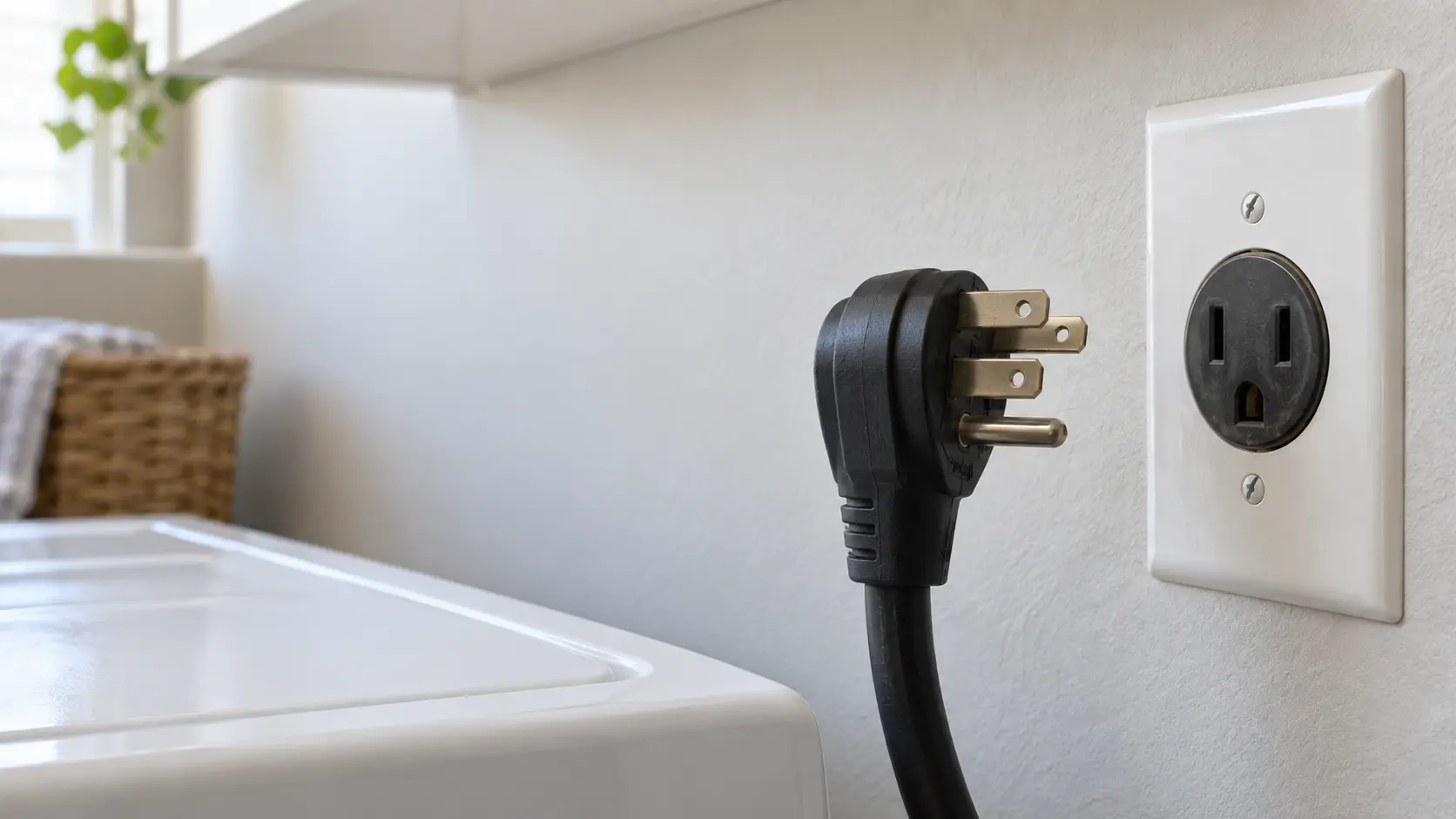
Several of the answers are set by the makers. GE forbids carrying a used flexible connector over to a new gas unit, and its laundry instructions list the cord kit as something the dryer does not come with, calling for a fresh UL-listed cord. LG advises against flood-preventing hoses with automatic shutoff devices on its front-load machines, because they can trip during the fill. An installer who arrives with the right parts for your model avoids the reused-connector compromise.
Why the install matters to the maker's coverage
The maker's warranty covers the machine, and makers draw the line at the connection. GE's gas installation instructions state that product failure due to improper installation is not covered by its warranty, and ask for installation by a qualified installer. LG's laundry manual asks that its machines be installed and electrically grounded by qualified service personnel in accordance with local codes.
In practice that means two parties answer for two different things. The maker answers for a part that fails on its own; whoever connected the unit answers for the joint, the cord, the drain route and the bracket. Choosing an installer is choosing who answers for the second list.
Workmanship and the machine
Our own warranty covers our workmanship on the connections we make, and nothing about the appliance itself. If a new unit arrives with a failed part, that goes to the maker; if it arrives damaged, GE tells owners to contact the dealer immediately, and a photograph taken before the packaging leaves helps either way.
Source: GE Appliances — Gas range installation instructions (31-2001181) — Never use an old connector; installation must be performed by a qualified installer; product failure due to improper installation is not covered under warranty; LG Electronics — Front-load washer owner's manual (WM4080) — Do not use flood-preventing hoses with auto shutoff devices; the appliance must be installed and grounded by qualified service personnel per local codes
The old unit: disconnect, haul-away and refrigerant
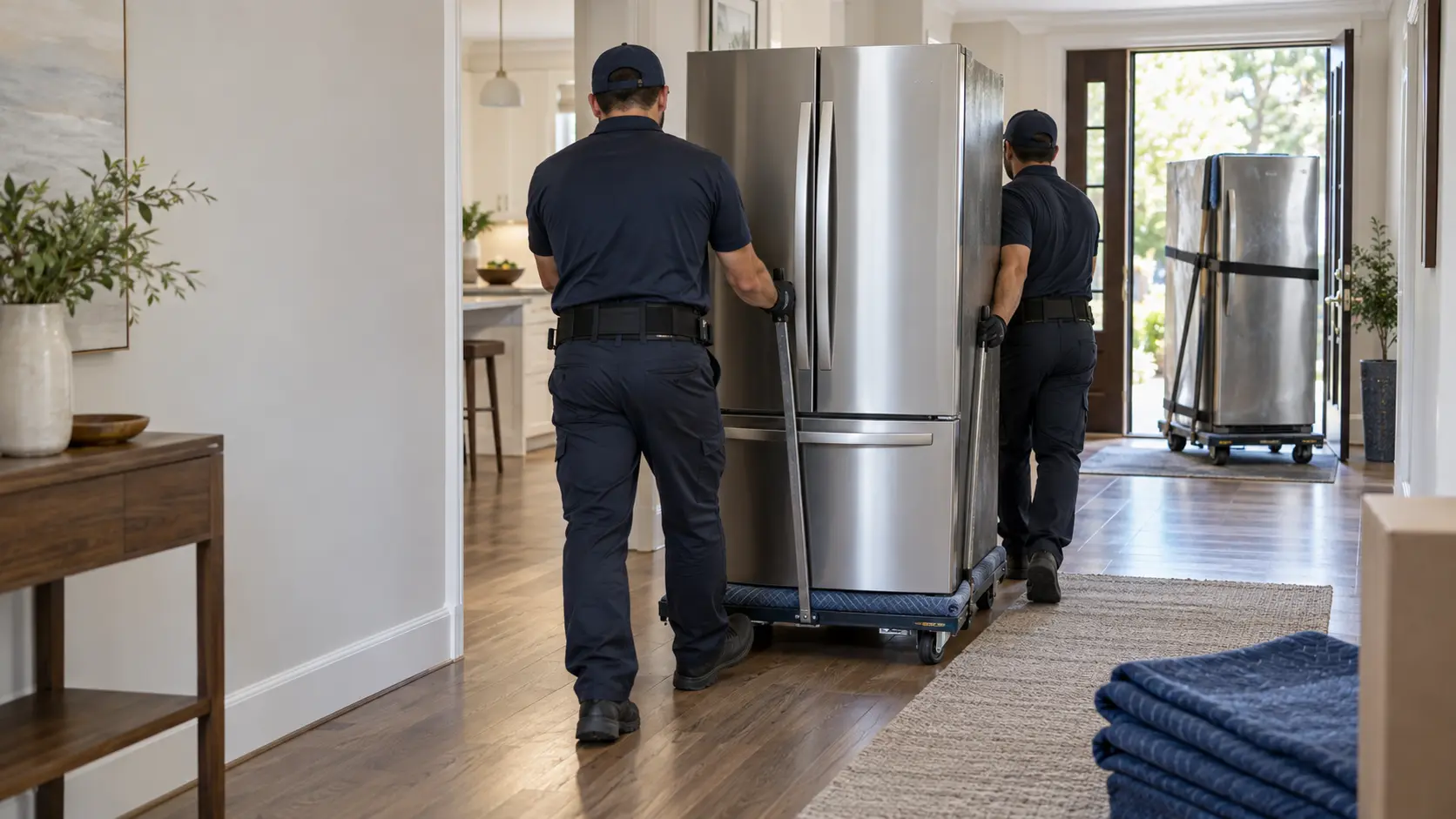
Removing the old appliance is part of the job, and it is where the questions get specific. A gas unit must be disconnected and its supply capped. A laundry pair needs its hoses drained before they come off. Cold storage carries refrigerant: EPA says household refrigerators and freezers typically enter the waste stream with the refrigerant charge intact, that the refrigerant must be recovered before final disposal, and that the final processor keeps a signed statement of who recovered it and when.
Ask where the old unit goes and whether that chain is in place. A haul-away that ends at a curb or an unregistered scrap pile does not meet it, and GE's manuals ask owners to dispose of or recycle appliances according to federal and local regulations.
Source: US EPA — Stationary refrigeration safe disposal requirements — Household refrigerators typically enter the waste stream with the charge intact; refrigerant must be recovered before final disposal; the final processor keeps a signed statement naming who recovered it and when; GE Appliances — Electric free-standing ranges owner's manual (49-2000951) — Dispose of or recycle the appliance in accordance with federal and local regulations
When each route fits best
Neither route is better in general. The job decides, and a quick look at the list below usually makes the choice obvious. When the answer is unclear, a site check before ordering costs less than a second trip after delivery.
- Store delivery install: same size, same fuel, same spot, hookups in good order
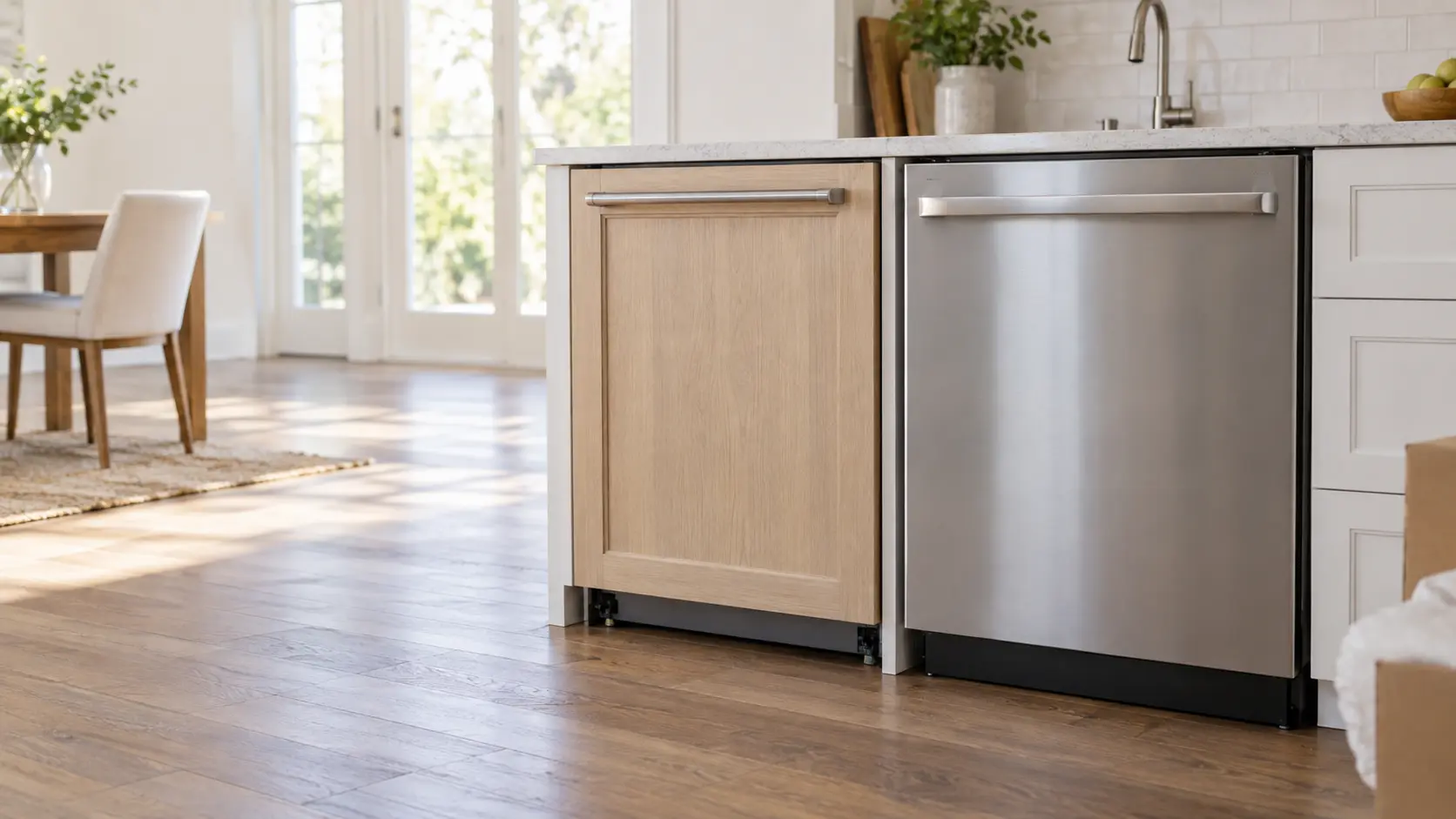
- Independent installer: a built-in, panel-ready or stacked unit
- Independent installer: a change from gas to electric or the other way round
- Independent installer: a new location, a new drain route or an exhaust run to rework
- Independent installer: an appliance bought online or moved from another home
Splitting the job between the two
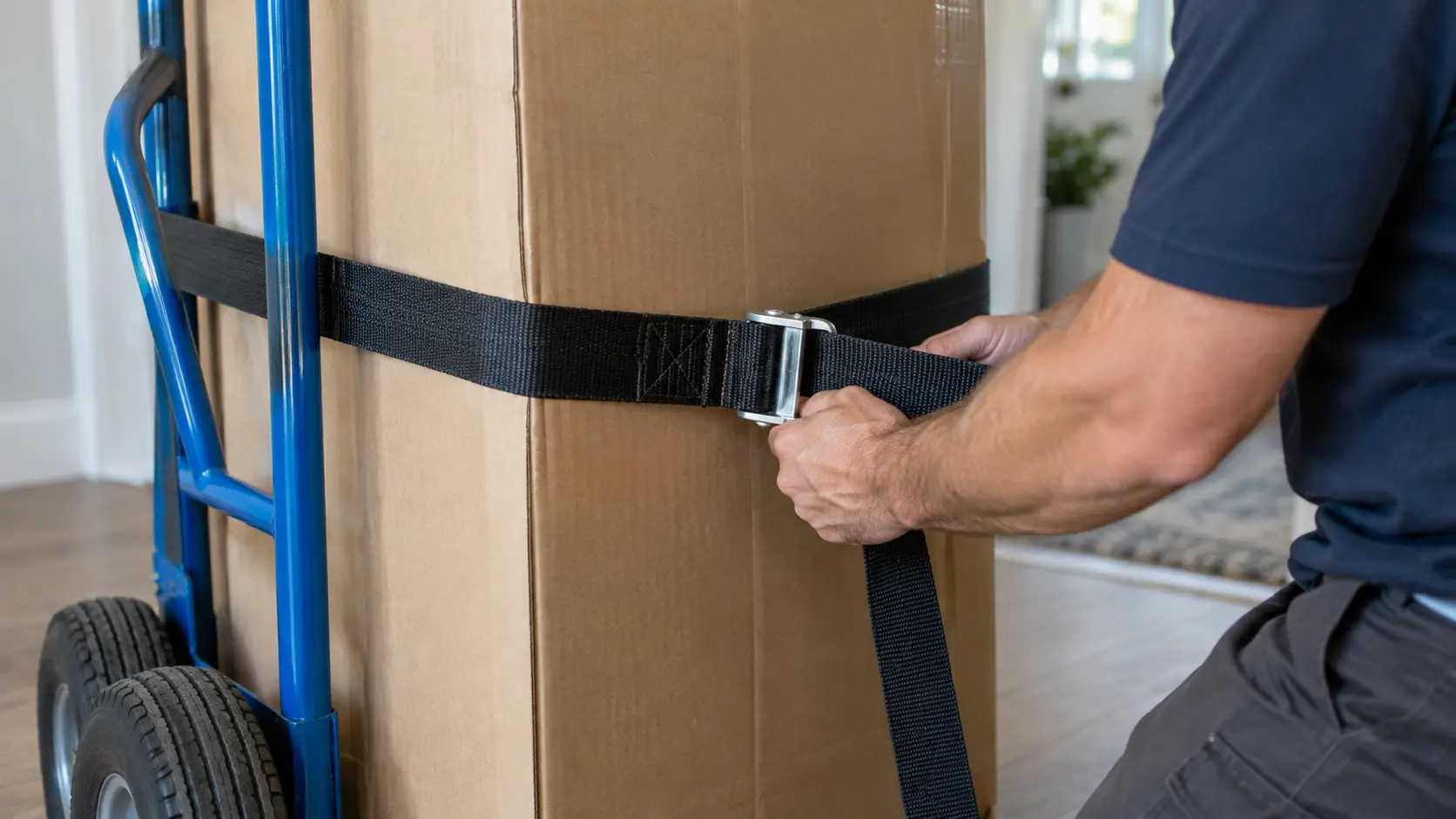
Many households do both: the store delivers, and a separate installer connects. That works well when the handoff is planned. Ask for delivery only, or delivery to the room of use, and have the unit left upright in its packaging near the opening rather than pushed into it unconnected. Book the connection for the same day or the next, so a gas unit is not left standing loose beside a capped stub and a cold storage unit is not left unplugged for days.
Keep the carton and the installation instructions for the installer. The instructions list the exact connector, cord and fittings for the model, and the carton often protects the finish while the unit is walked into place.