What does an installer need before the first visit?
An installer needs to know the new appliance, the space it goes into and the connections that already exist. With those three, the visit can be scheduled for the right length, with the right parts and people. Without them, the installer arrives and finds out, and the job moves to another day.
The appliance
Send the brand, model number and, if you have it, the serial number of the new unit. The model number tells the installer the size, the connections and the kit. If the unit has not arrived, the order confirmation usually lists it; if it has, photograph the rating plate. For help locating it, see the spec sheet and cutout dimensions.
The space
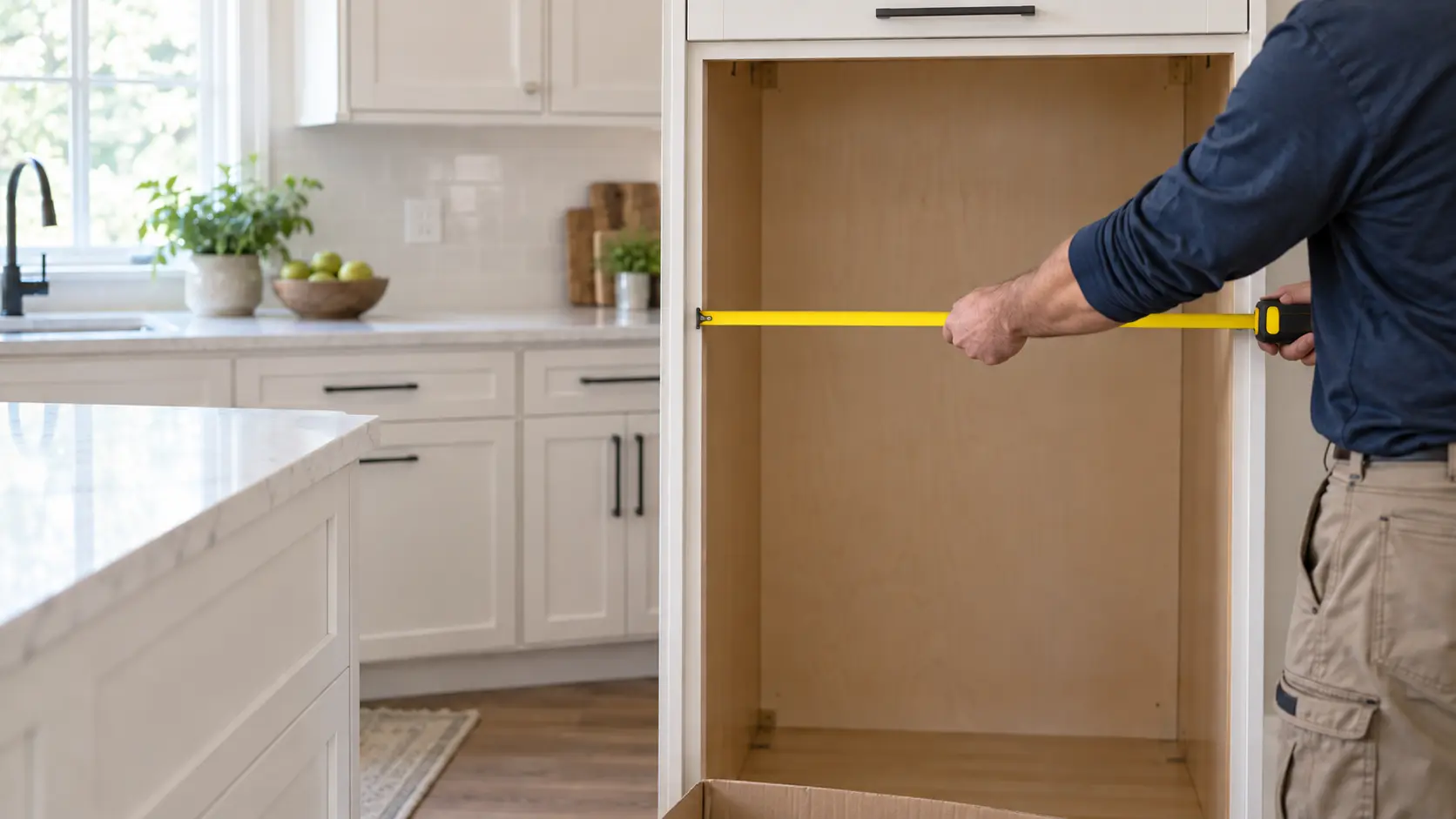
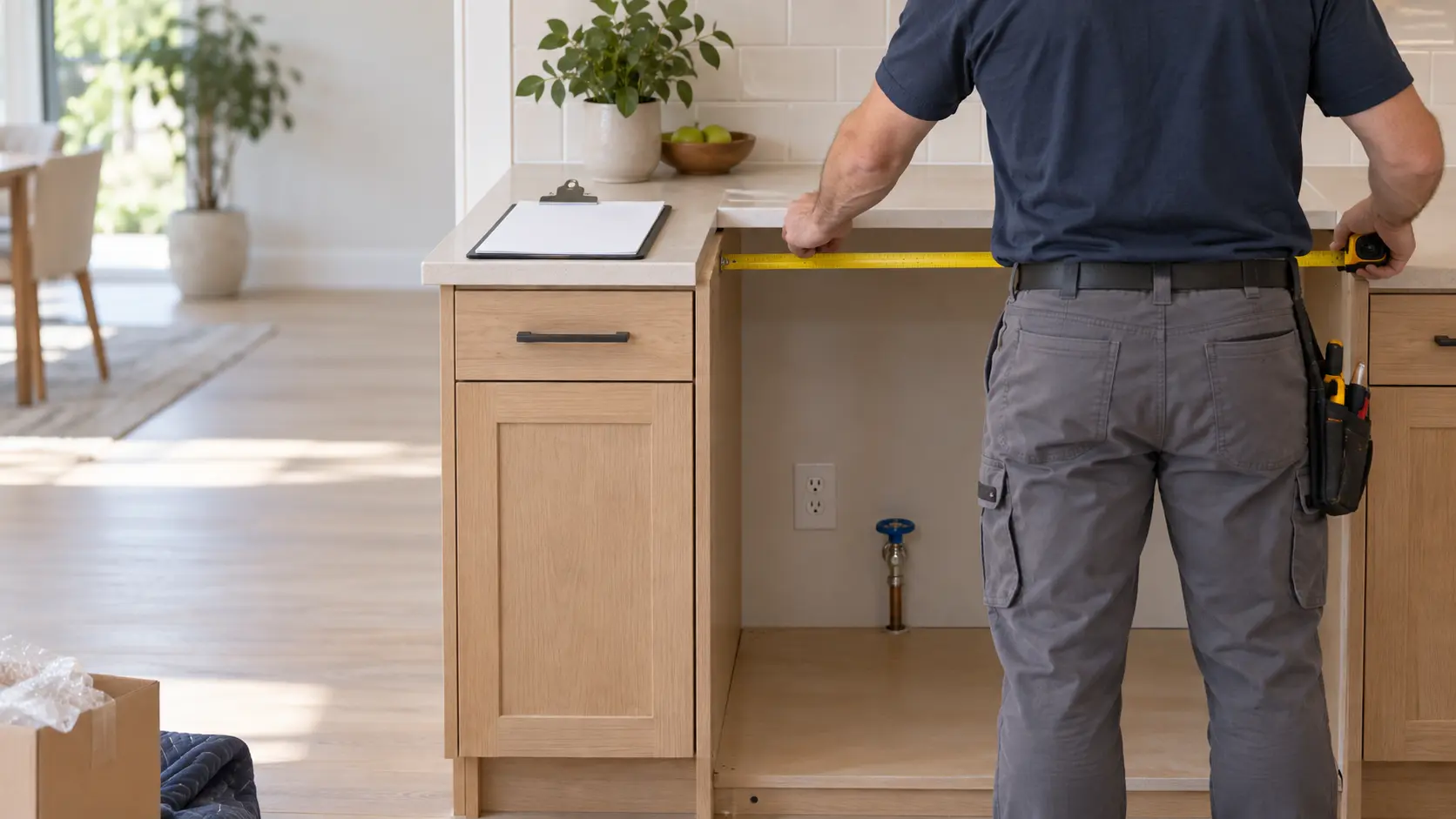
Give the opening width, height and depth, and say whether it is a freestanding spot or a cabinet cutout. A tape measure and a clear photo with the tape in frame help more than a description. If a built-in has to fit between cabinets, say so, because a new built-in that will not fit is a common reason for a failed visit.
The connections
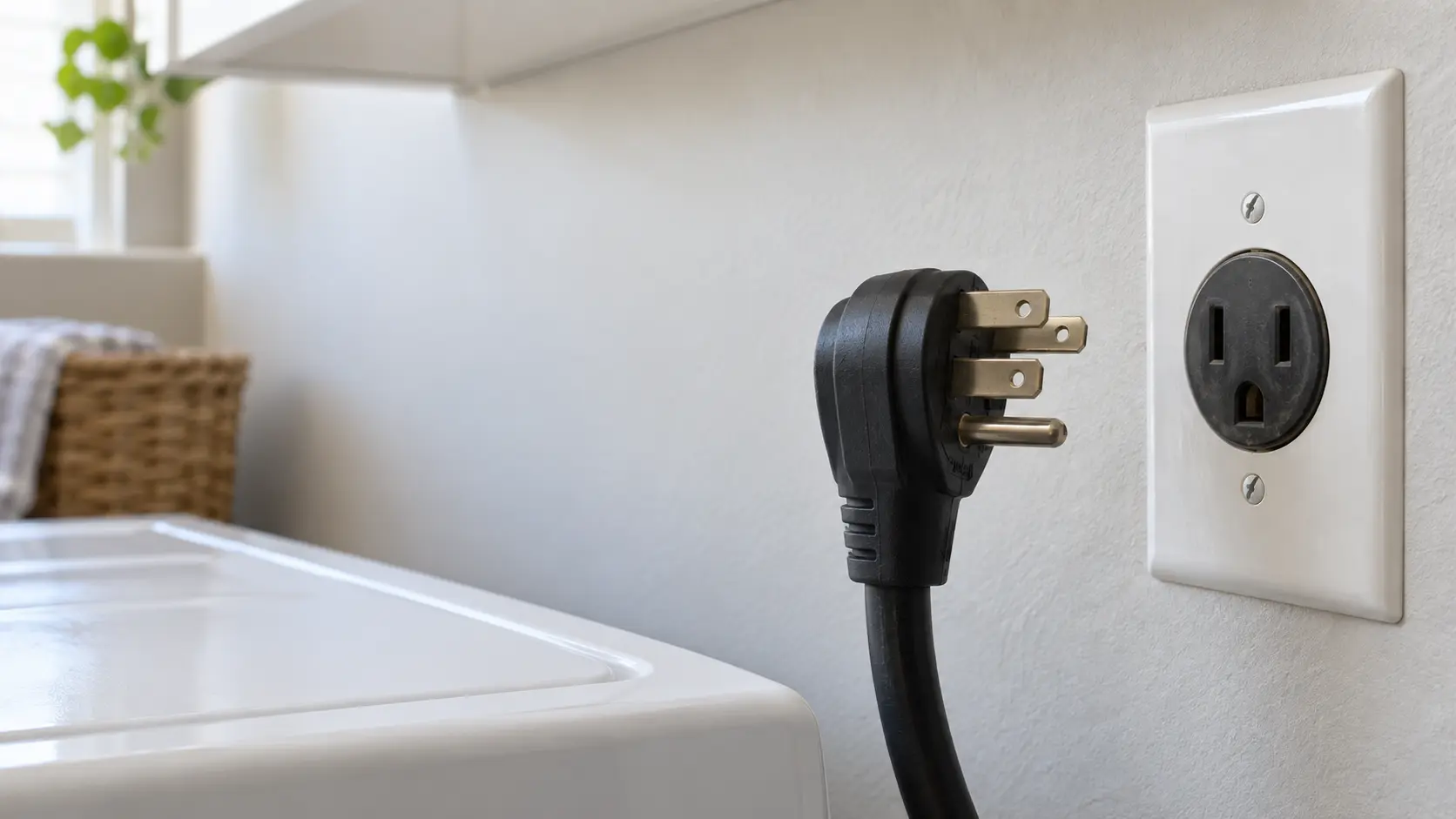
Say what the unit needs and what is there: gas, a 240-volt outlet, a 120-volt outlet, a cold water line, a drain, an exhaust duct. The circuit and outlet guide explains what common appliances ask for.
Which photos should you send?
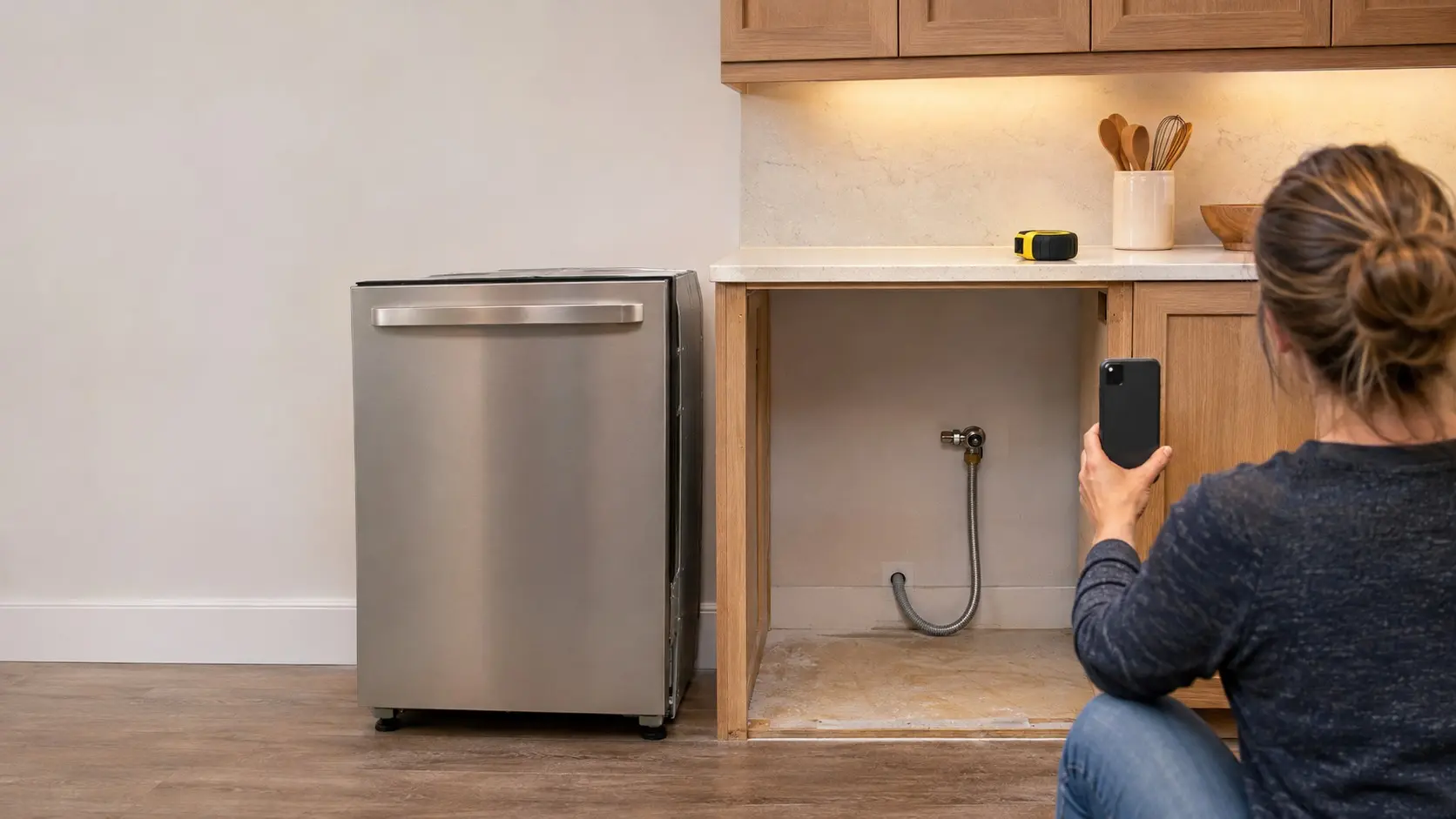
Send five or six clear photos rather than one wide one: they let the installer plan parts before arriving.
- The full opening with the old appliance removed, or the spot where the new one goes.
- The outlet or the gas valve on the wall, with a tape measure laid beside it for scale.
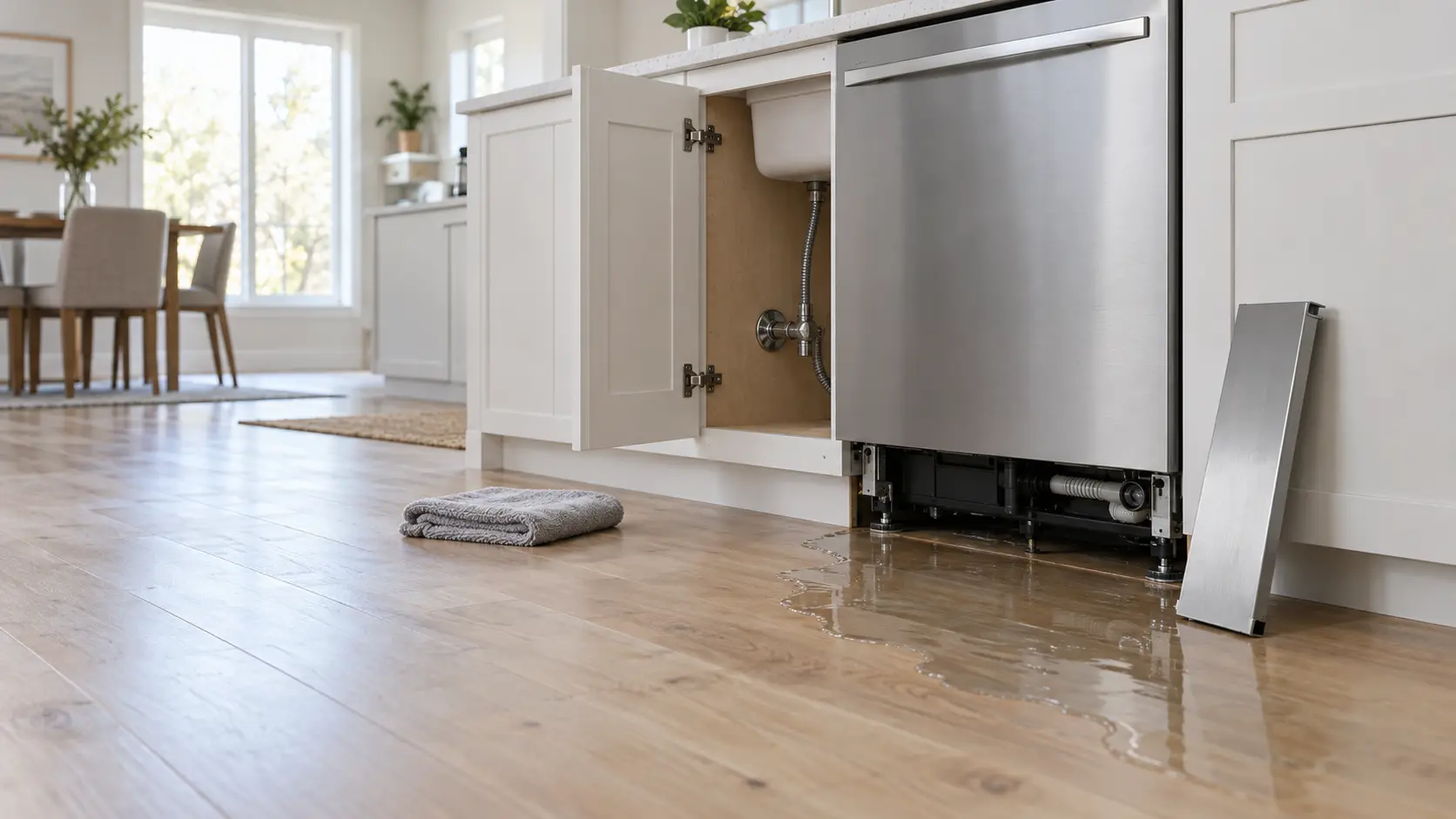
- The water shutoff valve and the supply line.
- The drain connection or standpipe.
- The route in: doorway, stairs, hallway turns.
- The model plate of the old unit, if it is staying connected for the swap.
What to leave out of the shot
Do not reach in to a gas valve, its connector or a wired terminal block for the picture, and do not touch the valve handle. Photograph from a step back with the flash on. Do not pull a gas appliance or a hardwired unit out from the wall just to get the shot: a gas connector can be strained and a wired connection disturbed. If the hookup is hidden behind a unit that is still connected, say so, and the installer will check it on the day.

What do you say about the old appliance?
Say what is being removed, where it goes and what it is connected to. A unit that has to be disconnected, hauled away and replaced is a different job from one that is only being added.
Table: What to tell the installer about each existing item
| Item | What to say |
|---|---|
| Old unit | Type, size, whether it works and whether it should leave the house |
| Gas, water or drain connection | Whether it is on a shutoff and whether the shutoff turns |
| Electrical plug or hardwire | Whether it is a plug or a wired connection |
| Extras | Stacking kits, platforms, brackets or panels to reuse |
An old appliance disconnect and removal visit covers the work of turning off, disconnecting and taking out the old unit, and it should be booked with the install, not after. If the old unit leaks or smells of gas, say so when you book.
What about stairs, doors and floors?
Tell the installer how the appliance gets from the door to its place, because a narrow stair or a tight turn changes how many people the job needs.
Describe the route
Measure the narrowest doorway and any turns. Note stairs, a step into the kitchen, thick carpet, tile you do not want scratched and anything fragile along the path. The delivery path guide gives a checklist to follow.
Note parking and timing
Say whether there is a place to park, an elevator booking in a condo and the hours the building allows. If someone must be home to turn off the water or let a crew in, say who.
How do you make the first visit enough?
Book the visit with every item answered, and ask what will be done on the day and what might need a second trip. A short, honest message beats an optimistic one.
- State what you know is missing, such as a bracket, a vent cap or a shutoff valve.
- Say if the home's water, gas or electrical setup has been changed recently.
- Mention whether the delivery crew is also expected to connect anything.
- Ask whether a gas hookup or a new outlet needs a separate qualified installer.
If you are unsure what the space needs, a diagnostic visit can check the opening and connections first. For a cabinet-integrated unit, a built-in and panel-ready fitting needs the cutout and panel details in advance. Compare who does what in store delivery, install or an independent installer before you decide.
What do installers wish customers had said?
The details that most often turn a one-visit job into two are small, and all of them are easy to mention at booking.
Things people forget to mention
- A cabinet or wall that was changed after the appliance was chosen, so the opening no longer matches the spec sheet.
- A shutoff valve that is painted shut, stiff or buried behind the unit.
- A floor that is uneven, soft or freshly refinished, which affects leveling and how the unit is moved.
- Pets or children, which change how doors, gates and the work area are managed.
- A second appliance that has to be moved aside to reach the first, such as a washer beside a dryer.
Things worth confirming after booking
Ask for a window of arrival, the expected length of the job and whether the crew carries the usual fittings, hoses and kits or expects you to supply them. If the unit is delayed, tell the installer as soon as you know, because the slot and the crew depend on it. Keep the manual, the order confirmation and the photos together; the guide on keeping the install records and manuals explains what to file afterward.