
What an installation leaves behind besides the appliance
The installation instructions are written for the installer, yet the makers want them kept by the household. Whirlpool's gas cooking instructions open with three lines: save for the local inspector's use, installer leave the instructions with the homeowner, homeowner keep them for future reference. GE's dish care instructions ask for the booklet to be left for the consumer's and the local inspector's use and kept with the owner's manual, and GE's laundry instructions carry the same note.
That booklet is the only document that shows how the appliance was meant to be connected: the clearances, the circuit, the gas pressure, the drain height. When something is questioned later by an inspector, a buyer's home inspector or a technician, it is the reference everyone reaches for, and a copy downloaded years afterwards may be a newer revision than the one your unit shipped with.
- Installation instructions and the use and care guide, both in their original revision
- Receipt, delivery paperwork and the written warranty
- Registration confirmation, with the date it was sent
- Any permit or inspection sign-off for new gas, electrical or duct work
- Photos of each connection taken before the appliance was pushed into place
When the booklet leaves with the crew
Installers sometimes gather packing and paperwork together and carry both out. Before the crew goes, ask for the installation instructions by name and check the box and the oven cavity for a second envelope. If it is gone, download the document for your exact model number the same day and note that it is a replacement copy.
Source: Whirlpool — Installation instructions, 30-inch freestanding gas ranges (W10658550) — Save for the local inspector; installer leaves the instructions with the homeowner; factory set for natural gas; conversion by a qualified installer; input reduced 4% per 1,000 ft above 2,000 ft; GE Appliances — Installation instructions, built-in dishwasher — Leave the instructions for the consumer's and local inspector's use; label a braided hose with the installation date; replace hoses, elbows and gaskets in 5 years; GE Appliances — Dryer owner's manual and installation instructions (49-3000386) — Installers leave these instructions with the customer; 4-wire required in new construction, 3-wire described; gas input reduced 4% per 1,000 ft above 2,000 ft
Finding the model and serial number on a new appliance
A new appliance carries its model and serial number in more than one place on the first day, and in fewer places once it is installed. The order confirmation names the model you paid for, and the carton label usually repeats both numbers, so compare them before the box goes out with the recycling. The number that counts, though, is the one on the rating plate fixed to the appliance itself, because that is the one parts, recalls and warranty claims are checked against.
Whirlpool lists where its tags usually sit, and the pattern holds across most makers. True puts the serial label of its built-in columns on the left wall near the freezer wire basket or the upper drawer, and GE's owner's manuals include a blank line near the front for writing both numbers by hand.
- Laundry: inside the door on the rim of the opening, or beneath the lid on the tub rim
- Dish care: on the left side of the tub frame, seen with the door open
- Cold storage: inside the fresh-food compartment, on the left wall for French door and bottom-freezer models and on the right for side-by-side
- Cooking appliances: on the oven frame or the storage drawer frame; a cooktop's rating plate is on its underside
- Over-the-range microwave: on the front frame, visible with the door open
Record it before the unit is built in
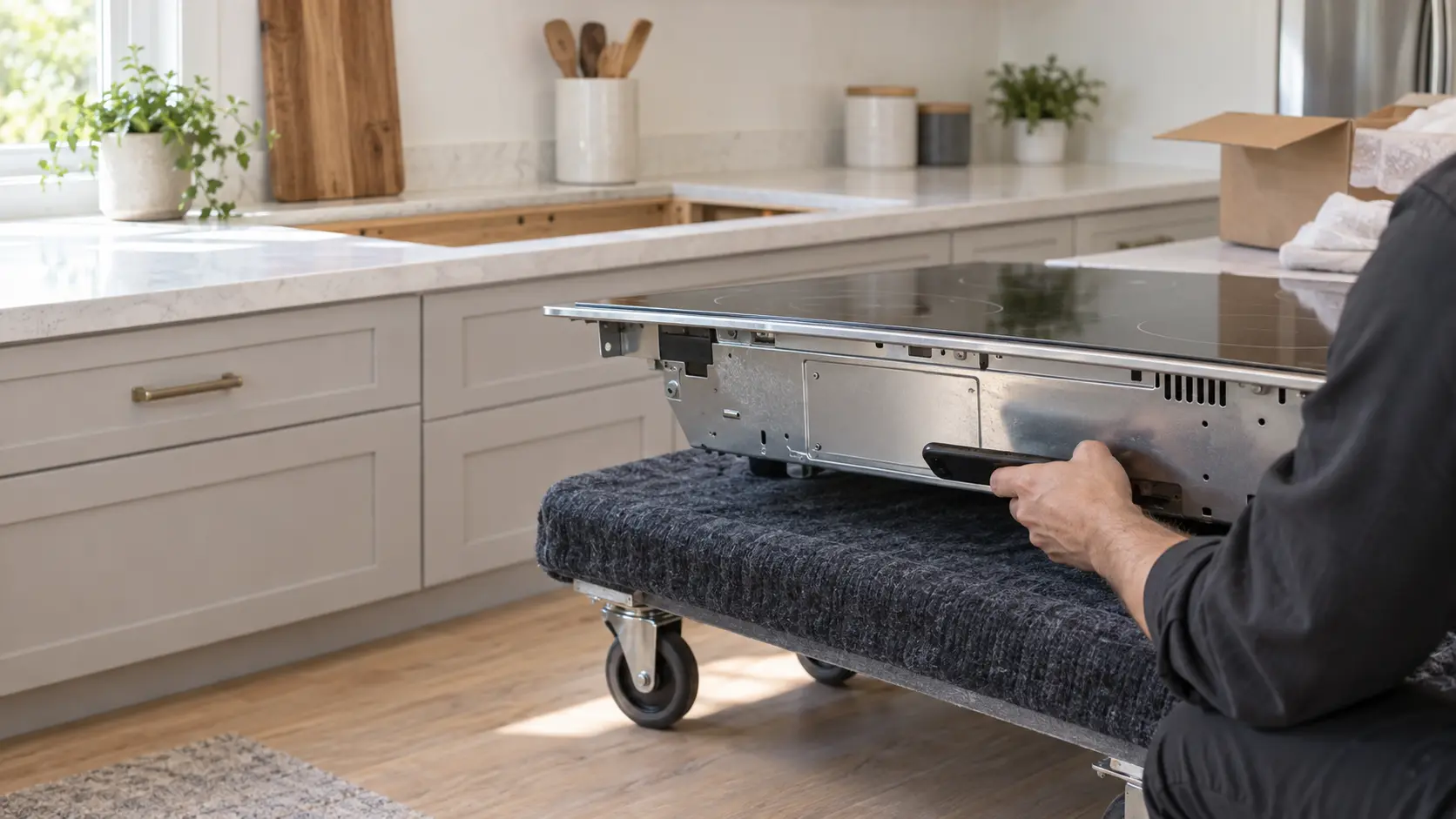
Some plates become hard to reach the moment installation ends. A cooktop dropped into a countertop hides its plate underneath, a panel-ready unit covers its cabinet with a custom front, and a freestanding unit pushed tight into an alcove turns its back label to the wall. Photograph every plate while the appliance is still on the dolly, then copy the numbers into the manual so they survive a lost phone.
Source: Whirlpool — Where is my model and serial number located? — Tag locations by appliance: washer and dryer door rim, dishwasher tub frame, refrigerator compartment walls, range oven or drawer frame, cooktop rating plate underneath, over-the-range microwave front frame; True Residential — 42/48 built-in installation manual — Serial label on the left wall near the freezer basket or upper drawer; register within 12 months of installation for extended sealed-system coverage; 30-day cosmetic warranty on stainless; GE Appliances — Single oven gas ranges owner's manual (49-2000316) — The manual provides a place to write the model and serial numbers

Registration, receipts and the dates that start each clock
The FTC notes that a warranty sometimes requires a product registration card to be returned before service is covered, and advises keeping a copy of the warranty together with the receipt, which proves the purchase date and that you are the original owner. Read the registration terms on the day of installation rather than when something goes wrong, because some deadlines are short.
True, for example, ties its extended sealed-system parts coverage to registration within 12 months of the unit's installation date, not its purchase date, and gives only 30 days to report cosmetic defects on stainless doors, handles and shelves. For a built-in ordered months before the kitchen is ready, those two dates can be far apart, so write the installation date down where the receipt is kept.
A date written on the hose itself
GE's dish care instructions ask the installer to label a flexible braided supply hose with its installation date and to replace braided hoses, elbows and gaskets after 5 years. A strip of tape and a marker on installation day turns that interval from a guess into a fact anyone can read with a flashlight.
Source: GE Appliances — Installation instructions, built-in dishwasher — Leave the instructions for the consumer's and local inspector's use; label a braided hose with the installation date; replace hoses, elbows and gaskets in 5 years; True Residential — 42/48 built-in installation manual — Serial label on the left wall near the freezer basket or upper drawer; register within 12 months of installation for extended sealed-system coverage; 30-day cosmetic warranty on stainless; FTC — Warranties — Some warranties require a registration card to be returned first; save the warranty and the receipt, which proves the purchase date and original ownership
Gas conversions, altitude and wiring choices worth a note
Some decisions made at the install are invisible afterwards. Whirlpool's gas cooking appliances leave the factory set for natural gas; converting to propane means changing the regulator setting and the orifice at each burner, work its instructions reserve for a qualified installer. Whirlpool and GE both reduce burner input by 4 percent for every 1,000 feet above 2,000 feet of elevation. A later technician who does not know either change was made can misread a flame or order the wrong parts.
Electric laundry has its own hidden choice. GE's instructions describe both a four-wire and a three-wire connection for its drying machines and require four-wire in new construction, so note which one was used and why.
- Gas type the appliance was set for, who converted it and on what date
- Any altitude adjustment made to burner input
- Three-wire or four-wire connection on an electric drying machine
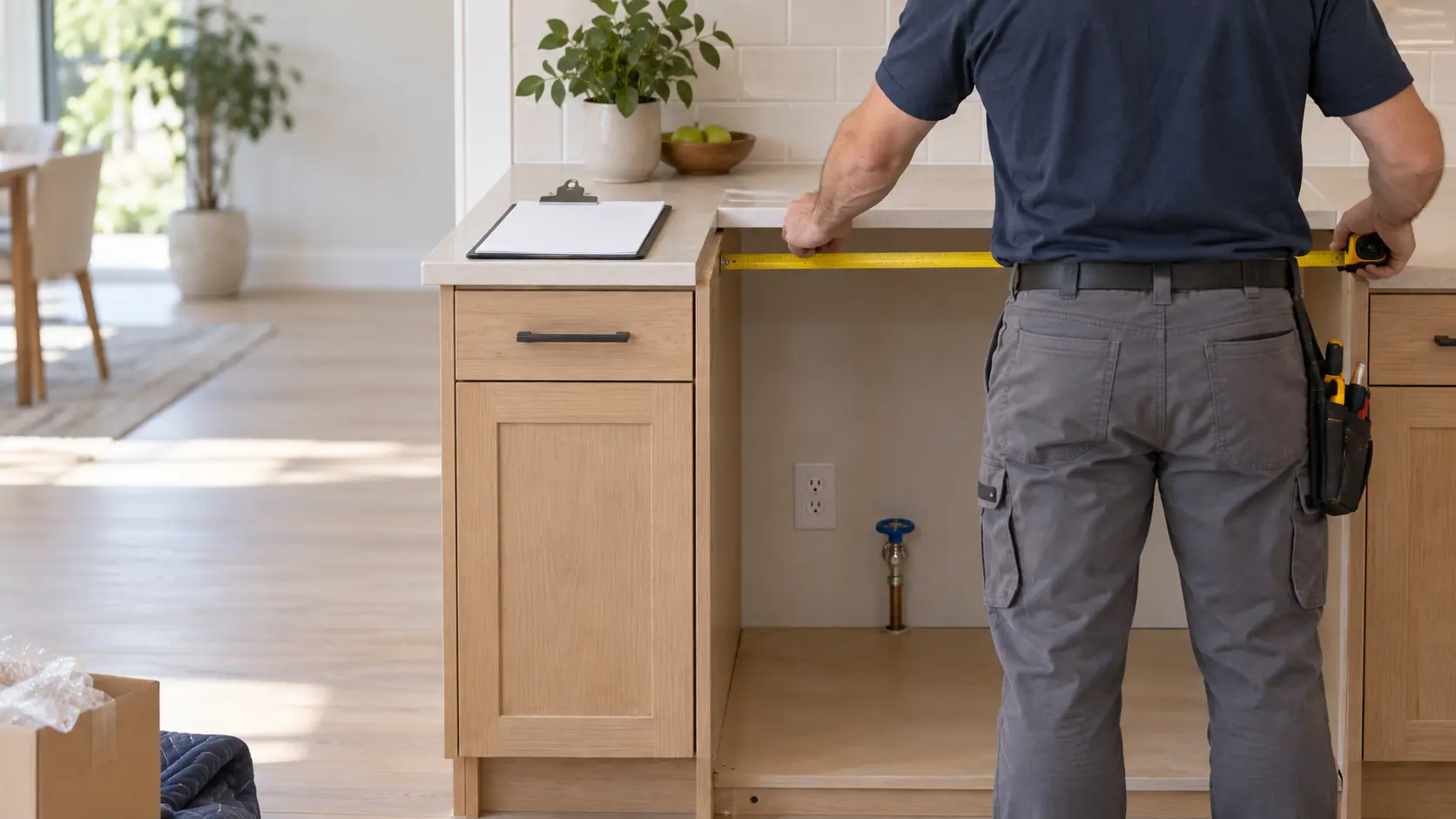
- Where the gas shutoff and the circuit breaker for each appliance are
Source: Whirlpool — Installation instructions, 30-inch freestanding gas ranges (W10658550) — Save for the local inspector; installer leaves the instructions with the homeowner; factory set for natural gas; conversion by a qualified installer; input reduced 4% per 1,000 ft above 2,000 ft; GE Appliances — Dryer owner's manual and installation instructions (49-3000386) — Installers leave these instructions with the customer; 4-wire required in new construction, 3-wire described; gas input reduced 4% per 1,000 ft above 2,000 ft
One folder, one photo set, one place everyone knows
Good appliance installation records depend less on format than on habit. A paper folder in the kitchen drawer nearest the appliances works, and so does a shared album with a photo of each rating plate, each open valve and each connection taken before the appliance was pushed back. What fails is the version that lives in one person's email.
Add to the same place over time: the first filter change, a replaced hose, a service visit. Keep manuals for appliances the household still owns and discard the ones for units that have left, so the folder stays a reliable description of the kitchen and laundry as they are today.


