
Why the first days after an install need their own routine
Every new appliance leaves the factory with traces of how it was made: a film of oil on oven parts, carbon dust packed inside a water filter, adhesive from shipping tape, an empty ice bin and controls sitting at their default settings. None of this means something is wrong. It does mean the first few uses behave differently from the hundredth, and a household that treats day one like any other day tends to misread what it sees.
A sensible new appliance break-in is mostly patience plus a few one-time jobs. Cold storage gets time to cool before it is loaded, cooking appliances get one empty heat before food goes in, water lines get flushed, and laundry machines get a first cycle with nothing in the drum. Each takes minutes of effort and avoids the most common first-week complaints.
Expected on day one, and what is not
A faint smell of hot oil that fades over two or three uses, a compressor that runs almost without stopping on the first afternoon, and a water dispenser that spits air are all part of the break-in. A smell that grows stronger with each use, a breaker that trips, water appearing under the unit or any hint of gas are not break-in at all, and the appliance should be switched off until it has been looked at.
Cold storage: let it pull down before the groceries go in
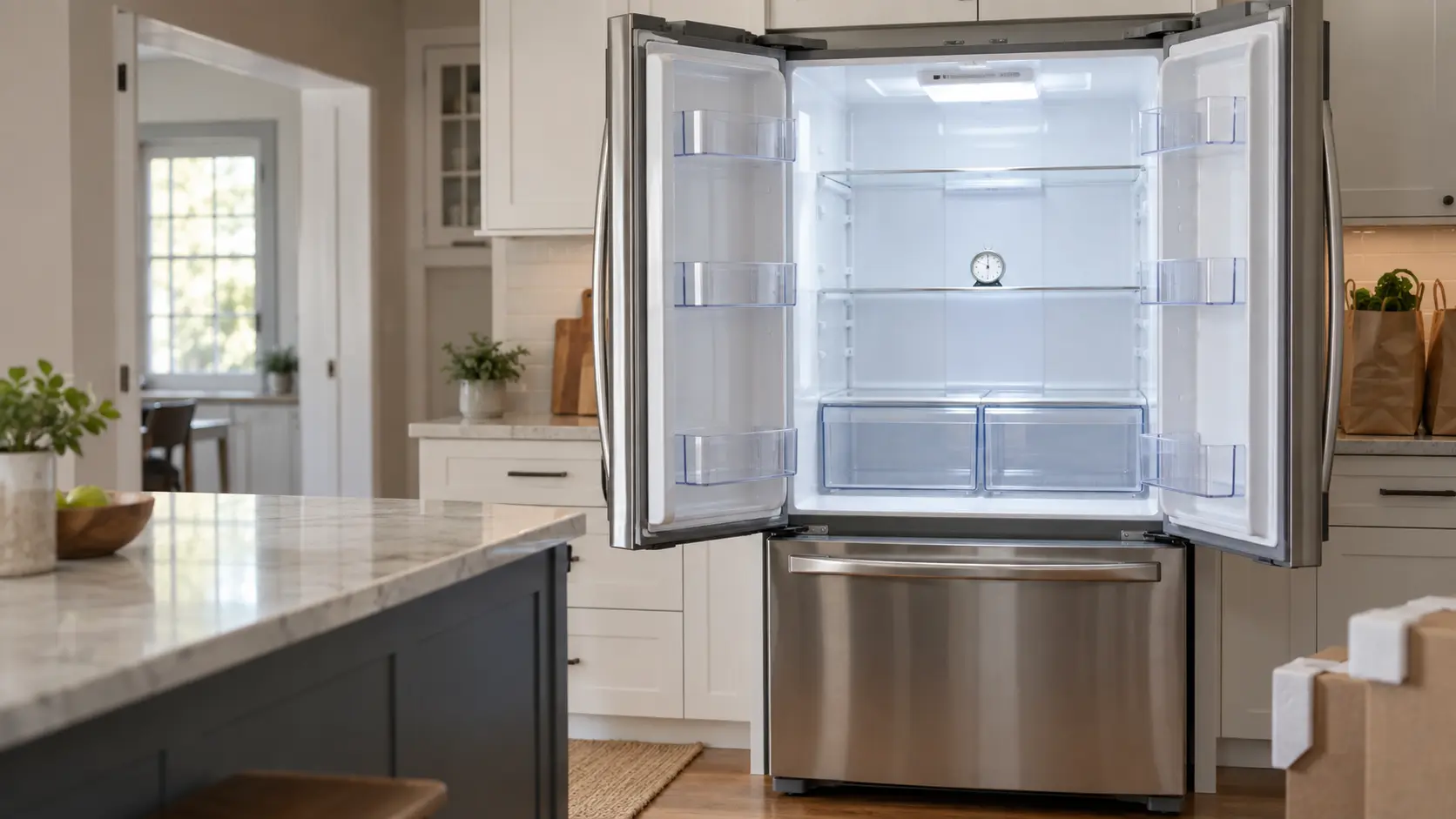
Whirlpool puts the cool-down of a typical refrigerator at 8 to 12 hours to reach operating temperature and up to 24 hours to settle completely, and suggests waiting until the fresh-food side reads 37°F or below and the freezer 0°F or below before a full load goes in. Loading warm groceries into a cabinet that is still pulling down slows the whole process, so plan the delivery for a day when the old unit, a cooler or a neighbor can hold food overnight.
Expect the new unit to run far more than the one it replaced. Whirlpool explains that its efficient compressors are designed to run for long stretches, typically 40 to 80 percent of the time at normal room temperatures and more in a warm kitchen. Long run time on its own is the design, not a warning sign.
- Set 37°F and 0°F, or the maker's middle setting, and leave the controls alone for a day
- Load in two stages if the freezer is not yet at 0°F
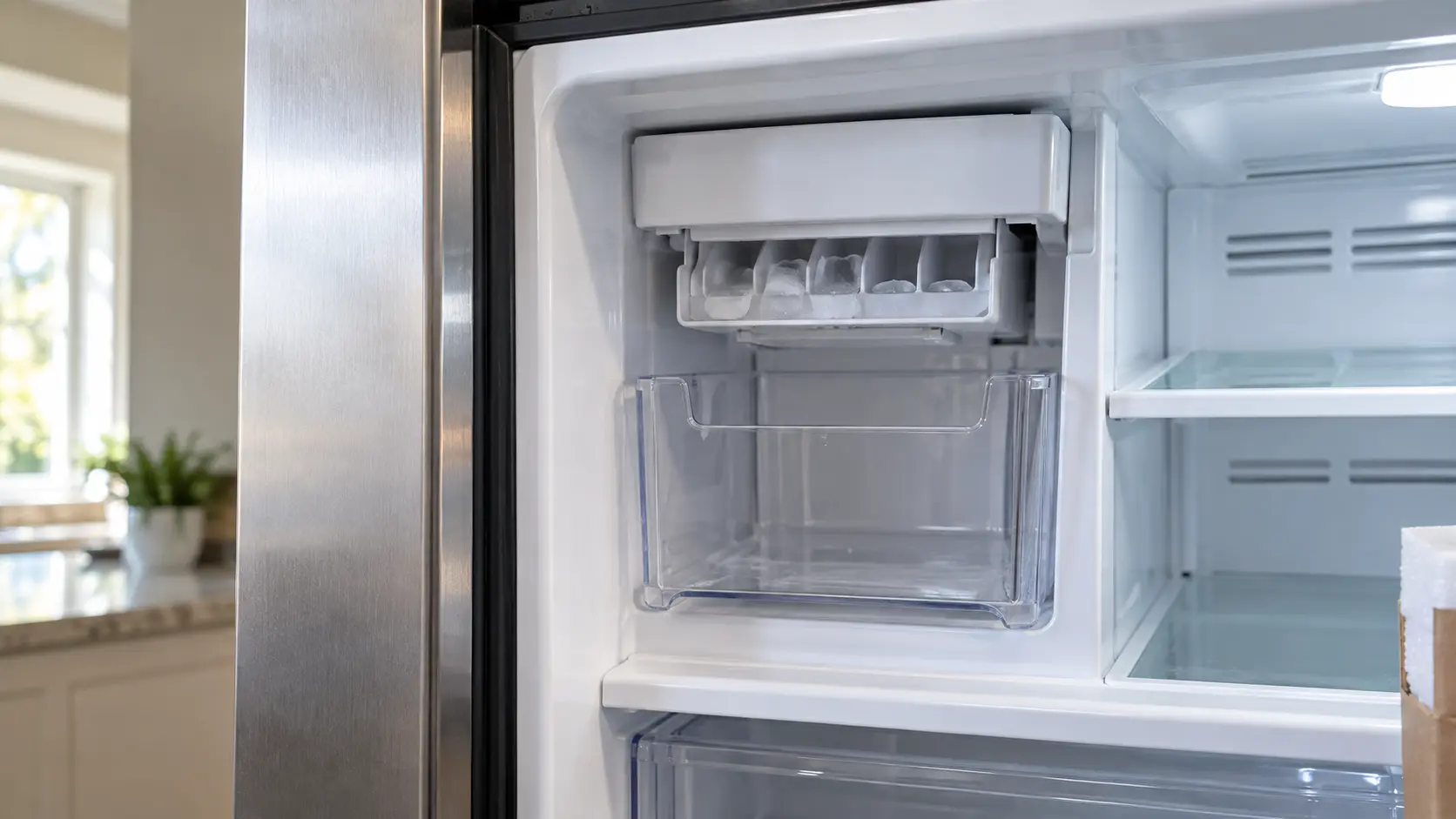
- Expect ice about every three hours once cold, and up to three days to fill the bin
- Keep a thermometer on a middle shelf for the first week rather than trusting the display
Why the first water and ice get thrown away
A new filter holds loose carbon from manufacturing and the line behind it is full of air. Whirlpool's routine is to press the dispenser for 5 seconds, release for 5, and repeat until 1 to 4 gallons have run through, depending on the filter. Units without a dispenser do the same job with ice: fill and discard three full containers. Skipping the flush is the usual reason for cloudy water, dripping at the dispenser and small hollow cubes in the first week.
Source: Whirlpool — How long to wait before adding food to a new refrigerator — 8 to 12 hours to operating temperature, up to 24 to stabilize; load at 37°F and 0°F; a batch of ice about every three hours, up to three days to fill the bin; Whirlpool — New refrigerators are different — A new high-efficiency refrigerator runs about 40% to 80% of the time at normal room temperature; Whirlpool — How to flush the water system in a refrigerator — Dispense in 5-second bursts until 1 to 4 gallons have run; without a dispenser, fill and discard three containers of ice
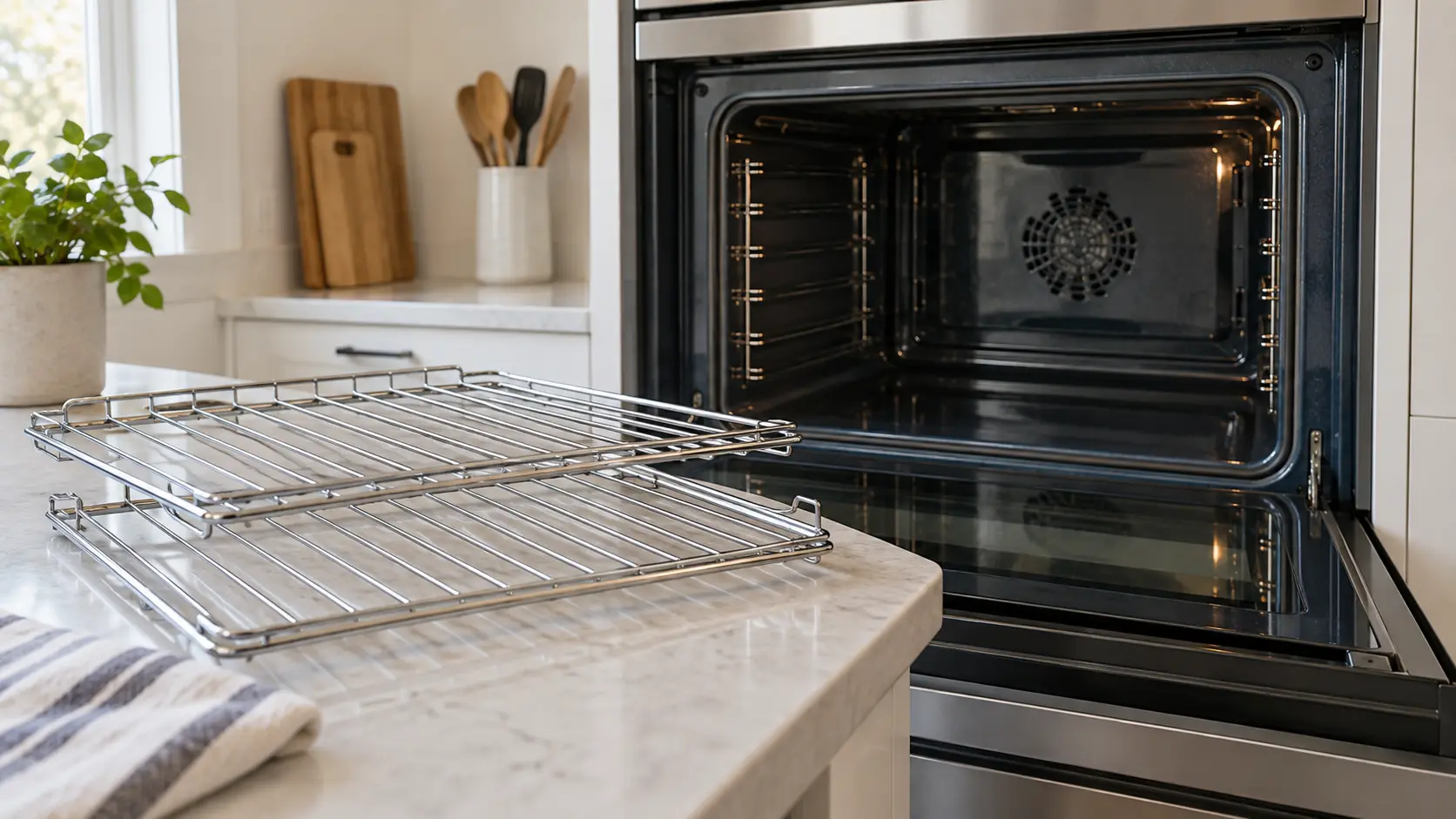
Cooking appliances: one empty bake before the first meal
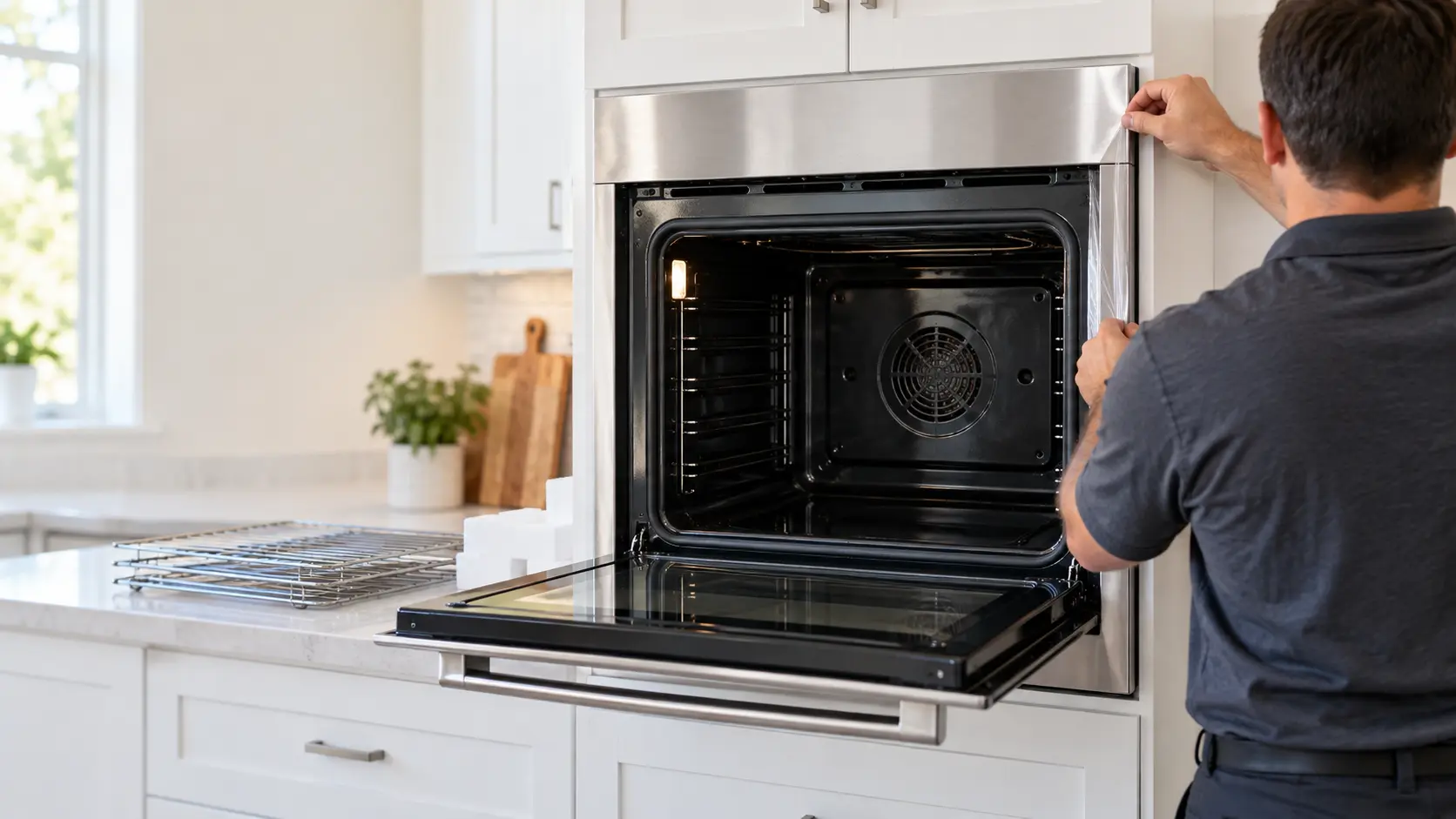
Whirlpool traces the smoke and smell of a new oven to heating new parts and insulation, the protective oil used in manufacturing and leftover shipping tape. Its fix is simple: remove every piece of packaging from the cavity, run Bake at 350°F for 60 minutes with the oven empty, repeat once or twice if the smell lingers, and wipe the cool interior with a damp cloth. Cooking before that first empty heat risks food that tastes of it.
The same break-in covers the outside. Whirlpool asks for the thin plastic film on control panels, doors and stainless trim to come off before first use, because heat and moisture bond it to the finish and make it much harder to remove later. On a gas model, check that every burner cap sits level on its base; Whirlpool's installation instructions note that a cap out of position keeps its surface burner from lighting.
Pet birds and sensitive noses
Whirlpool warns that some birds are extremely sensitive to the fumes a new oven gives off and can die from exposure, so move any bird to a closed, well-ventilated room before the first heat. Open nearby windows and run the hood fan for anyone else who finds the smell unpleasant.
Source: Whirlpool — Ovens, first-time use: odors and smells — New-oven odor comes from new parts, insulation, manufacturing oil and tape; bake empty at 350°F for 60 minutes; birds are sensitive to the fumes; Whirlpool — Removing protective film from a range — Remove the protective film before first use; heat and moisture bond it to the finish; Whirlpool — Installation instructions, 30-inch freestanding gas ranges (W10658550) — Burner caps must be level and properly positioned or the surface burners will not light
Dish care and laundry: hot water first, clothes second
A new dish care machine washes best with incoming water at about 120°F. Whirlpool's habit for owners is to run the kitchen faucet for 30 to 60 seconds before starting a cycle, so the machine fills with hot water instead of the cold water that was sitting in the pipe. A cup of that tap water and a kitchen thermometer tell you in one minute whether the water heater is set high enough.
For a new front-loading laundry machine, Whirlpool recommends one empty Quick Wash with HE detergent in the dispenser before the first real load, which cleans the drum and primes the dispenser. Both the hot and cold valves must be open, since its models need pressure from both hoses to finish a cycle.
- Dish care: warm the tap, then start; watch under the sink during the first drain
- Laundry: empty Quick Wash, then a normal load, then check behind the machine for drips
- Heated drying: clean the lint screen before the very first load, as with every load after
A freshly painted laundry room
Installs often follow a renovation. Whirlpool points out that a drying machine pulls in the room's air to dry the load, so fumes from fresh paint, stain or varnish end up in the clothes. Ventilate the room until the odor is gone, and rewash anything that picked it up. GE adds that its drying machines need a room above 50°F for the controls to work properly, which matters in a garage or an unheated addition.
Source: Whirlpool — Dishwasher water temperature troubleshooting — Incoming water of 120°F; run the kitchen faucet 30 to 60 seconds before starting a cycle; Whirlpool — Front load washer installation checklist — Run an empty Quick Wash with HE detergent before the first load; both hot and cold water must be connected and on; Whirlpool — Odor or smell from a dryer — The dryer pulls room air, so paint, stain or varnish fumes end up on the load; GE Appliances — Dryer owner's manual and installation instructions (49-3000386) — Install the dryer where the temperature is above 50°F for the control system to operate properly