Start with the rating plate and the installation sheet
Every appliance circuit and outlet requirement is printed twice: on the rating plate on the appliance and in the electrical section of its installation instructions. Read both before the purchase is final, because the house may need a new circuit, a different receptacle or a replaced two-prong outlet, and each of those is work for an electrician before the appliance arrives. GE's dish care instructions say it directly: if the supply does not meet the requirements, call a licensed electrician before proceeding.
True adds a step few owners know about: measure the incoming voltage before connecting a new unit, and correct it if it is more than 5 percent below the rated voltage on the serial label. A tired circuit shared with a toaster and a space heater can pass for adequate on the first day and cause trouble for years.
Plug, cord kit or hardwired connection
Freestanding appliances usually arrive with a cord and plug. Many electric cooking and laundry appliances ship without one, so the installer fits a cord rated for the circuit. GE's built-in dish care machines can be hardwired through a junction box or fitted with GE's own cord kit. The choice decides whether the kitchen needs a receptacle or a junction box, and where.
Source: GE Appliances — Installation instructions, built-in dishwasher — 120 V individual grounded branch circuit on a 15 or 20 A breaker; wiring rated 75°C; aluminum-wiring connectors; receptacle 6–18 in. from the opening and floor; hardwired cable 24 in. from the rear wall; call a licensed electrician if the supply does not meet the requirements; True Residential — 42/48 built-in installation manual — 115 V, 15 A, three-prong grounding receptacle in the marked area; GFCI not recommended; check incoming voltage within 5%; never an adapter or extension cord, which voids the warranty
Cold storage: 115 volts, grounded, and a GFCI only where the maker allows it
True's built-in columns need 115 volts, 60 Hz, on a 15-amp breaker with a three-prong grounding receptacle placed inside a shaded zone on the rough-opening drawing, so the plug can be reached once the unit is in. True does not recommend GFCI protection, warning that it may interrupt operation, and asks for a licensed electrician to confirm the outlet's polarity and ground.
The same instructions rule out adapter plugs and extension cords in capital letters and say True will not honor its warranty on a unit connected through either. GE's older manuals strongly recommend against extension cords too. Local code may require GFCI protection on some kitchen and garage receptacles regardless, which is exactly the conflict an electrician should resolve before the unit arrives.
- Dedicated, grounded 115-volt receptacle within the zone the drawing shows
- No adapter on a two-prong outlet; the outlet itself is replaced
- No extension cord, even for the first night
- Polarity and ground checked on a new or relocated outlet
Source: True Residential — 42/48 built-in installation manual — 115 V, 15 A, three-prong grounding receptacle in the marked area; GFCI not recommended; check incoming voltage within 5%; never an adapter or extension cord, which voids the warranty; GE Appliances — Side-by-side refrigerator owner's manual (49-60198) — Strongly recommends against the use of an extension cord

Cooking appliances: from a 120-volt ignition circuit to 40 amps
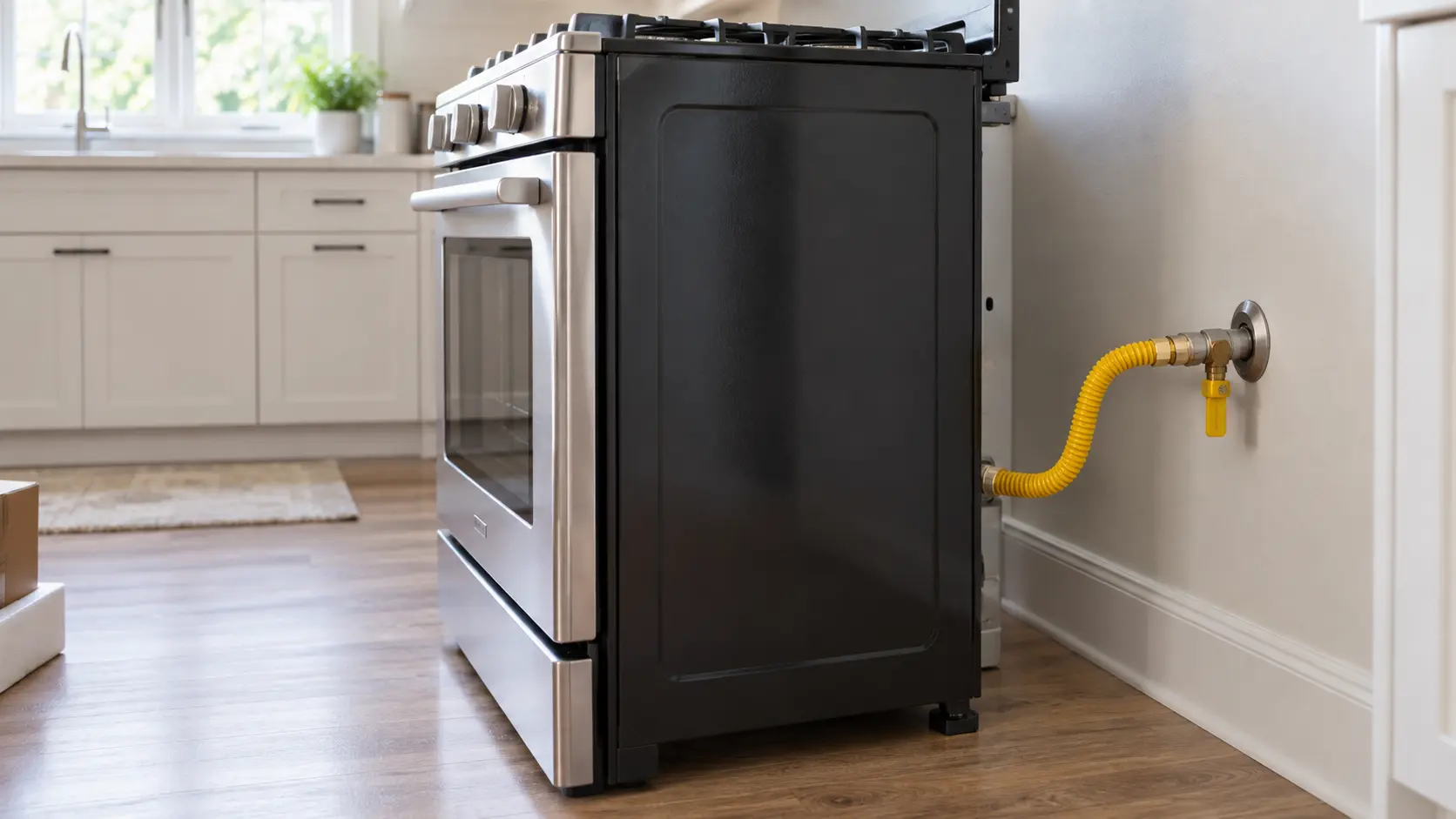
A gas cooking appliance still needs electricity for its igniters, clock and controls. Whirlpool asks for a 120-volt, 15-amp circuit, recommends one serving only the appliance, and notes that its electronic ignition will not work on an outlet that is not correctly polarized, and that the keypads stay dead if the metal chassis is not grounded. It also recommends against plugging any major appliance into a GFCI outlet because normal cycling can trip it.
An electric cooking appliance is a heavy load. GE's installation instructions for its freestanding electric models call for an individual, properly grounded branch circuit of at least 40 amps on 120/240 or 120/208 volts, with a listed cord rated at 40 amps and 125/250 volts. An over-the-range microwave has its own rule: Sharp wants a separate 120-volt circuit of 15 amps or more, with the grounded receptacle in the cabinet directly above, installed by a qualified electrician before the microwave goes up.
Three-wire or four-wire
Since January 1, 1996, the National Electrical Code has required a four-conductor connection to electric cooking appliances in new construction, according to GE's instructions, and the same applies in mobile homes, recreational vehicles and anywhere local codes forbid grounding through the neutral. Older kitchens may still have three-wire receptacles; the installer matches the cord to what the code allows at that address.
Source: Whirlpool — Installation instructions, 30-inch freestanding gas ranges (W10658550) — 120 V, 15 A circuit, separate circuit recommended; ignition needs correct polarity; chassis must be grounded for the keypads; GFCI not recommended for any major appliance because of nuisance tripping; GE Appliances — Installation instructions, free-standing electric ranges (31-2000911) — Individual grounded branch circuit of 40 A minimum on 120/240 or 120/208 V; cord rated 40 A, 125/250 V; four-conductor connection required in new construction since January 1, 1996; Sharp — Over-the-range microwave installation instructions (R-1881LSY) — Separate 120 V, 15 A or more branch circuit with a grounded receptacle in the cabinet above; a new outlet installed by a qualified electrician first
Dish care: an individual circuit in the sink cabinet
GE's built-in dish care machines need 120 volts, 60 Hz, on an individual, properly grounded branch circuit protected by a 15- or 20-amp breaker or time-delay fuse, wired with two conductors plus ground rated for 75°C. Aluminum house wiring needs listed anti-oxidant compound and aluminum-to-copper connectors.
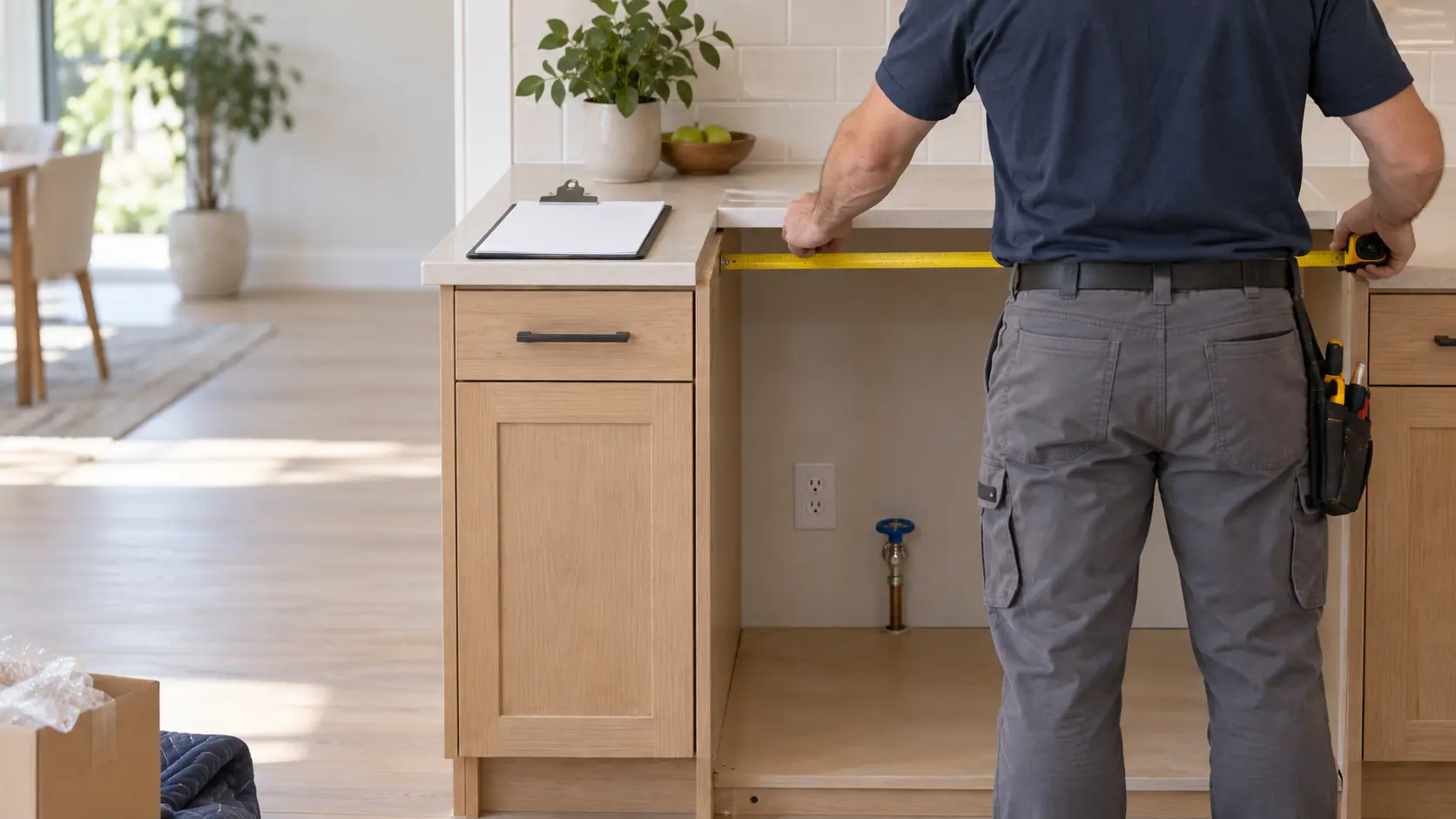
Where the power arrives matters for the fit. For a cord-connected model, GE wants a three-prong receptacle on the back wall of the sink cabinet, 6 to 18 inches from the opening and 6 to 18 inches above the floor, with the cord passing through its own hole. For a hardwired model, the cable must reach at least 24 inches out from the rear wall so it can be connected at the right front corner.
- Receptacle in the adjacent cabinet, never behind the machine
- Cord and hot water line through separate holes
- Hardwired cable long enough to connect before the machine slides in
- Breaker labeled for the machine alone
Source: GE Appliances — Installation instructions, built-in dishwasher — 120 V individual grounded branch circuit on a 15 or 20 A breaker; wiring rated 75°C; aluminum-wiring connectors; receptacle 6–18 in. from the opening and floor; hardwired cable 24 in. from the rear wall; call a licensed electrician if the supply does not meet the requirements
Laundry: 120 volts for washing, 240 for heated drying
Whirlpool's washing machines use a grounded 120-volt, three-prong outlet within 6 feet of the power cord, preferably on a circuit serving only that machine, with a time-delay fuse or breaker. LG adds that the outlet should be within 60 inches of either side and never shared with a second appliance.
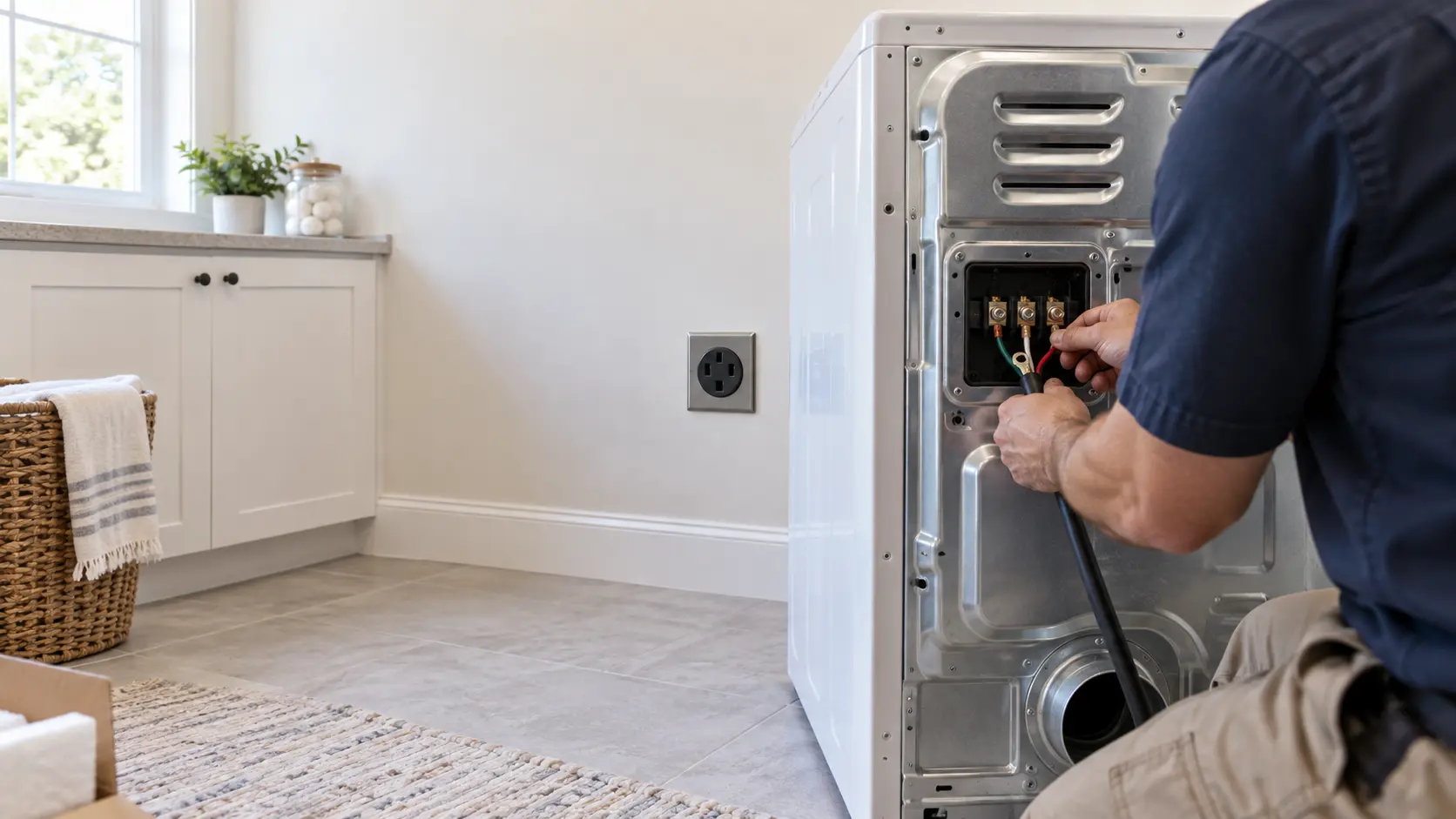
An electric drying machine is a 240-volt appliance. GE's instructions call for a new listed 240-volt, 30-amp cord, a 30-amp fuse or breaker, and a four-wire connection in new construction; where the branch circuit is on a GFCI breaker, a three-wire connection is not permitted. A gas drying machine still needs its 120-volt outlet for the drum motor and controls.
Why the old cord rarely goes on the new machine
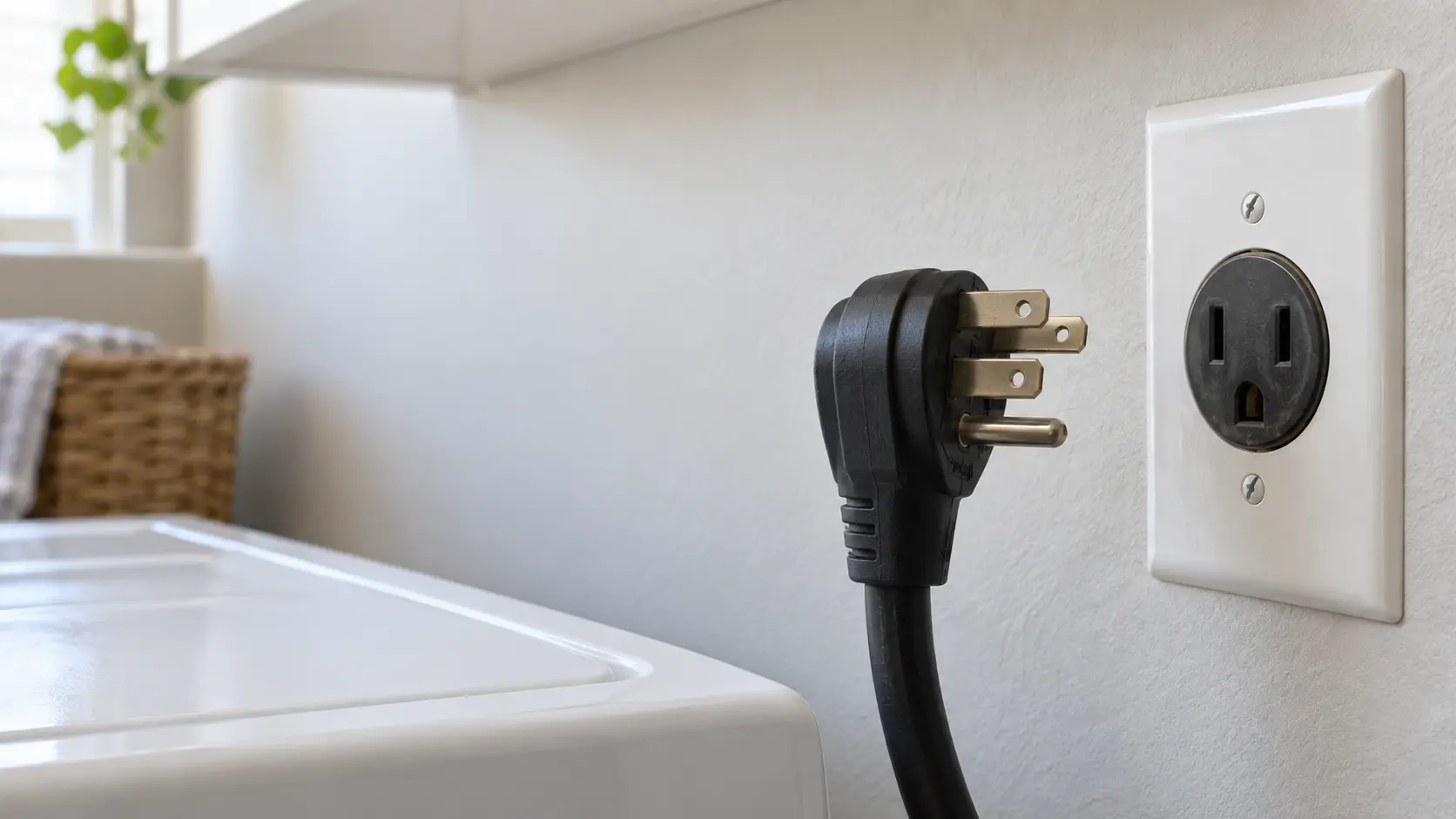
Cords for electric cooking and drying appliances are bought to match the house receptacle, and a home wired after 1996 has a four-prong receptacle that an old three-prong cord will not fit. GE specifies a new cord, and the right one is the one that matches both the receptacle and the terminal block of the new appliance.
Source: Whirlpool — Electrical supply needed for a washer — Grounded 120 V three-prong outlet within 6 ft of the cord; separate circuit recommended; time-delay fuse or breaker; no extension cord; LG Electronics — Washer owner's manual (WM4080) — Outlet within 60 inches of either side; do not overload the outlet with more than one appliance; GE Appliances — Dryer owner's manual and installation instructions (49-3000386) — New UL-listed 240 V, 30 A cord and 30 A fuse or breaker; four-wire required in new construction; three-wire not permitted on a GFCI breaker