Are open-box and floor-model appliances a safe buy?
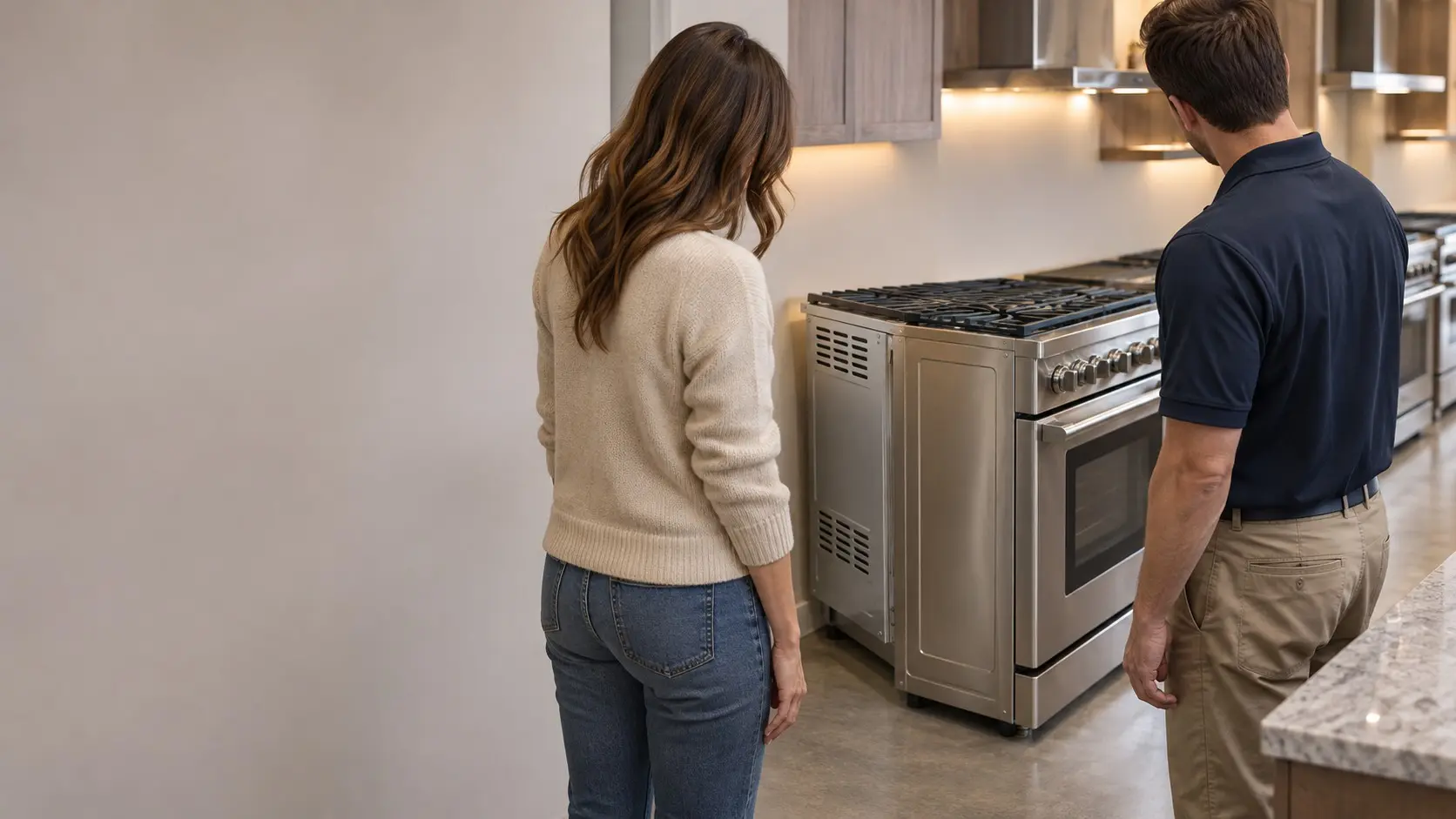
Open-box appliances can be a safe buy, if you treat the discount as a trade for work you do at the store. An open-box unit was bought and returned or opened for display, and a floor model has been touched by many hands. The risk is not that it is broken; it is that it is incomplete or damaged in a place that matters at installation.
Open-box versus floor model
An open-box unit usually arrives in its carton with the packaging opened and the accessories possibly rifled. A floor model has been on display, sometimes for months, and may have had its kit, cords or shelves removed to be shown. Both are sold as-is or with a shorter return window, so the paperwork matters as much as the appliance.
Ask what is covered and for how long
Ask for the return window, who handles a delivery problem and whether the maker's coverage still starts on your purchase date or an earlier one. Get the answer written on the receipt rather than relying on memory.
What should come in the box?
Count the pieces against the manual's parts list before you pay, because the small items are the ones that go missing.
- Anti-tip bracket and screws for a range or a freestanding cooking appliance.
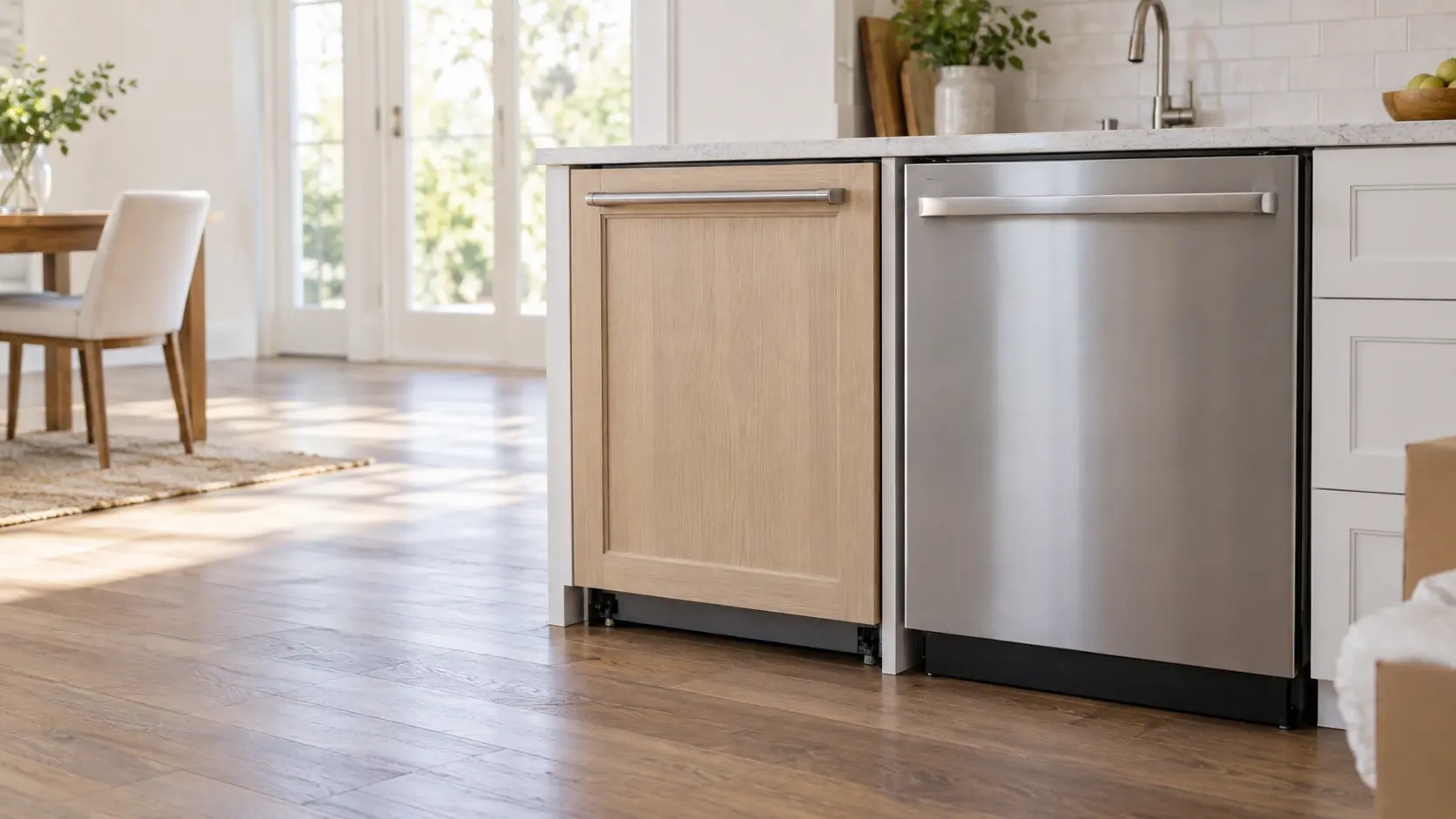
- Mounting brackets, trim kits or side panels for a built-in.
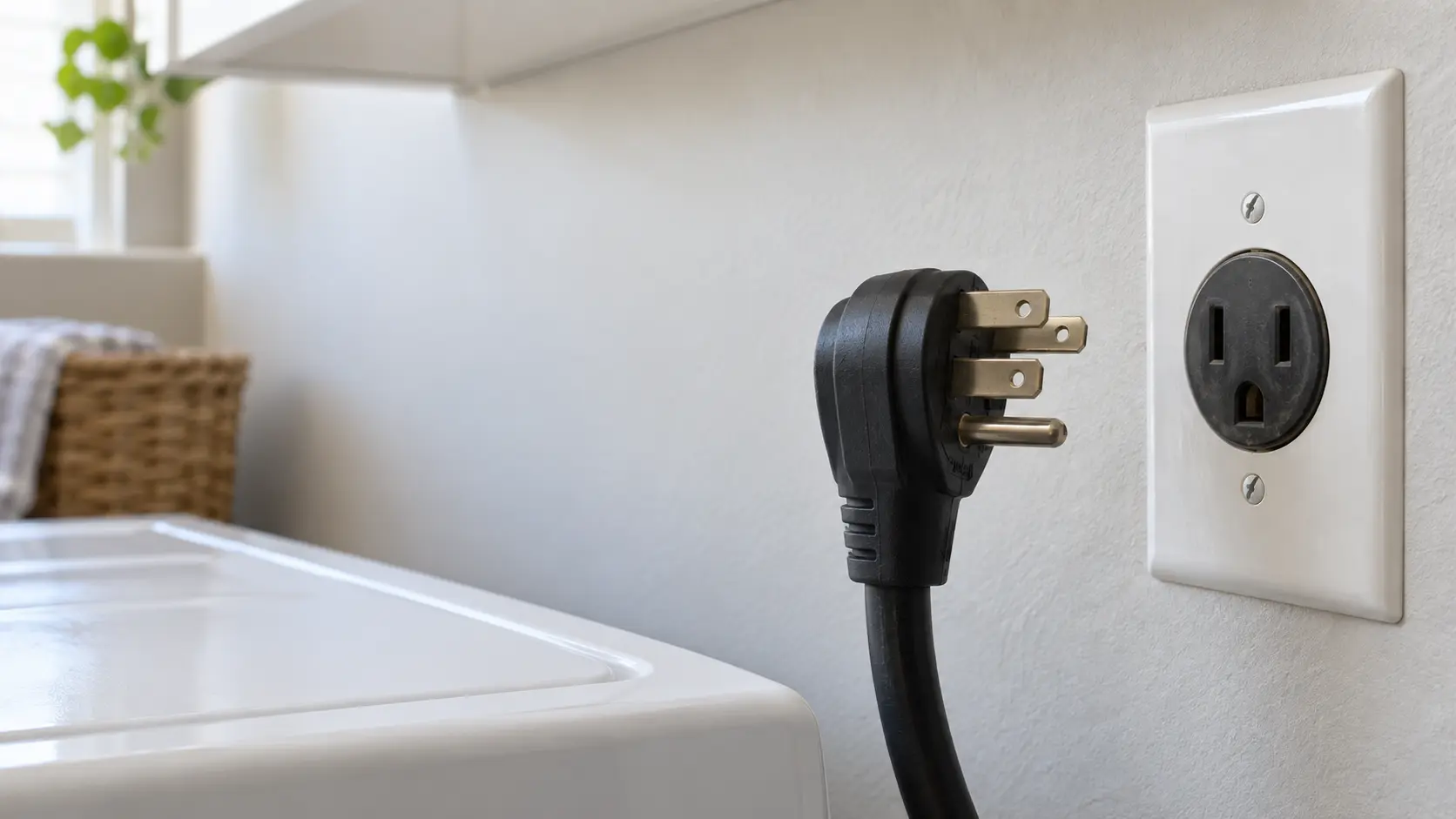
- The power cord, if the model is sold with one, and the correct plug.
- Shelves, racks, drawers and filters that belong inside.
- The printed manual, the spec sheet and the template or cutout sheet.
- Any water, gas or drain connectors the manual lists as included.
Gas models are not always sold with a connector or a conversion kit, and a model made for natural gas may need a kit to run on propane; a conversion is work for a qualified installer, not something to do at home, so ask whether the kit is in the box and who will fit it. The gas appliance hookup guide lists what normally comes with the unit and what does not.
The bracket that gets lost
The bracket is the first item to check. Without it a range or other tall freestanding unit has no way to meet the tip-over requirement; see anti-tip brackets and why they are required. If the store cannot find one, you can still buy it, but you need the right model. An anti-tip bracket and leveling visit covers fitting it correctly to the floor or wall.

Where should you look for damage?
Look at the faces and edges that touch the cabinet, floor and wall, because a cosmetic scratch on the front is less important than a bent mounting flange.
Table: Inspection points on an open-box unit
| Area | What to check | Why it matters |
|---|---|---|
| Mounting flanges and trim | Straight, no kinks or crushed corners | A built-in must sit flush in the opening |
| Back and sides | Dents, bowing, scraped insulation | A dent can stop the unit sliding into place |
| Feet and rollers | All present, turn freely | Leveling depends on them |
| Door and hinges | Opens, closes, aligns with the frame | A door that drops is hard to adjust later |
| Cords and ports | Cord intact, ports free of tape residue | A damaged cord should not be used |
Look inside and underneath
Open every door and drawer, check the racks and run a hand along the inside edges. Look for rust, moisture or signs the unit was moved while loaded. Tilting a heavy unit to look underneath is a two-person job; ask the store to do it.
How do you check the spec sheet against your space?
Take the model number from the plate or the carton and read its spec sheet on your phone, then compare it with your measurements before the unit leaves the store. Floor models are sometimes a different version of a similar-looking model, so check the exact number rather than the name.
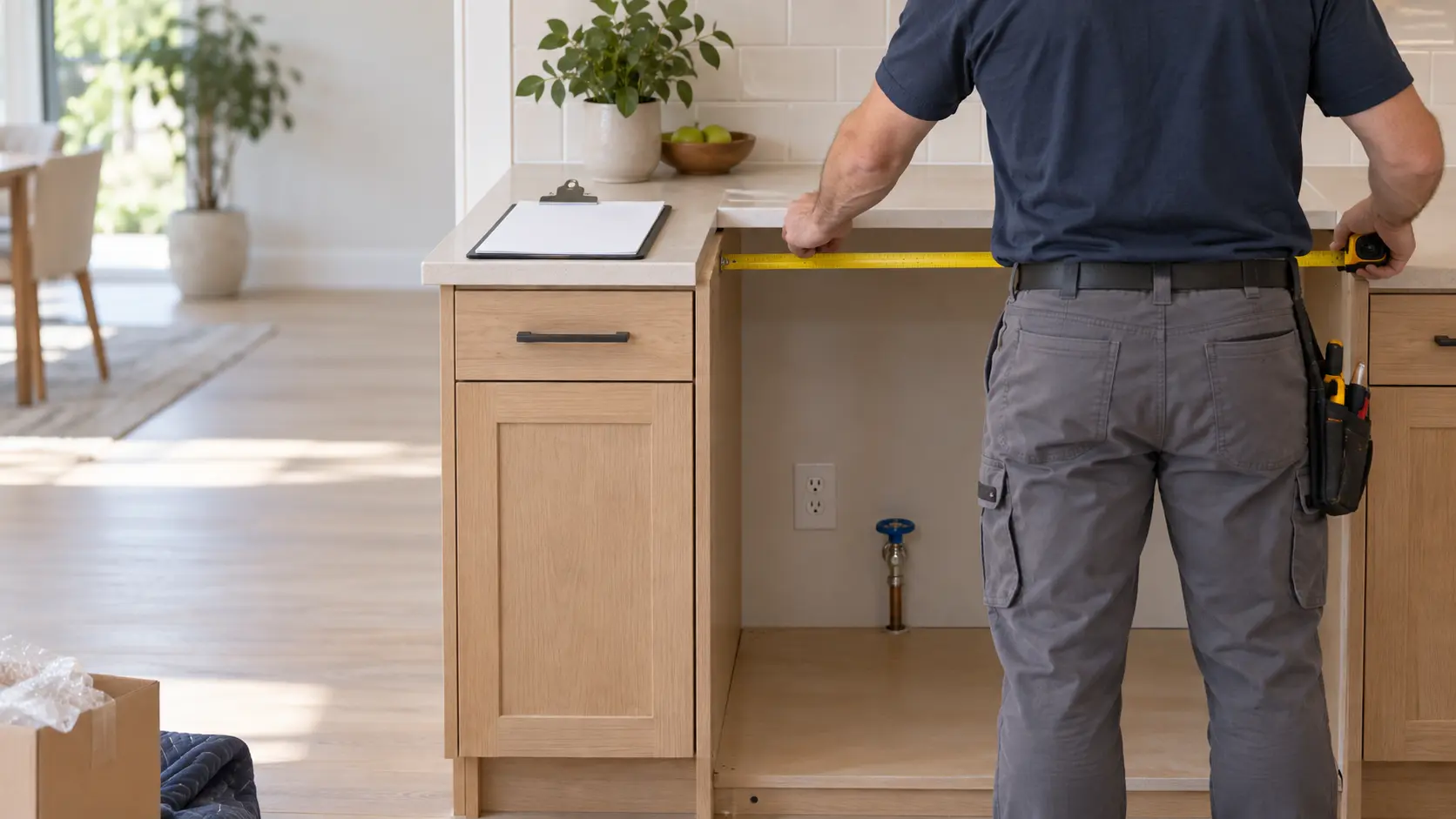
- Width, height and depth against the opening; see cutout dimensions and the spec sheet.
- Voltage, amperage and plug type against the outlet; the circuit and outlet guide explains what a new unit needs.
- Gas type, water inlet and drain or vent needs, if the unit has any.
- Door swing and handle clearance.
A unit that is the wrong size is a common surprise, described in when a new built-in will not fit. Measuring first, as in measure before you order, avoids it.
Check for a recall
Search the brand and model number on the Consumer Product Safety Commission's recalls page (cpsc.gov/Recalls) before buying a discounted unit, especially one that has been on the floor a long time or returned without a reason given. A recall notice lists the affected model numbers and often a serial or date range, so compare it with the rating plate, and ask the store whether the unit has already had the remedy the notice describes. If the model is listed and the store cannot show the fix was done, walk away.
Source: U.S. Consumer Product Safety Commission — Recalls — Searchable list of recalls and product safety warnings
What should you settle before paying?
Settle the return window, the delivery and the installation plan, because an open-box sale often has the shortest windows.
A short list to settle
- The return period, and whether a restocking charge applies.
- Delivery date and what the delivery crew will and will not connect.
- Who installs, and whether the unit needs a gas, water or electrical connection first.
- The serial number written on the receipt.
If the unit needs a haul-away of the old one or a connection, a diagnostic visit can confirm that the opening, supply and venting are ready before delivery day. A built-in with a damaged flange may still be workable with a built-in and panel-ready fitting, but ask before you assume.